


C R O M L E C H

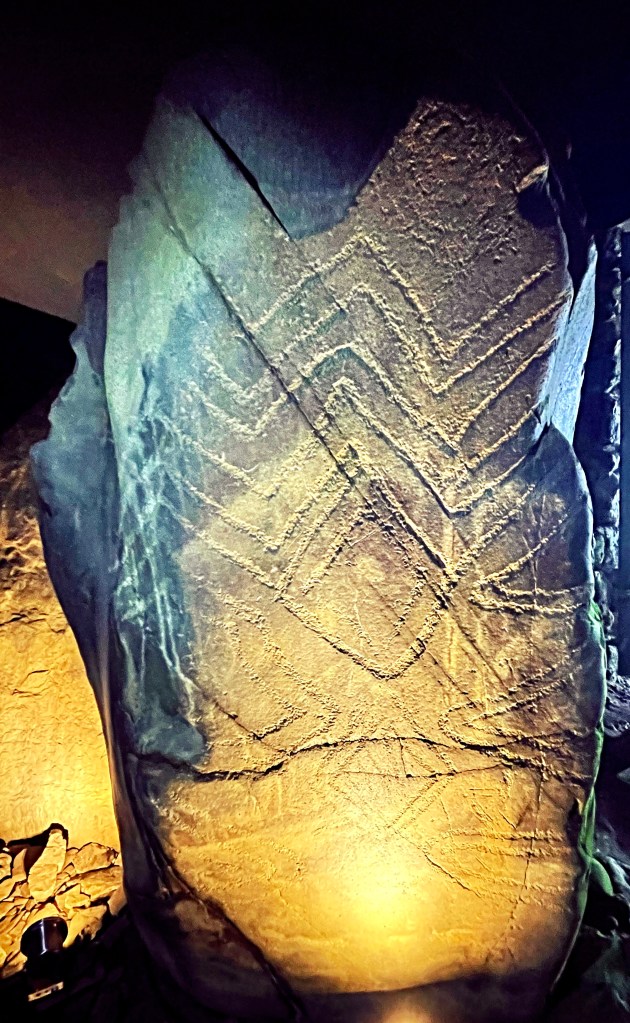



Daethpwyd o hyd iddi yn ystod cloddio (1925-1929) o’r garnedd yn gorwedd yn erbyn carreg orchudd y pydew defodol y tu ôl i’r siambr.
Credir bod y bobl a gododd y bedd cyntedd wedi ei guddio’n fwriadol. Mae meddwl am ei darddiad yn gorwedd wyneb i waered yn gryf.
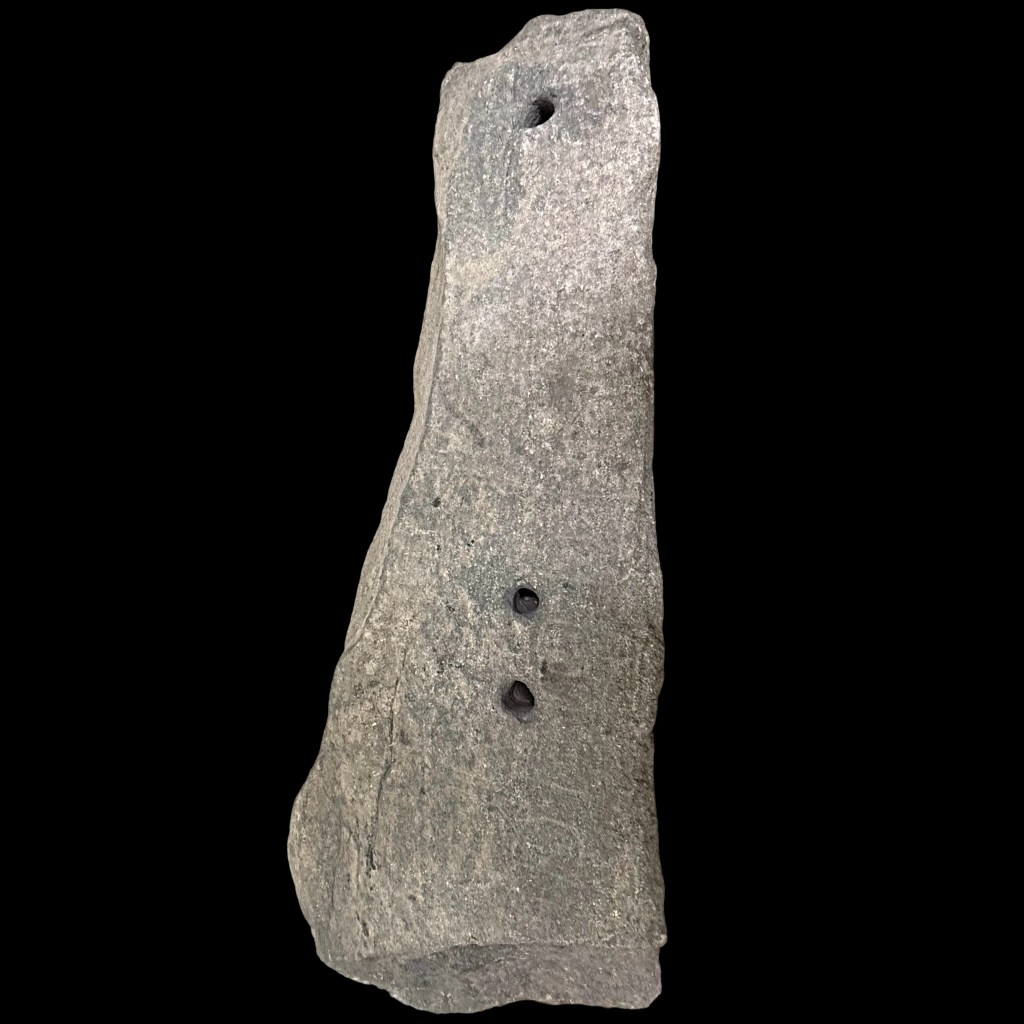
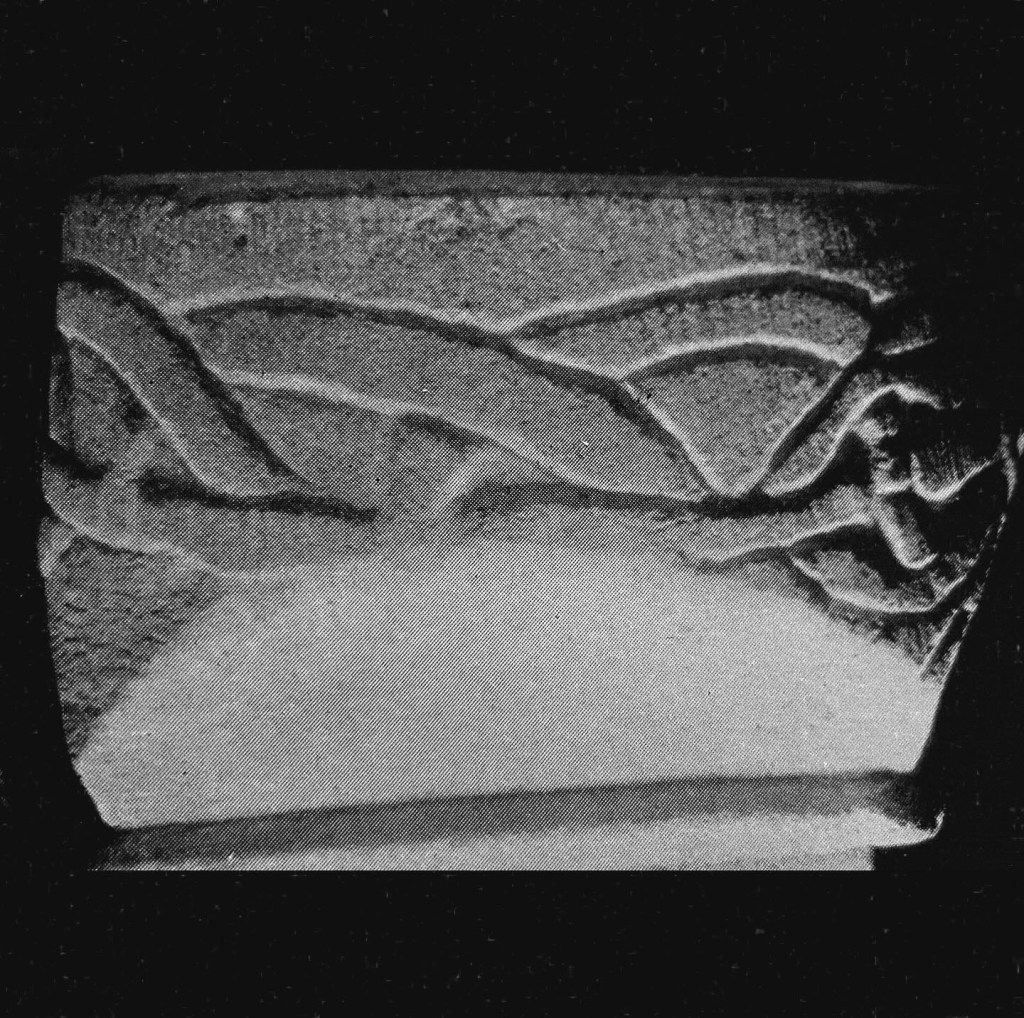
Pattern stone from Bryn Celli Ddu, Neolithic passage grave, Anglesey, at St. Fagans National Museum of History (a replica now stands at the site on the sacred isle). There is a decoration of incised spiral and sinuous serpentine forms on three sides, made by “pecking” with a pointed tool.
Found during excavation (1925-1929) of the cairn lying against the cover-stone of the ritual pit behind the chamber.
It is thought that the people who constructed the passage grave deliberately hid it. The concept of it emanating lying face down is potent.

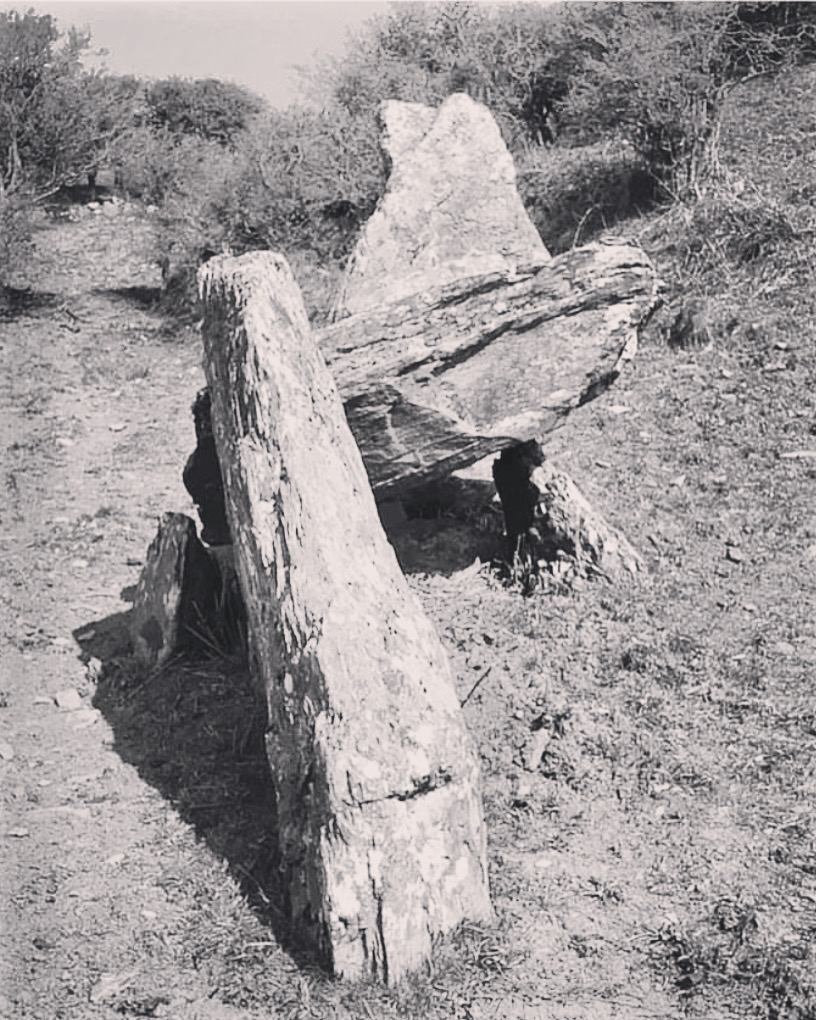
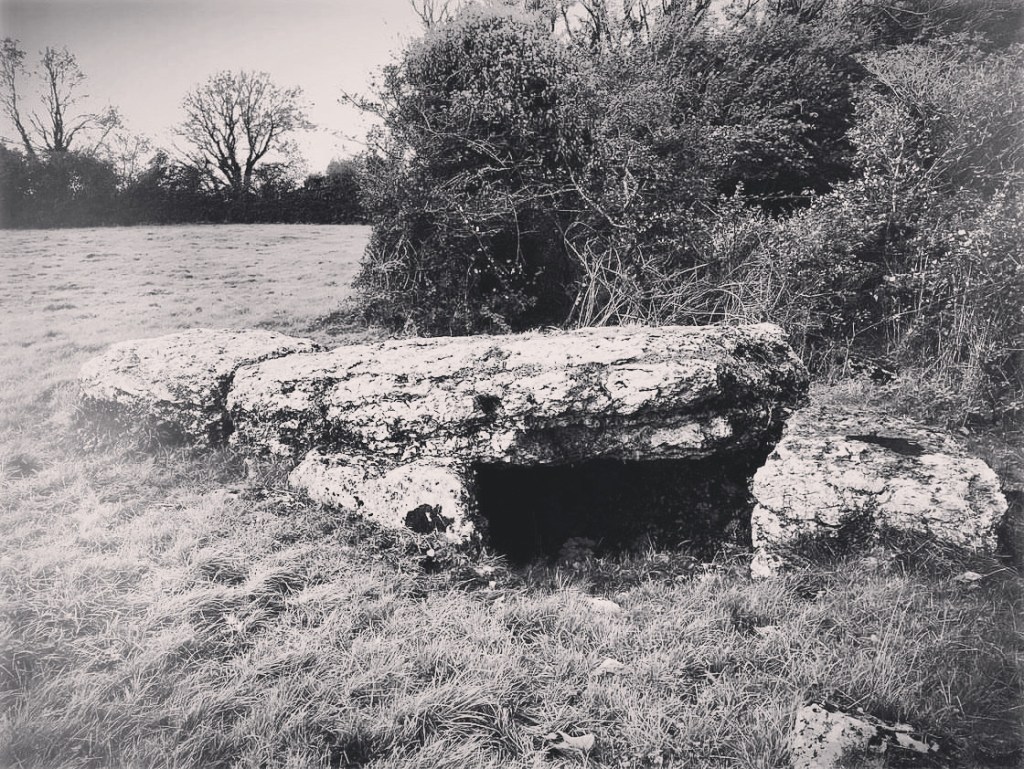

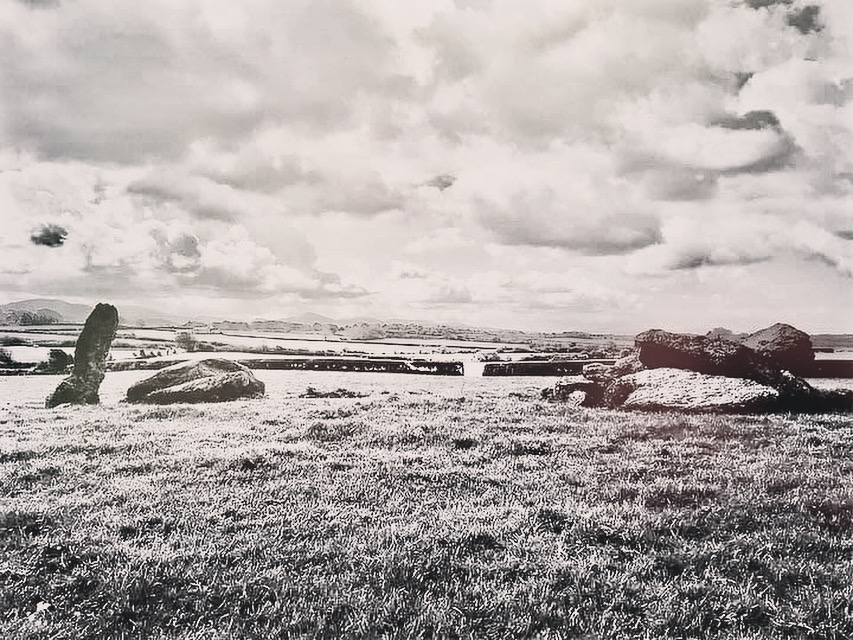


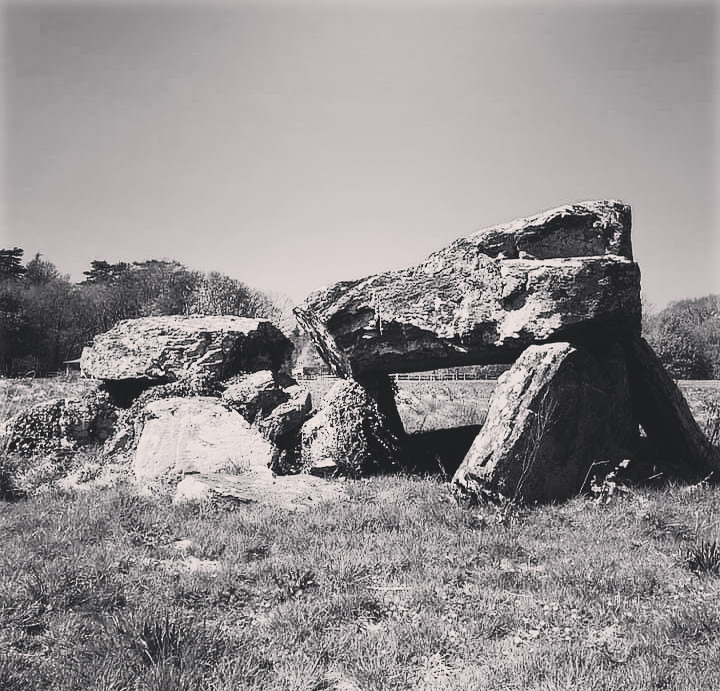
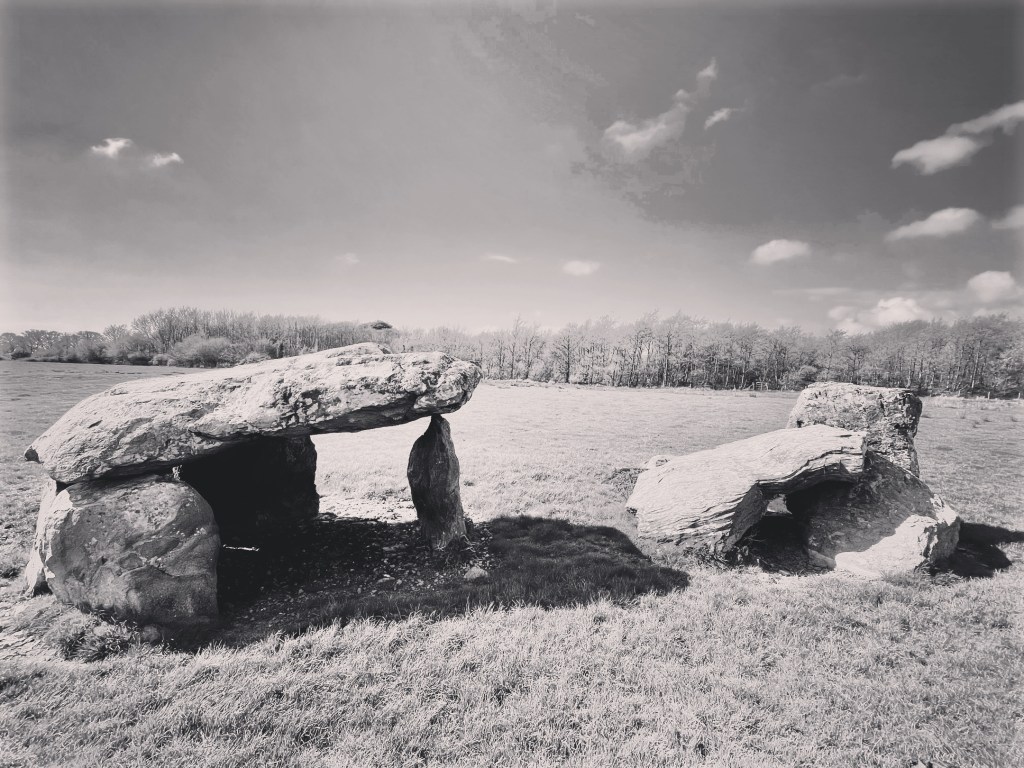
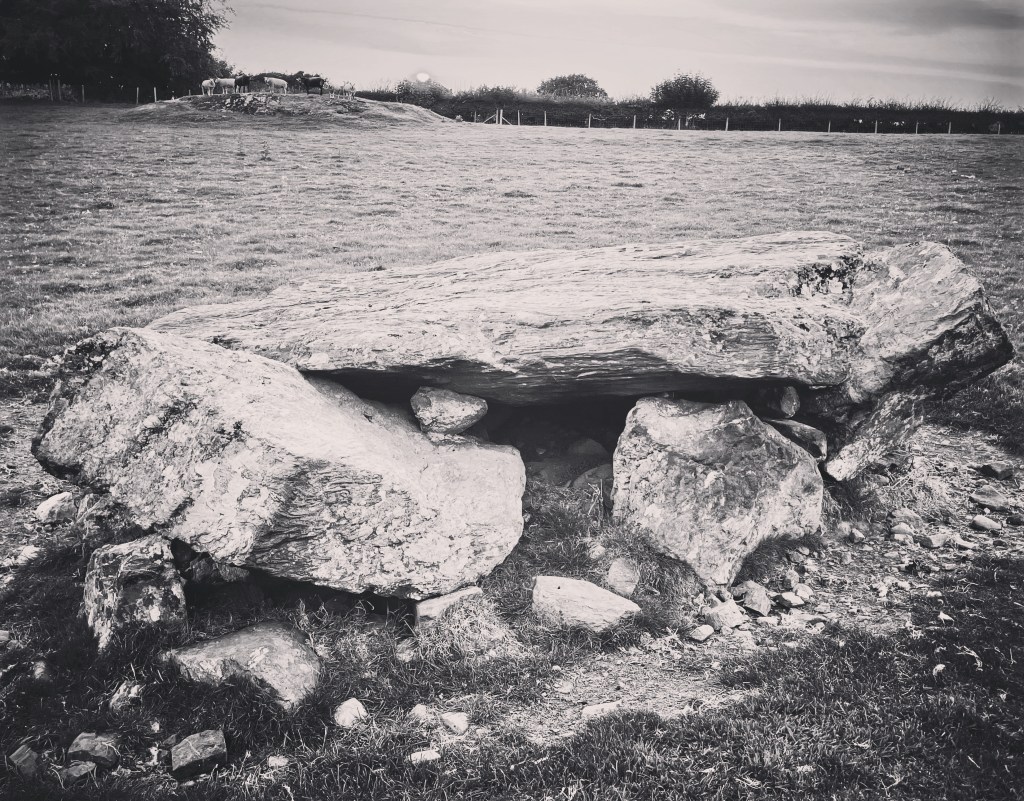
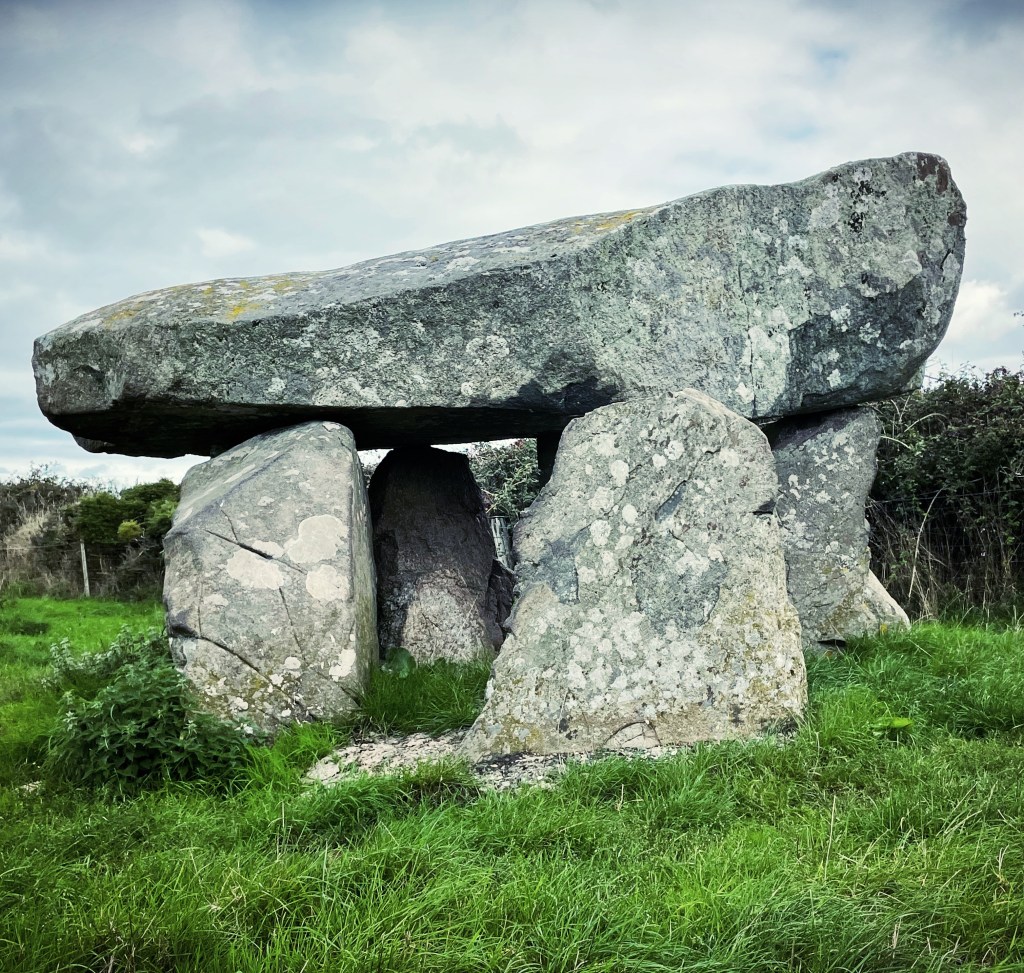
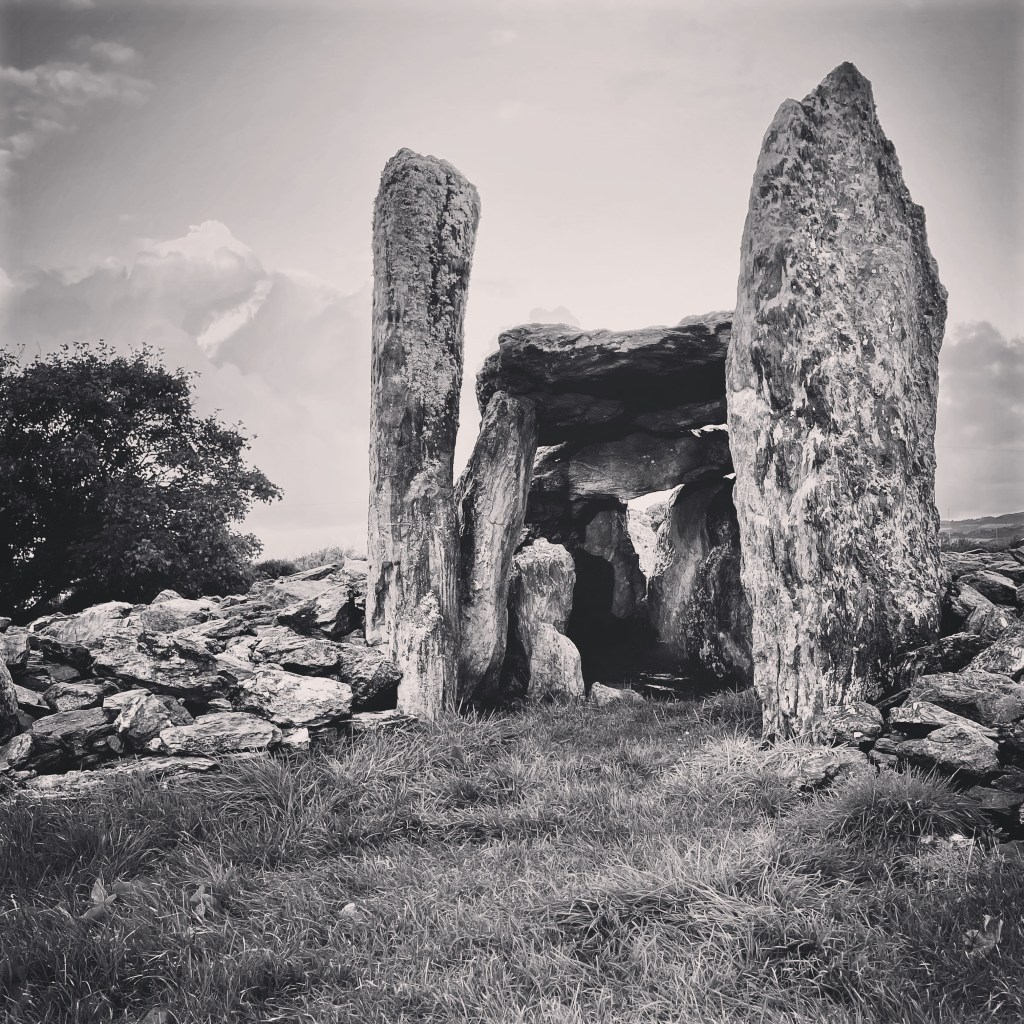


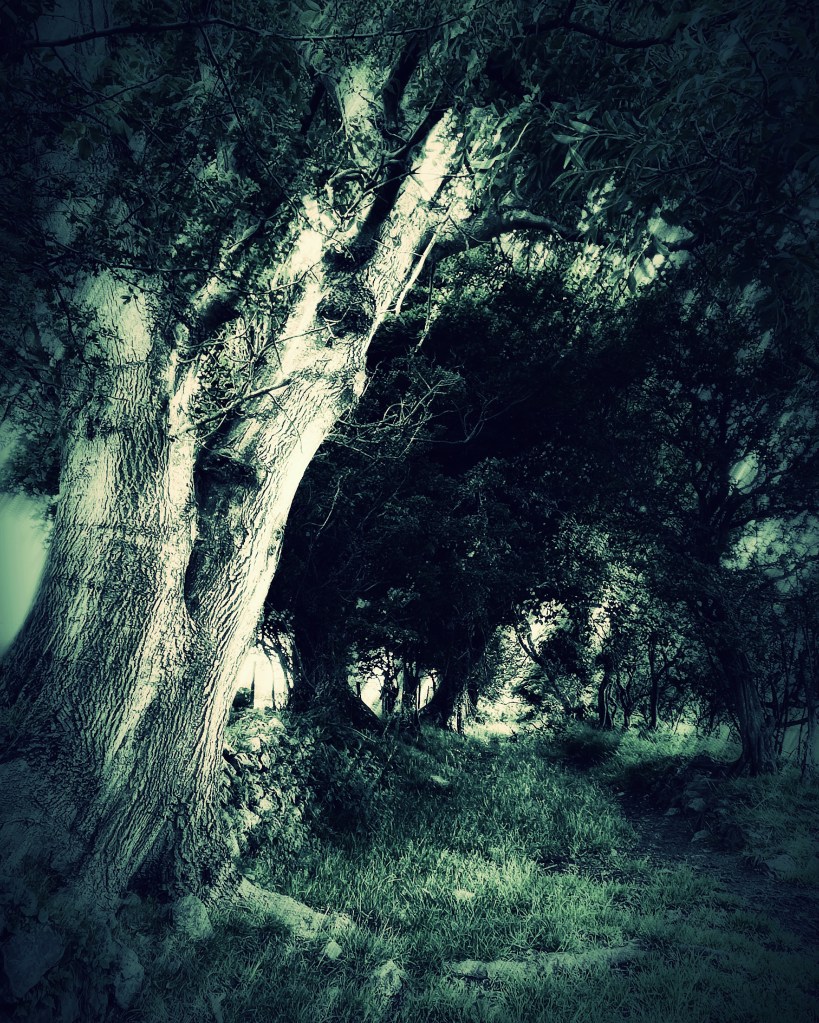
This footpath is in Llandegfan (not far from the church and two standing stones).
Excerpt from ‘The Settlements of the Celtic Saints in Wales’ by E. G. Bowen:
“Here, the Menai platform is approximately 300 ft. high…Recent submergence in the Straits…has had its effect on the lower reaches of the Cadnant stream.
The contours numbered below 200 feet are closely packed together, while the upper section of the valley shows signs of greater maturity. St. Tegfan chose his site on a spur overlooking the upper reaches of the valley. With local modifications these conditions are repeated with great frequency all over the island…”.

M E I N I H I R I O N



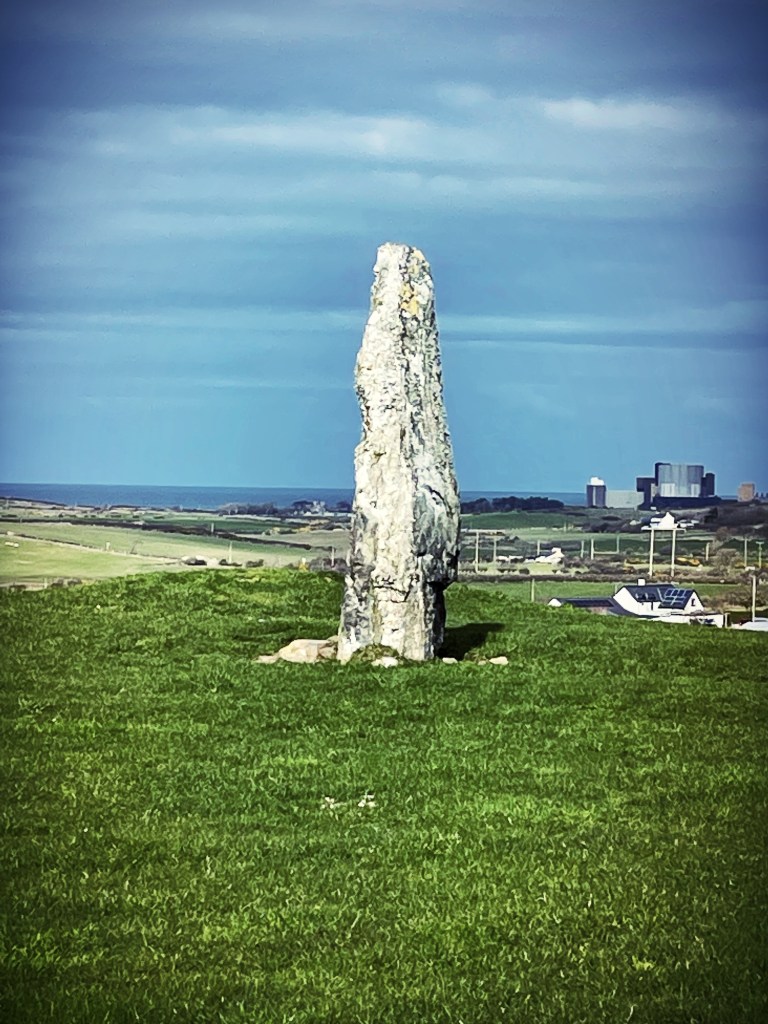
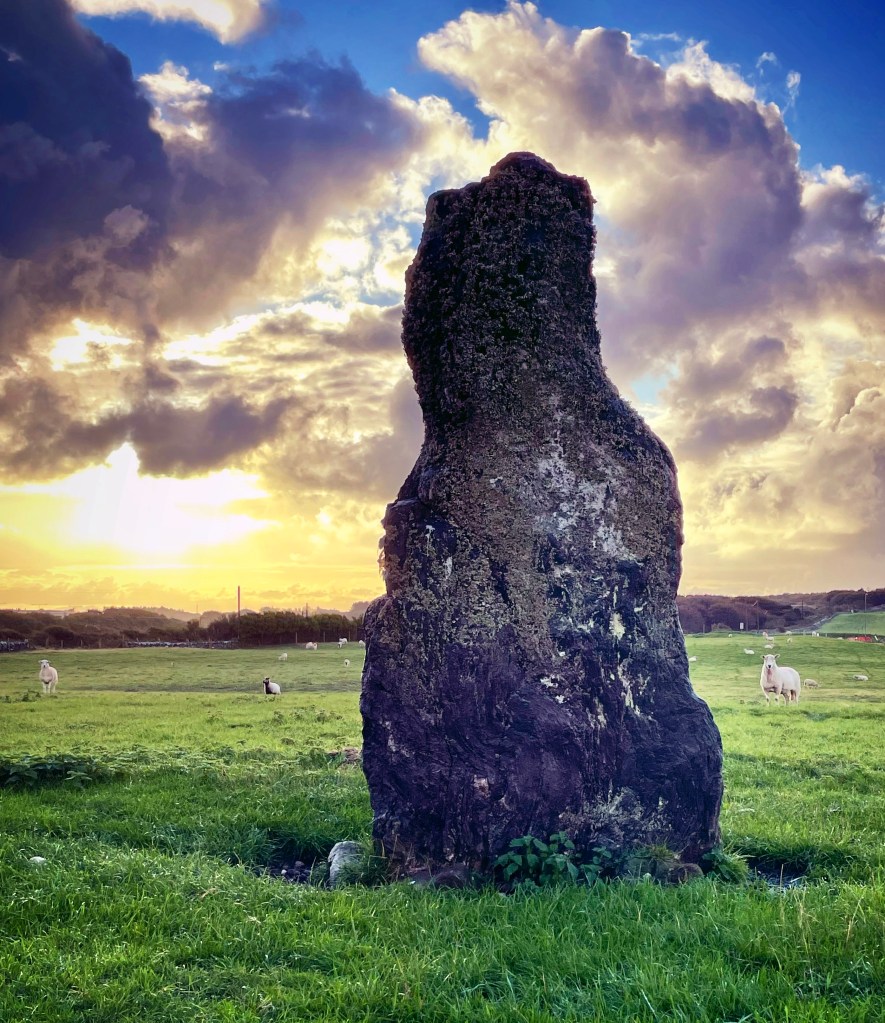
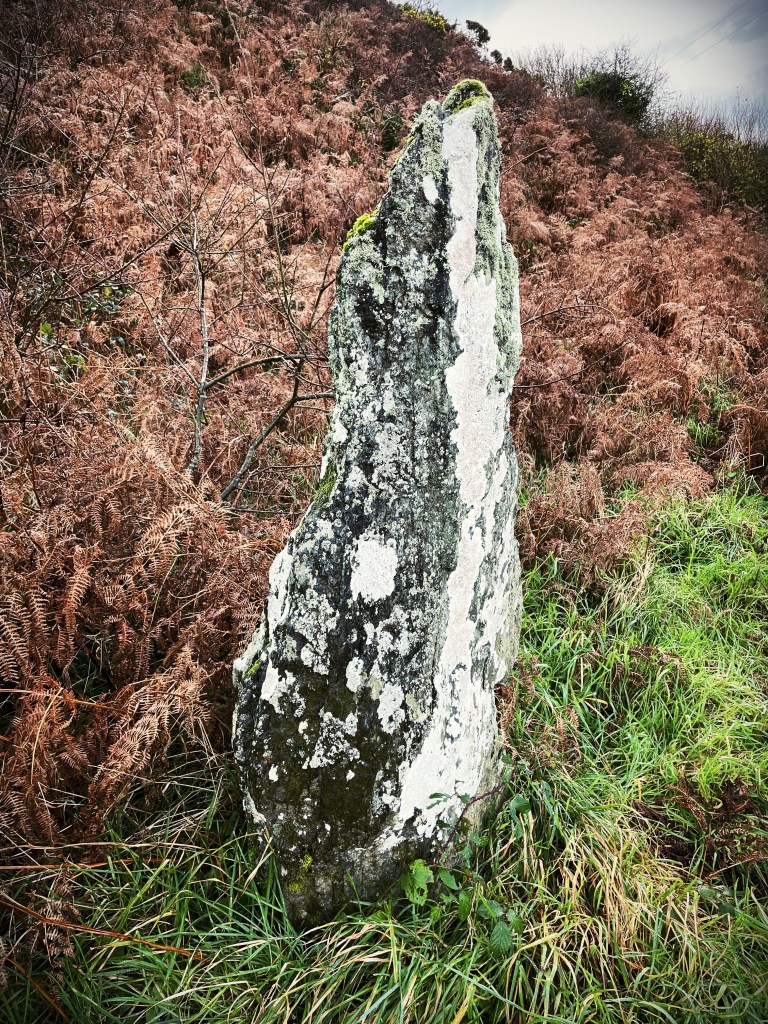
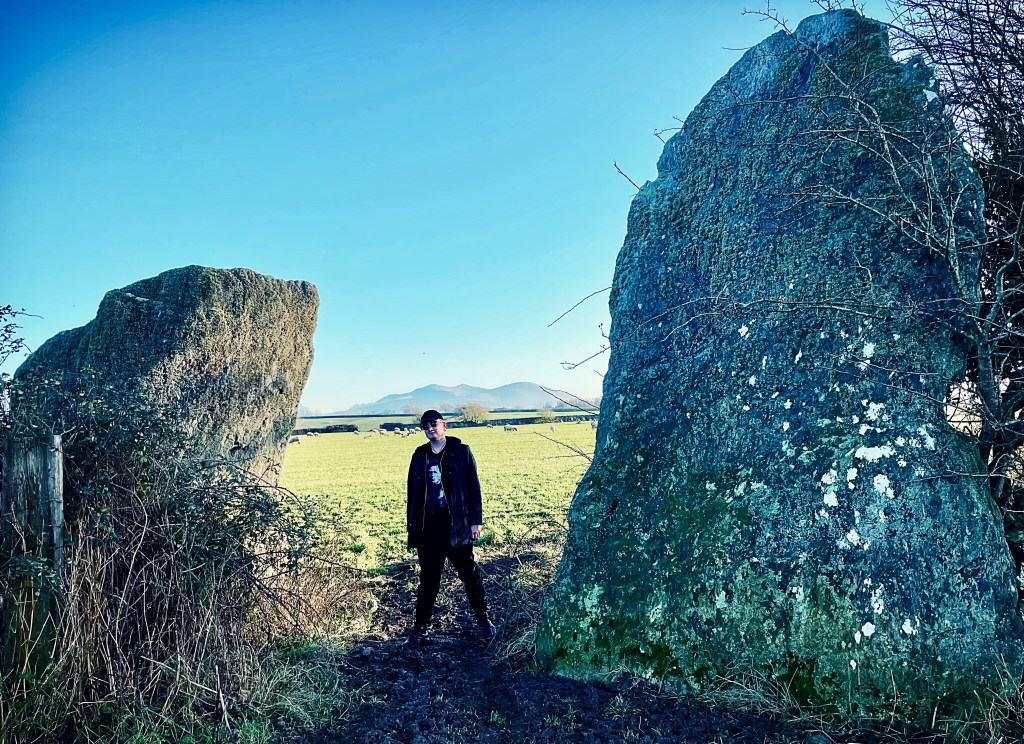








A N H E D D I A D A U


F F Y N H O N N A U
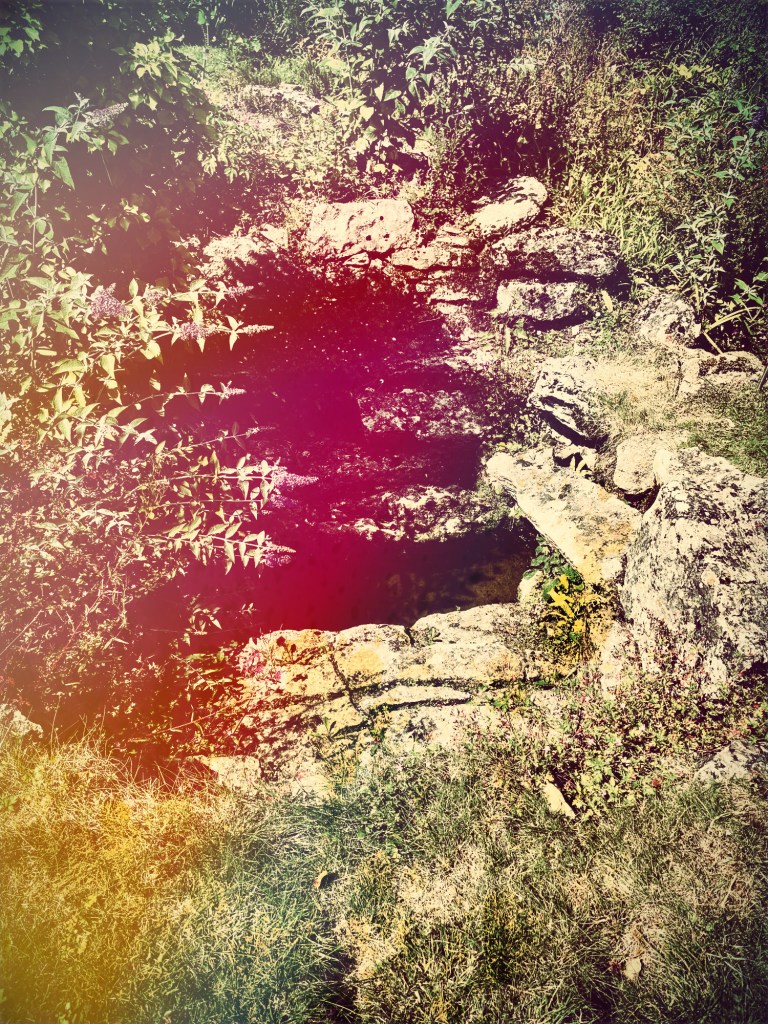
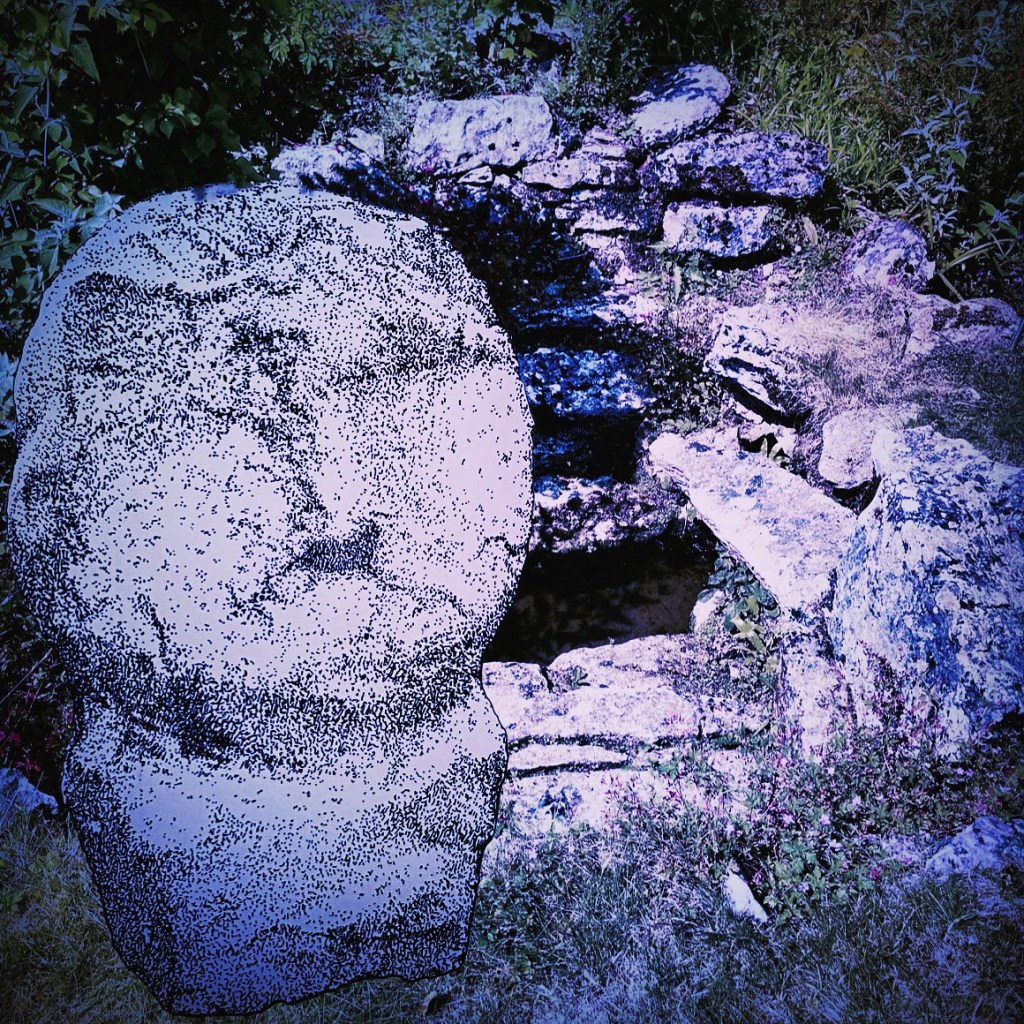
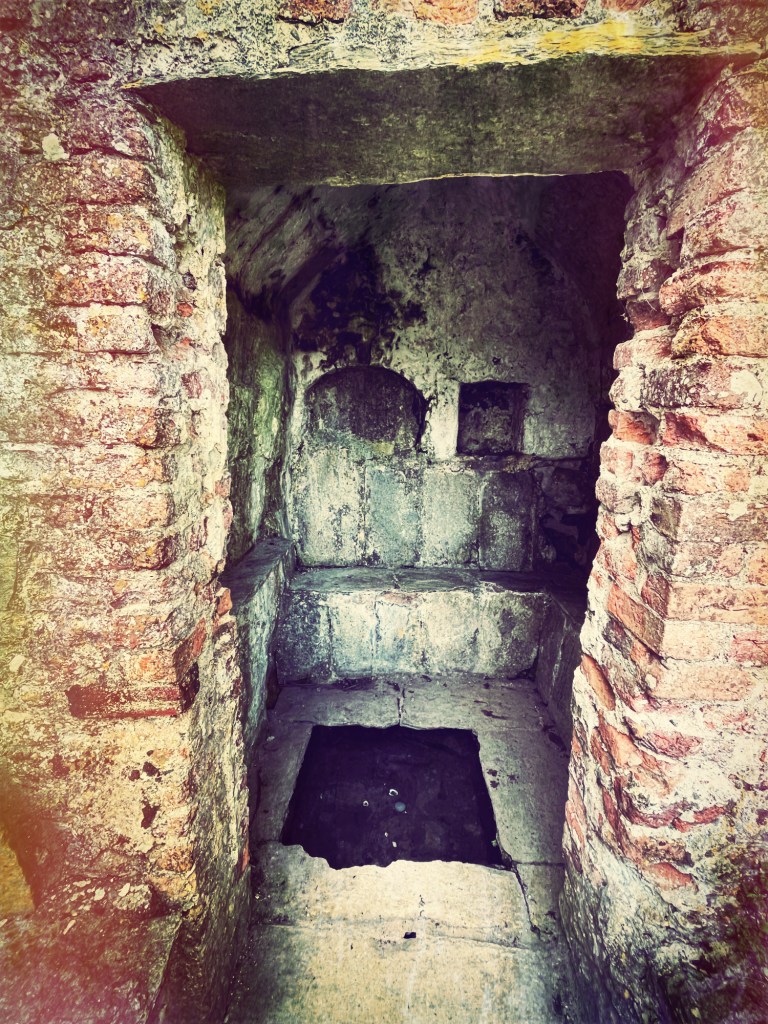
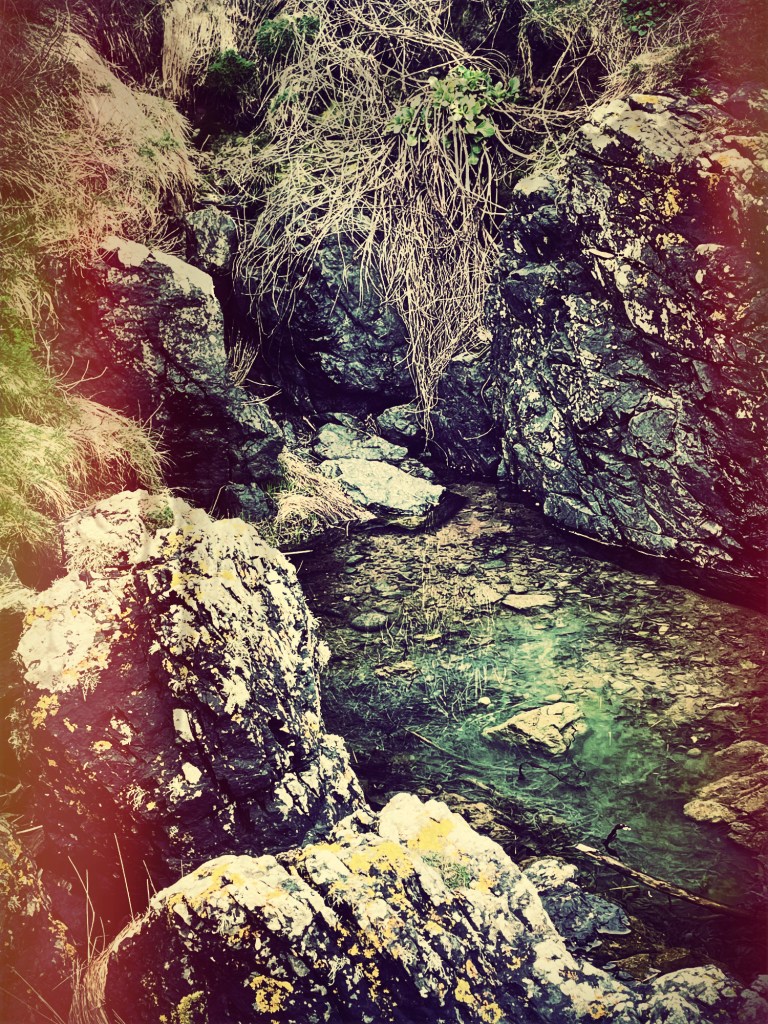
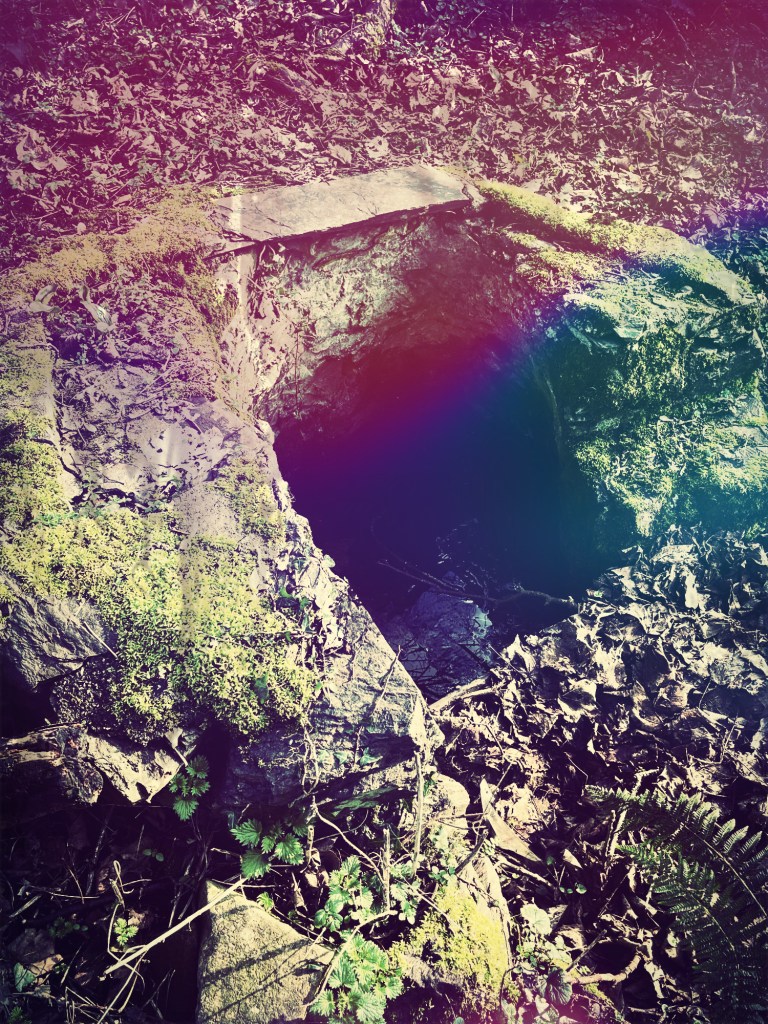
Un o ffynhonnau hynaf Ynys Môn. Yn ôl ‘Ffynhonnau Cymru’ gan Eirlys a Ken Gruffydd, roedd y safle yn gysegredig i’r duwiau Celtaidd; yn 1982 darganfuwyd pen dynol tywodfaen cerfiedig ger y ffynnon. Fe’i disgrifir yn yr Inventory of Ancient Monuments of Anglesey a gyhoeddwyd yn 1937 fel ‘a small pool within a rectangular chamber ten and a half feet by seven with low walls of limestone blocks’. Roedd y dwr yn llawn swllfat leim ac yn iachusol, er nad os gofnod o ba anhwylderau’n union a gâi eu gwella gan ddwr y ffynnon. Mae’r ffynnon rhwng dwy garafán ar faes gwersylla heddiw. Wedi dweud hynny, roedd dal awyrgylch i’r lle (mae’r ddaear yn sanctaidd) fel y dywed Coflein: “Mae gan ffynnon Sant Allgo leoliad bucolig wrth ymyl nant fechan rhyw 350m i’r de-orllewin o eglwys Llanallgo”.
One of the oldest wells on Anglesey. According to ‘Ffynhonnau Cymru’ by Eirlys and Ken Gruffydd, the site was sacred to the Celtic gods; in 1982 a sandstone human head sculpture was found near the well. It is described in the Inventory of Ancient Monuments of Anglesey published in 1937 as ‘a small pool within a rectangular chamber ten and a half feet by seven with low walls of limestone blocks’. The water was full of lime sulphate and was healing, although there is no record of exactly which ailments were cured by the well’s water. The well is between two caravans on a campsite today. That being said, there was still a charge to the place (the site is holy), as Coflein say: “St Allgo’s well has a bucolic setting by a small stream some 350m south-west of Llanallgo church”. The head is now in a private collection.
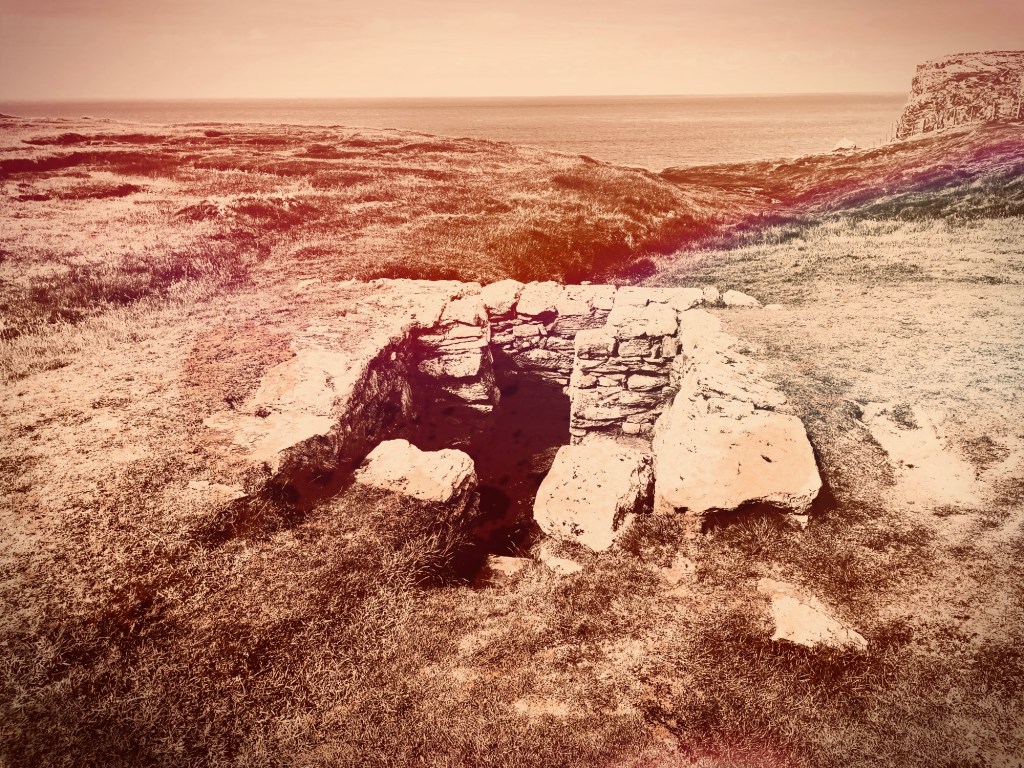


St Ceinwen Holy Well, Cerrigceinwen on Anglesey with superimposed potentially Iron Age stone head with three deliberately made depressions on the top from Cerrigceinwen (now in the National Museum of Wales). It is believed the depressions atop these heads (as with the Hendy head on Anglesey) were for ritual offerings.







L L Y N N O E D D


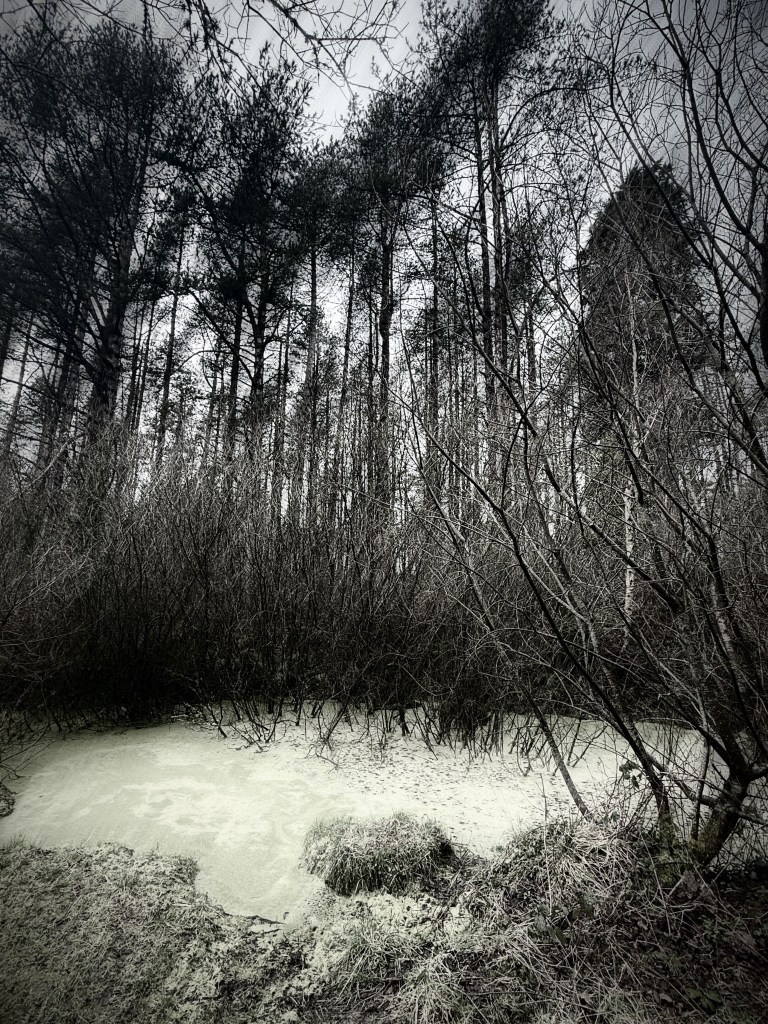
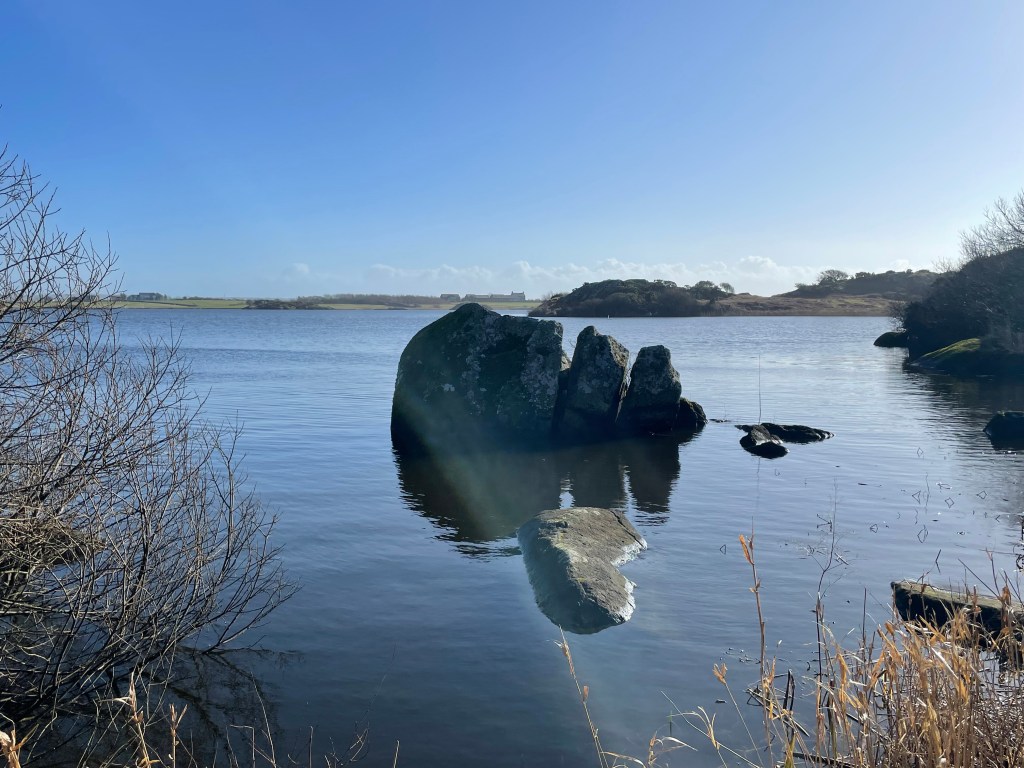
Coflein: “Y darganfyddiadau yn Llyn Cerrig Bach yw’r enghraifft Brydeinig bwysicaf o ffenomen sy’n adnabyddus ar y Cyfandir ac a ddisgrifiwyd gan Cesar – llyn cysegredig lle taflwyd ysbail rhyfel gan y Celtiaid yn offrymau i’w duwiau.”
“Mae dyddiadau’r darganfyddiadau hefyd o ddiddordeb. Mae rhai o’r cleddyfau o fathau o gerrynt yn yr 2il ganrif CC, mae eraill o ddyluniadau diweddarach, ond ni ellir adnabod dim hwyrach na 60 OC. Mae hyn yn awgrymu bod y llyn wedi datblygu ei bwysigrwydd yn ail hanner yr Oes Haearn, a goresgyniad y Rhufeiniaid ar Ynys Môn yn 60 OC a rwystrodd y llif o offrymau.”
𖦹 ꩜ 𖦹
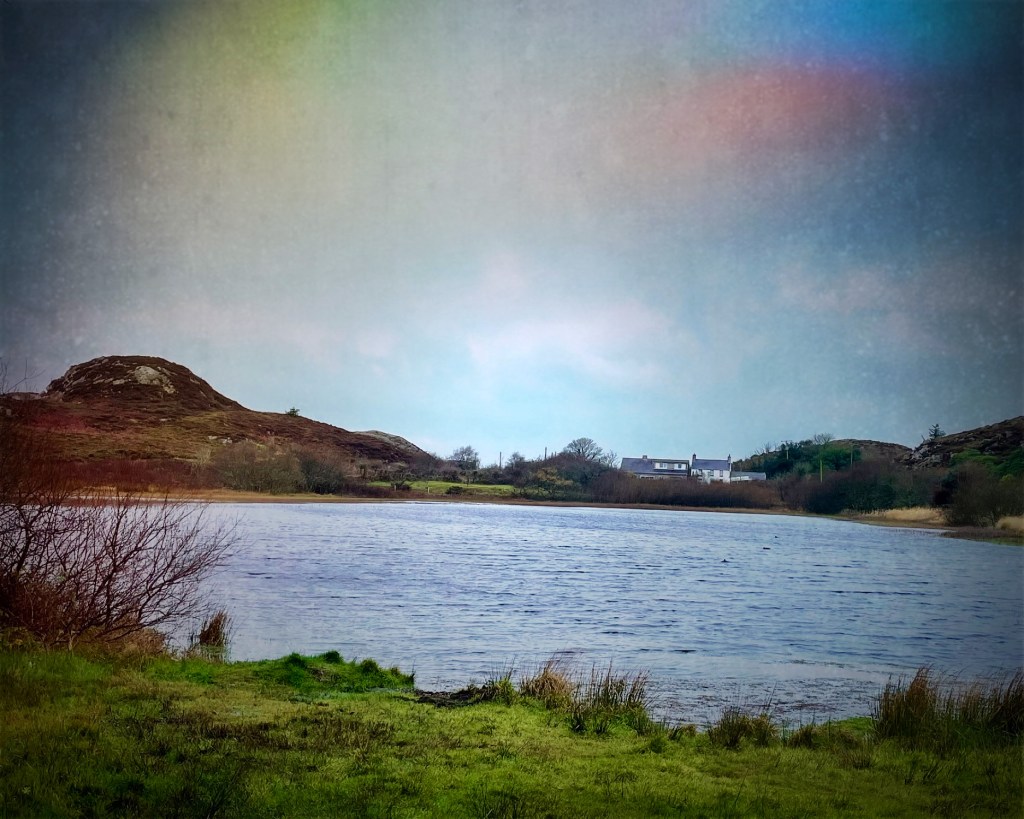
Finds from Llyn Cerrig Bach (lake), Llanfair yn Neubwll (‘St Mary’s of the Two Pools’), Anglesey, on display at St Fagans National Museum.
Coflein: “The finds at Llyn Cerrig Bach are the most important British example of a phenomenon well known on the Continent and described by Caesar – a sacred lake in which the spoils of war were thrown by the Celts as offerings to their gods.”
“The dates of the finds are also of interest. Some of the swords are of types current in the 2nd century BC, others are of later designs, but nothing later than AD 60 can be identified. This suggests that the lake developed its importance in the latter half of the Iron Age, and it was the Roman invasion of Anglesey in AD 60 that put a stop to the flow of offerings.”
Discovered near RAF Valley during the Second World War. Similar accumulations of weapons have been found at Iron Age religious sanctuary sites in Gaul (France). Examples of throwing or offering weapons from timber platforms into water have been discovered in La Tène in Switzerland, Flag Fen in Cambridgeshire and Fiskerton in Lincolnshire.


B R Y N G E I R I




E G L W Y S I
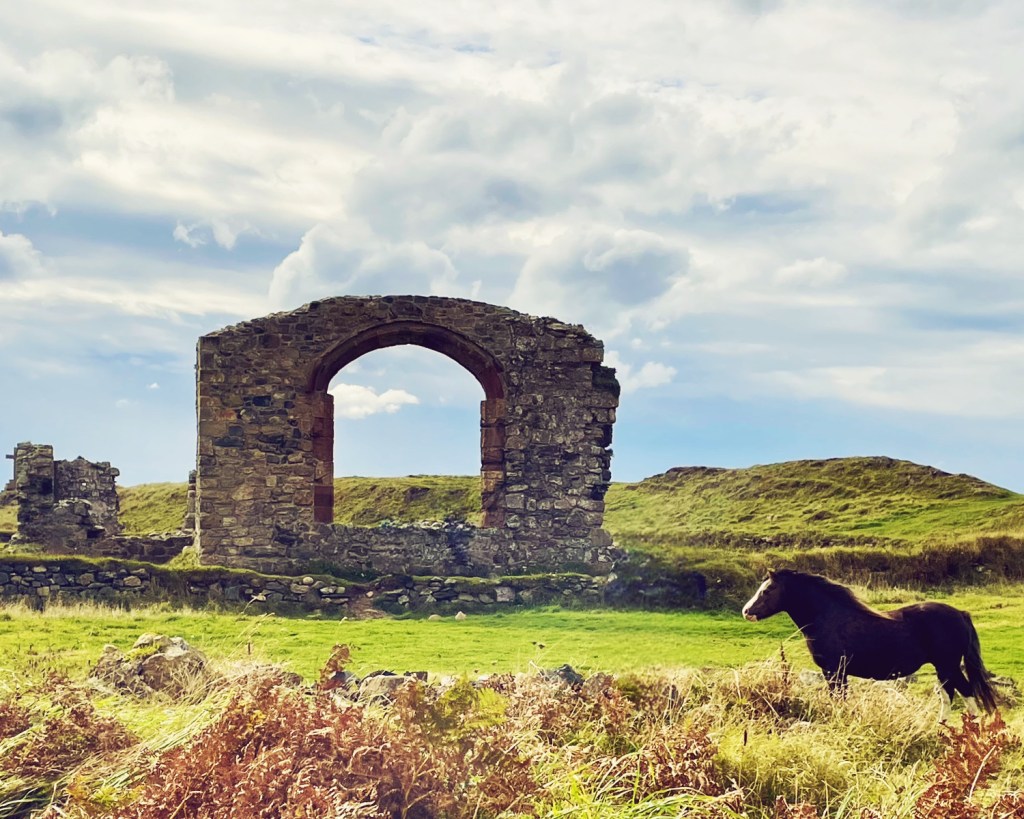
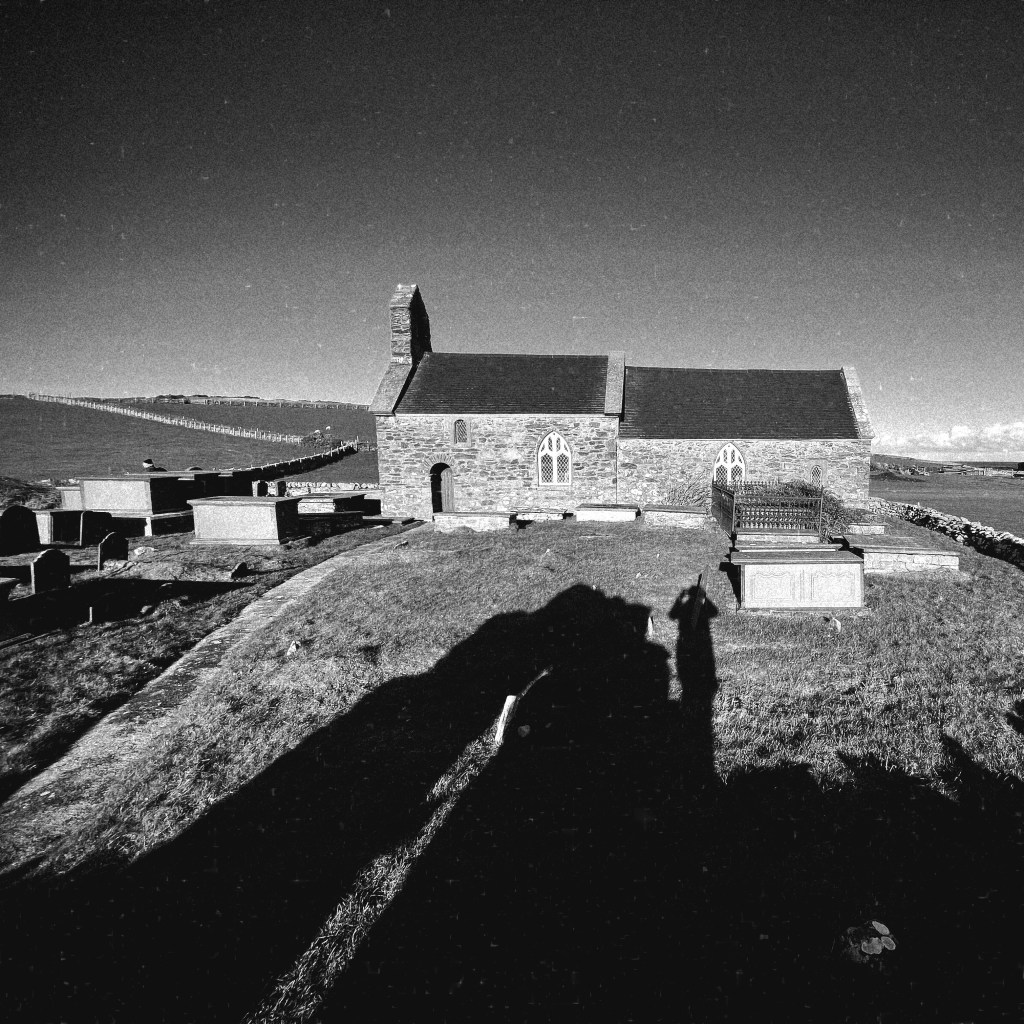
Nid oes olion yr eglwys a adeiladwyd yn c 570 ond mae’r fynwent gylchol yn dynodi sylfaen gynnar. O’r adeilad presennol, mae’r drws corff a’r de gyda’i fwa crwn o gerrig garw yn dyddio o’r 12fed ganrif. Wedi’i ymestyn yn y 13eg ganrif, cefnogir y gangell gan gruck. Mae’r ffenestr gul yn wal ddeheuol y gangell yn dyddio o’r un cyfnod, tra bod y ffenestr ddwyreiniol yn ôl pob tebyg yn dyddio o’r 15fed ganrif. Mae grisiau yn y porth yn arwain at oriel prin o’r 18fed ganrif. Mae’r ffenestr ddwyreiniol yn cynnwys angel cerfiedig gyda phenwisg hefo croes.
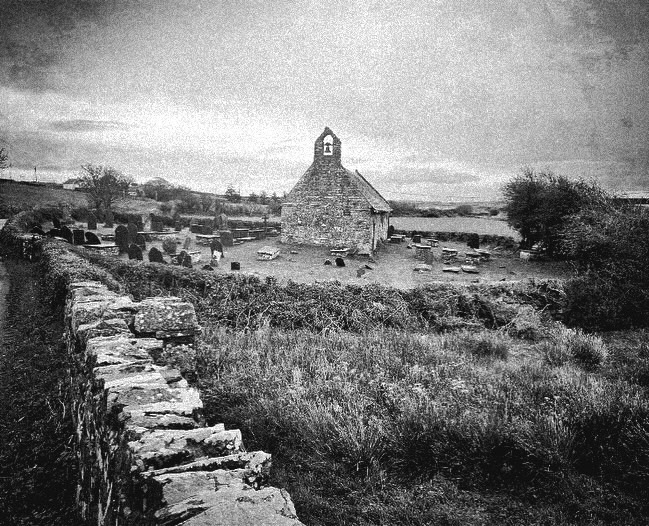
Described by Frances Lynch as: “one of the best and most attractive examples of a circular churchyard in Anglesey – a quiet and meditative spot”.
Eglwys ganoloesol (yn rhannol o’r 12fed ganrif). Ceir pennau cerrig cerfiedig ar y naill ochr a’r llall ac uwchben y drws deheuol wedi’i ailadeiladu (mae un arall o fewn ond cafodd ei gloi). Credir mai Celt Prydeinig o’r hen ogledd oedd Pabo a geisiodd loches yma, wedi’r rhyfeloedd yn erbyn y Pictiaid ddechrau’r 6g.

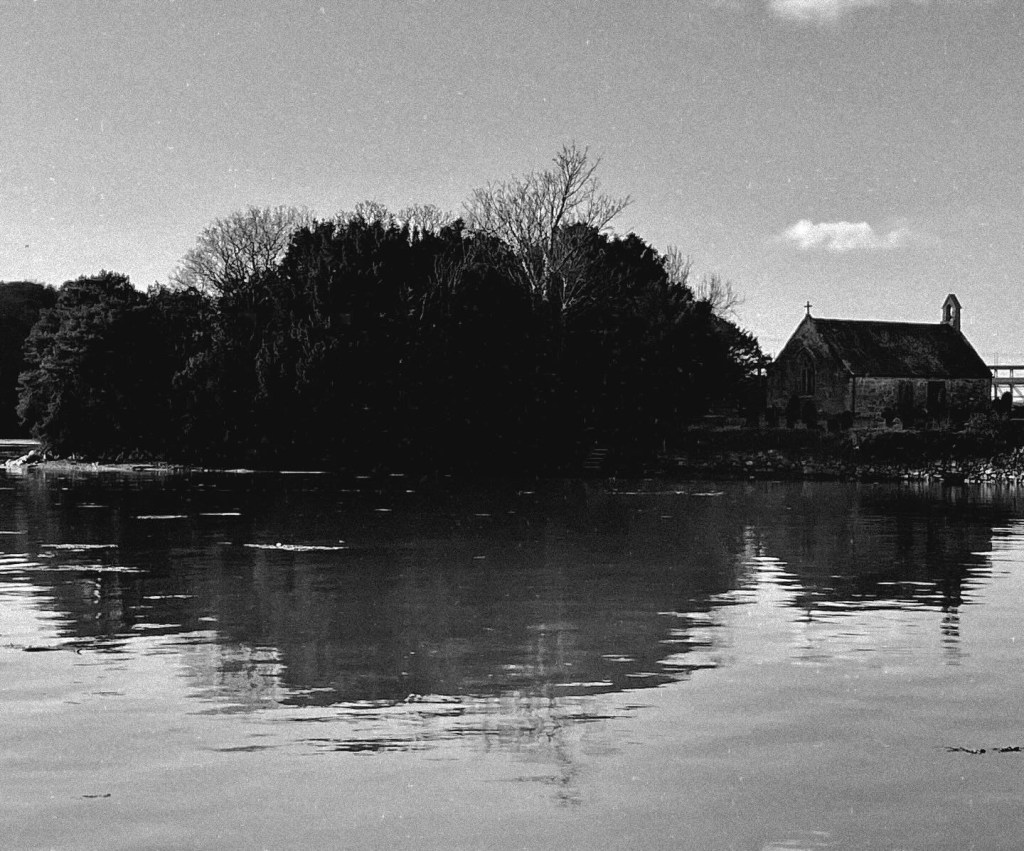

Wedi’i hamgáu gan wal eglwys gylchol hynafol (‘Llan’) a’i hamgylchynu gan goed, mae Eglwys Sant Tyfrydog yn eistedd o fewn lleoliad hynod atmosfferig. Fe’i sefydlwyd yn y 5ed ganrif, ac mae’r cofnodion cynharaf o eglwys yma yn dyddio’n ôl i 1098 ac fe’i cofnodwyd hefyd yn y dreth 1254 Norwich. Y rhan gynharaf o’r adeilad presennol yw’r corff a adeiladwyd tua 1400 gyda’r gangell yn cael ei hychwanegu ar ddiwedd y 15fed ganrif. Dywedodd yr hanesydd Cymreig Gerald o Gymru pan oedd yr arglwydd Normanaidd Hugh o Sir Drefaldwyn yn rhoi’r gwrthryfel Cymreig dan arweiniad Gruffudd ap Cynan yn 1098, ei fod yn cadw ei gŵn yn yr eglwys. Roedd y cŵn wedi mynd yn wallgo erbyn y bore, a lladdwyd Maldwyn o fewn wythnos. Mae’r fynwent gylchol (arwydd o safle hynafol bob amser) yn cynnwys deial haul wedi’i wneud o bres, sy’n dyddio o’r 18fed ganrif, sy’n sefyll yng nghanol croes garreg ganoloesol.
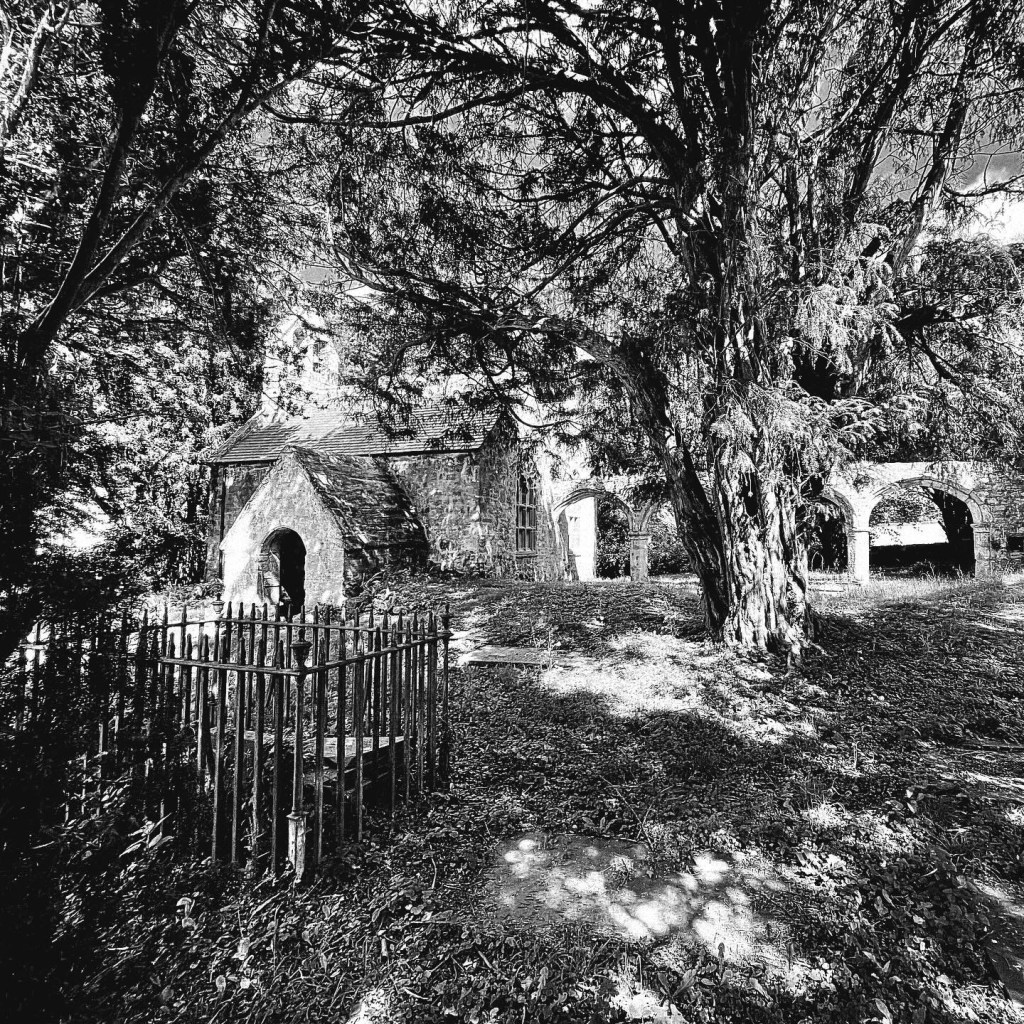
Henry Rowlands, author of ‘Mona Antiqua Restaurata : An Archæological Discourse on the Antiquities, Natural and Historical, of the Isle of Anglesey, the Ancient Seat of the British Druids’ (1723), was vicar of Llanidan.
Eglwys ganoloesol ger Afon Menai, Ynys Môn. Sefydlwyd y safle yn y 7g gan Sant Nidan, cyffeswr y mynachlog ym Mhenmon, Ynys Môn, ond mae’r strwythur presennol (preifat) (gydag arcêd o chwe bwa) yn dyddio o’r 14eg – dechrau’r 16eg ganrif. Rwy’n caru’r ddau ben cerrig cerfiedig bob ochr i’r drws – mae Anne Ross wedi ysgrifennu am y rhain. Mae’r creiriau a’r pen cerrig cludadwy bellach yn eglwys newydd Sant Nidan.
Henry Rowlands, awdur ‘Mona Antiqua Restaurata : An Archæological Discourse on the Antiquities, Natural and Historical, of Isle of Anglesey, the Ancient Seat of the British Druids’ (1723), oedd ficer Llanidan.
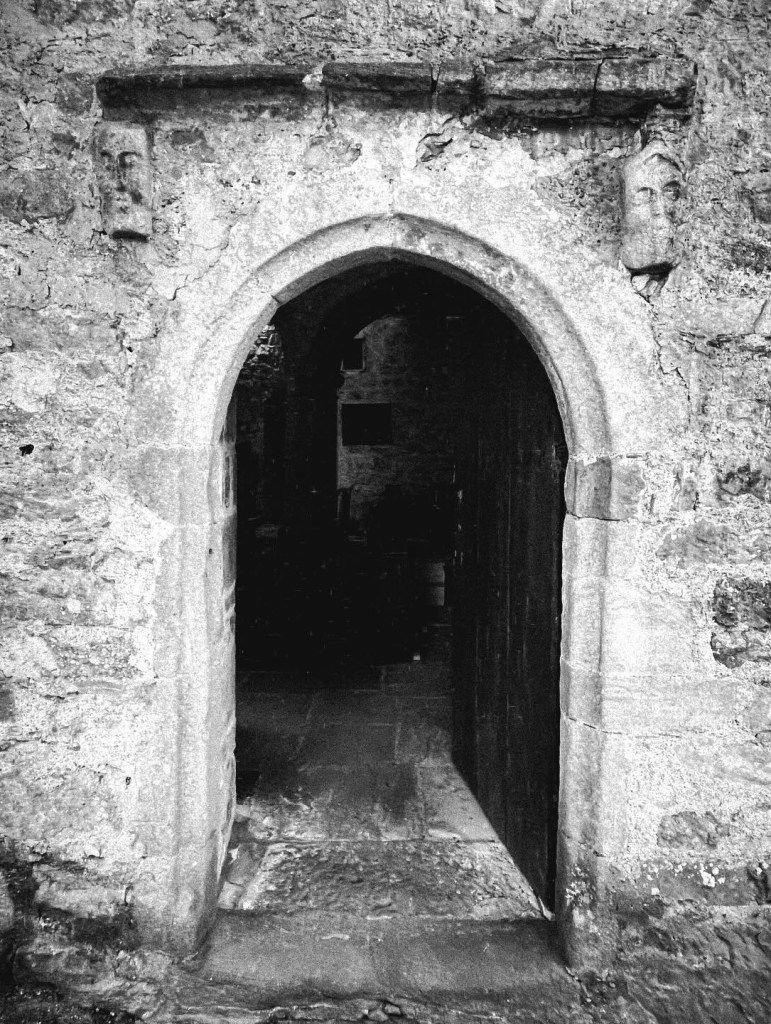

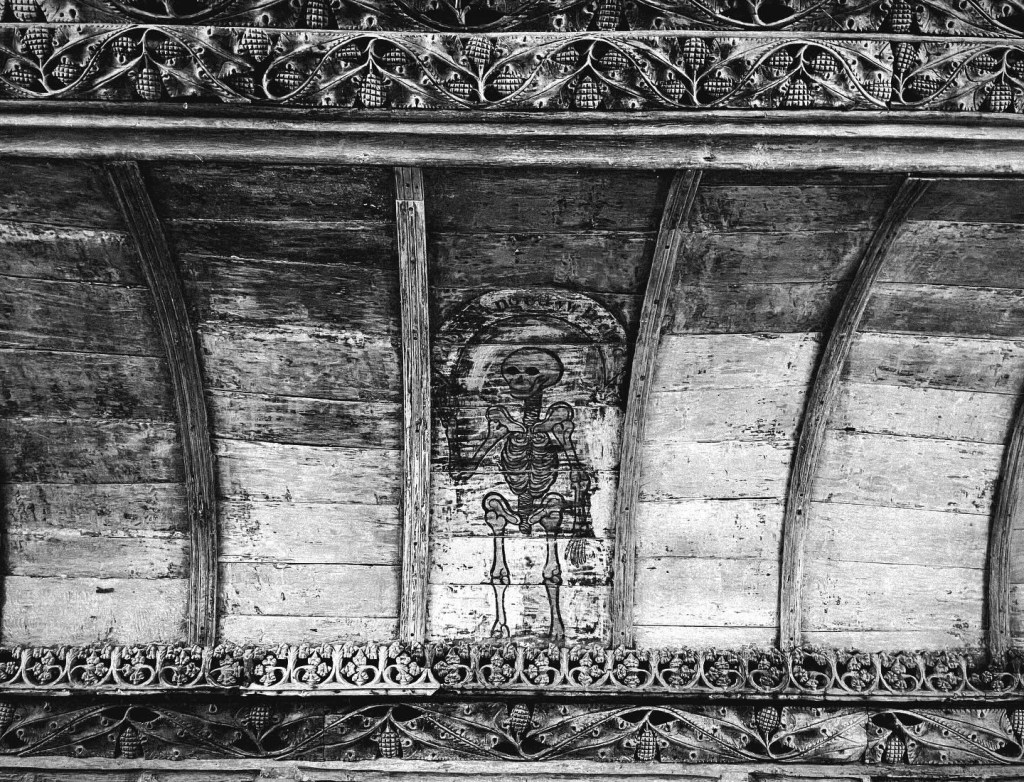
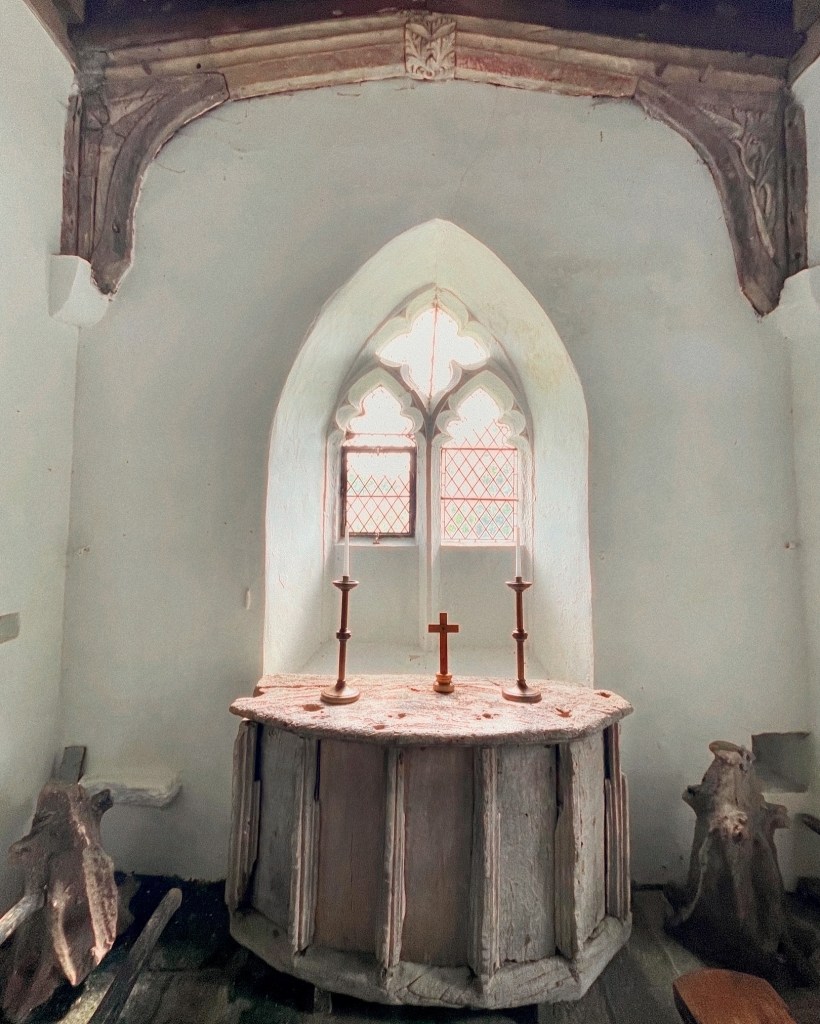
Roedd Eilian yn sant o’r 6ed ganrif gyda ffynnon sanctaidd a beddrod, ond diflannodd yr eglwys bren wreiddiol ac fe’i hailadeiladwyd yn y 12g (goroesodd y tŵr gorllewinol). Mae’r sgrin grog dderw o’r 15fed ganrif rhwng y gangell a’r corff yn brydferth. Mae’r panel canolog yn cynnwys darlun o sgerbwd gyda sbri a charnau gyda’r arysgrif ‘Colyn Angau yw Pechod’ (“Sin yw sting marwolaeth”). Mae’r capel bach o’r 14eg ganrif a osodwyd ar ongl i’r gangell hefyd yn arbennig iawn.

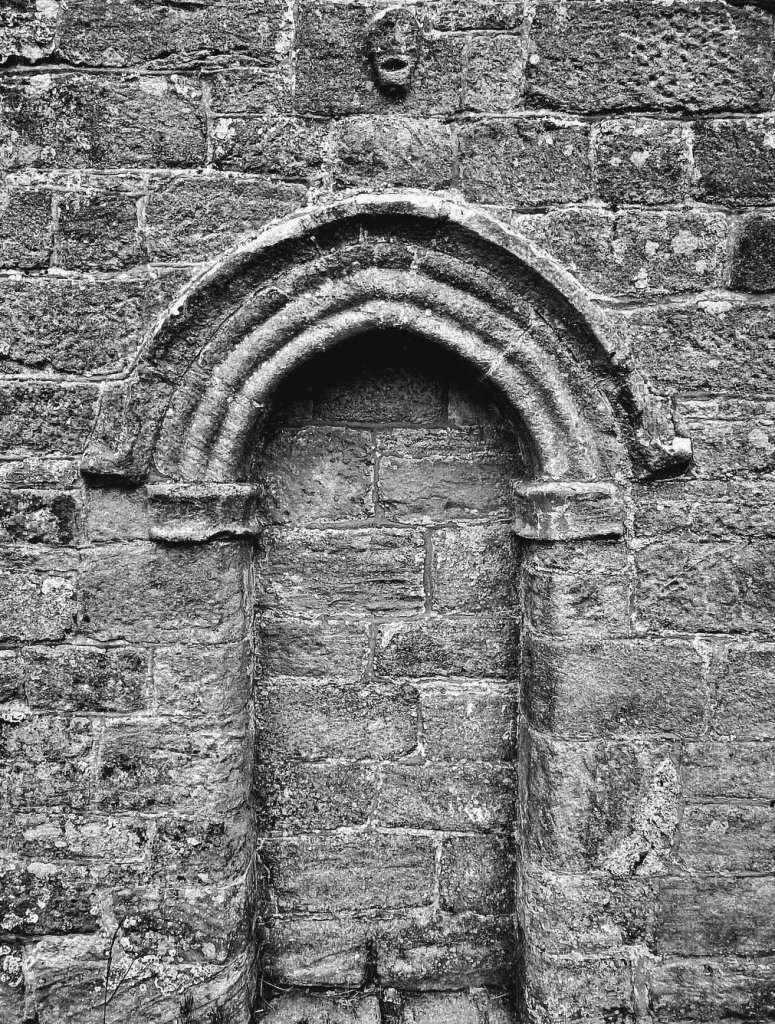
Mae’r corff yn dyddio o’r 12fed ganrif i ddechrau’r 13eg ganrif, mae’r gangell yn 14eg ac mae ychwanegiadau eraill o ganol yr 17eg ganrif. Credir mai’r eglwys yw man claddu’r Brenin Cadfan (Brenin Gwynedd). Mae carreg gerfiedig (m. OC 625) sydd bellach wedi’i hadeiladu i mewn i’r wal ogleddol yn darllen ‘CATAMANUS REX SAPIENTIS MUS OPINATISM US OMNIUM REG UM’, sy’n golygu ‘Brenin Cadfan, y Doethaf a’r Mwyaf Enwog o’r Holl Frenhinoedd’. Fe’i gelwir yn Maen Cadfan neu Catamanus. Dywed y llyfryn gwybodaeth gan Morfudd Jones “credir mai dyma’r garreg fedd gyntaf iddefnyddio y Groes Geltaidd…rhodd gan Cadwaladr er cof am ei daid, Cadfan”.
St Cadwaladr’s Church in Llangadwaladr, Anglesey. The nave is from the 12th to early 13th century, the chancel is 14th and there are other additions from the mid 17th century. It may be my favourite on the island.
The church is thought to be the burial place of King Cadfan (King of Gwynedd). A carved stone (d. AD 625) now built into the north wall reads ‘CATAMANUS REX SAPIENTIS MUS OPINATISM US OMNIUM REG UM’, meaning ‘King Cadfan, the Wisest and Most Renowned of All Kings’. It is called the Cadfan or Catamanus Stone. The information booklet by Morfudd Jones states “this is believed to be the first tombstone to bear the Celtic Cross…the gift of Cadwaladr in memory of his grandfather, Cadfan”.
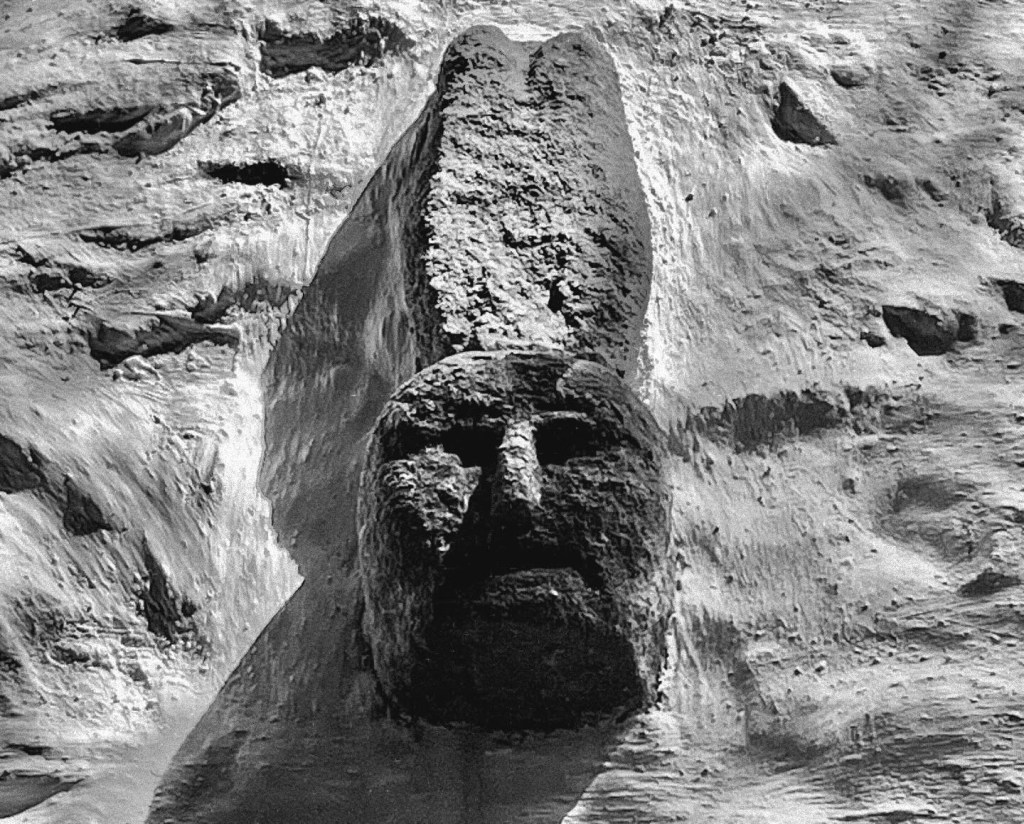
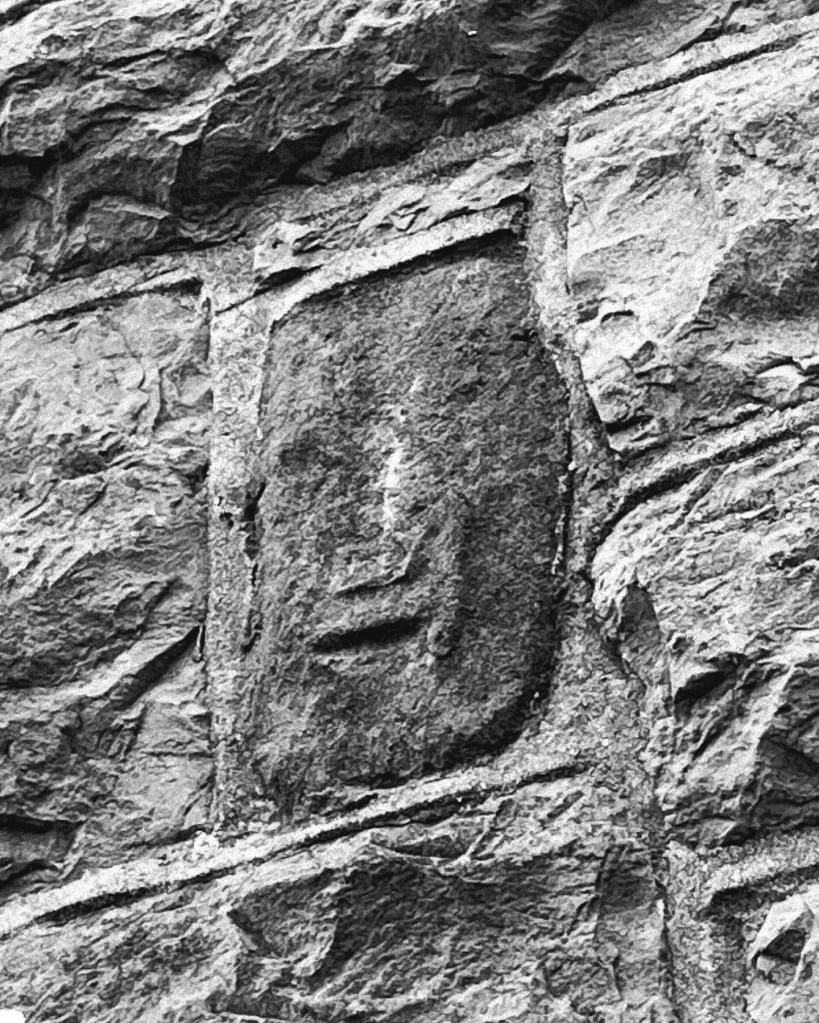
My favourite external carving is this mutilated weather-worn grotesque carved stone head above the 12th century north doorway.


Mae’r gangell a rhan ddwyreiniol corff yr eglwys yn dyddio o’r 14eg ganrif. Estynnwyd corff yr eglwys yn ystod yr 16eg ganrif. Adferwyd yr eglwys bresennol yn 1850 ac erbyn hyn dyma’r eglwys hiraf ar Ynys Môn yn dilyn estyniadau. Mae pennau cerrig cerfiedig ar y ffenestr ddwyreiniol o’r 14eg ganrif.
St Peter’s on Anglesey was originally known as Llananno. Believed to be founded in about 500 CE. The church is next to Llys Rhosyr, the Anglesey residence of the Princes of Gwynedd, and may have been connected to the royal court. After Gwynedd was invaded by Edward I in 1283, the community of Rhosyr was renamed Newborough for the displaced residents of Llanfaes, who were evicted by the king when Beaumaris was formed. Let’s start calling it Rhosyr or Llananno again.
The chancel and the eastern part of the nave are 14th century. The nave was extended during the 16th century. The present church was restored in 1850 and is now the longest church on Anglesey following extensions. There are carved stone heads as label stops on the 14th century east window. The carved font is 12th century and gravestones in arches in the north and south wall of the chancel are 14th century.
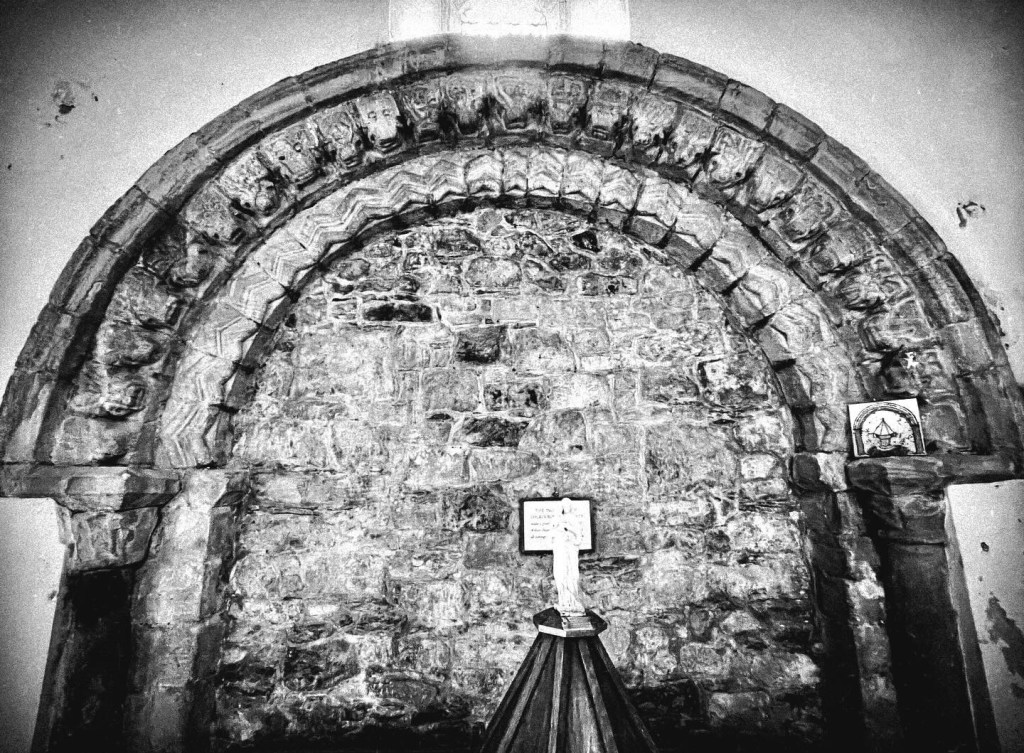
Nodwedd fwyaf trawiadol eglwys Beuno Sant yw’r bwa Romanésg o’r ddeuddegfed ganrif yn y wal orllewinol, wedi’i addurno â chefronau a phennau anifeiliaid.
The church at Aberffraw is dedicated to S. Beuno, founder of Clynnog Fawr in Gwynedd. The church was established in Aberffraw in the 7th century by St Beuno. The oldest parts of the church (south wall of nave and west wall) date from the 12th century. The church was enlarged in the 16th century when a second nave was built.
The most striking feature of St. Beuno’s in Aberffraw is the twelfth century Romanesque arch in the west wall, decorated with chevrons and animal and human heads.
See Carved Corbels, Brackets, and Label Stops in Anglesey Churches: A Survey’ by Canon Hulbert-Powell (in the 1944 Transactions of the Anglesey Antiquarian Society and Field Club) which explains:
“It has been reversed and reconstructed. This Arch with a fragment of walling is all that remains of the former Romanesque church which must have been a building of distinction, though small, worthy of the royal manor and the Palace of the Princes of Gwynedd.”

‘Twrog, son of Ithel Hael, is said to have had his residence in the parish of Bodwrog four miles from Llangefni. He accompanied Cadfan, whose inscribed stone is in Llangadwaladr Church when he entered Wales in the sixth century. The parish church is dedicated to him, which shows the existence of an earlier building on this site. The present church, much restored, was built in the late fifteenth century. There is a carved stone of a bull’s head over the south doorway. On the spandrel of the north doorway, now converted into a window, is a similar bull’s head with two smaller ones. These heads are not arranged in heraldic fashion; in this they differ from the coat of arms of the Llywarch ap Bran family, “a chevron between three choughs or crows (ravens) each in his beak an ermine spot of the same. This is found on the east spandrel of the south door where the chevron and the birds are correctly placed though with a vertical slope. The spandrel carvings on the opposite side in each case are floral. The bulls heads refer to the Bulkeley family of Baron Hill, Beaumaris. Their escutcheon is, “sable a chevron between three bulls’ heads argent affronted cabossed and horned.” The connection of this family with Anglesey began with the arrival of William Bulkeley as constable of Beaumaris castle in 1410. The church at Bodwrog was rebuilt during the Tudor Henry VII.’s reign (1485—1509) when Wales was quiet, and consequently this was a period of great building activity. Richard Bulkeley was Archdeacon of Anglesey in 1500 and would be concerned in the re-building of the church and was probably a benefactor.’

St Deiniol Church, Llanddaniel Fab, Anglesey. Ancient site rebuilt in the 19th century although the lower parts of the nave walls are thought to be medieval. The vestry has reset medieval moulded jambs and a medieval carved human face forms the keystone arch. There is a large slate roofed lychgate. No longer used by the Church in Wales.
Angharad Llwyd in 1833 on the earlier church: “The church, dedicated to St. Daniel Vab (whose day is celebrated on September 11th) is a very ancient and dilapidated structure, originally erected in the year 616, and exhibiting some good specimens of the architecture of a very remote period. The resident population in 1821 was 384, and 372 in 1831.”
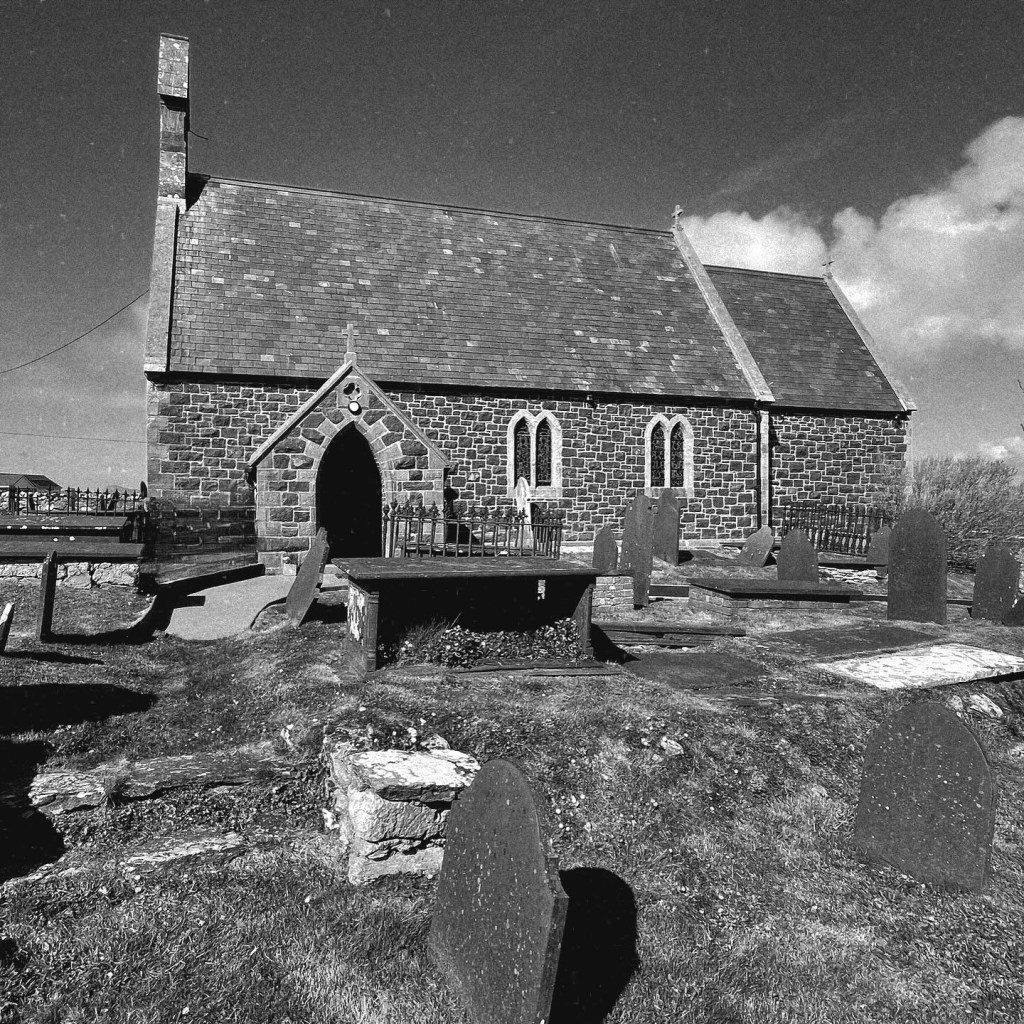
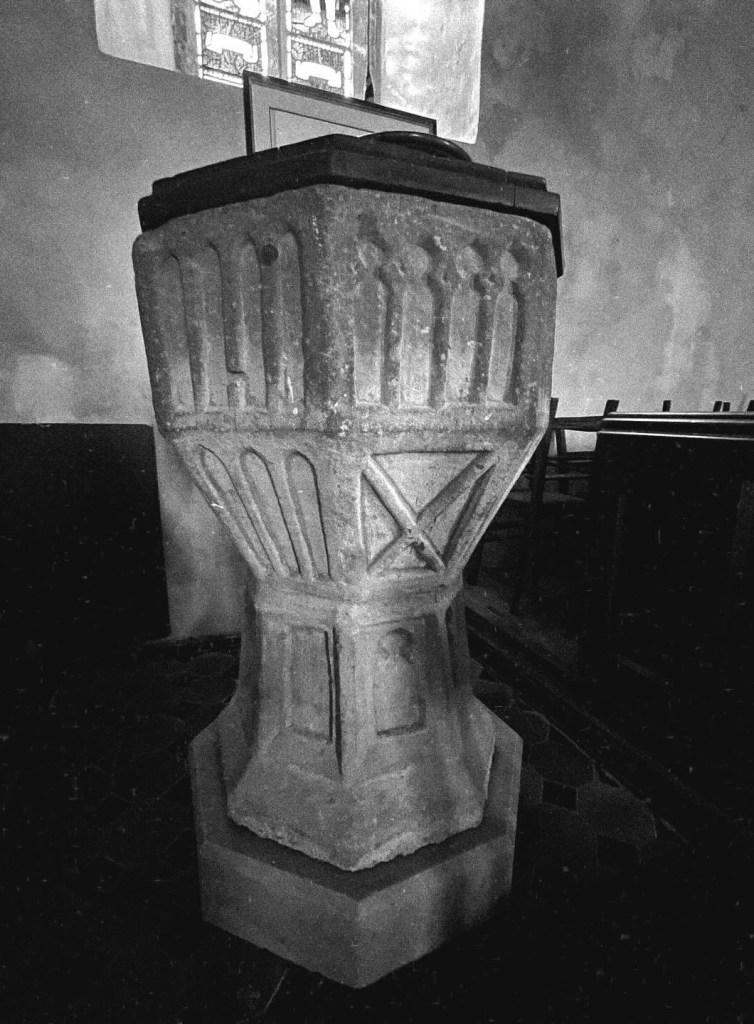
St Gwenfaen, Rhoscolyn, Anglesey. Gwenfaen was a 7th century saint who had her cloister at Rhoscolyn (the old name was Llwanwenfaen). Gwenfaen was daughter to Pawl Hen of Manaw, and sister to Peulan. There has been a church dedicated to her on the site since 630AD. The present building dates from 1871-75, when it was reconstructed with stone from a 15th century church that was destroyed by fire. The 15th century doorway with casement-moulded jambs and a round head in a square frame with enriched spandrels was reset in the south wall. The elegant font with cusped arches is 15th century.
Information on church notice board: “Legend has it that the powerful Anglesey Druids chased St Gwenfaen away from her cloister. She escaped by climbing onto rocks off Rhoscolyn Head, where she was rescued by angels, who carried her to Heaven. The bay is still called Saint’s Bay and we celebrate her feast day on 4th November.
St Gwenfaen was famous for healing mental illness and her holy well became an important pilgrimage site in medieval times. People still visit the well, sometimes leaving offerings of two white pebbles.”
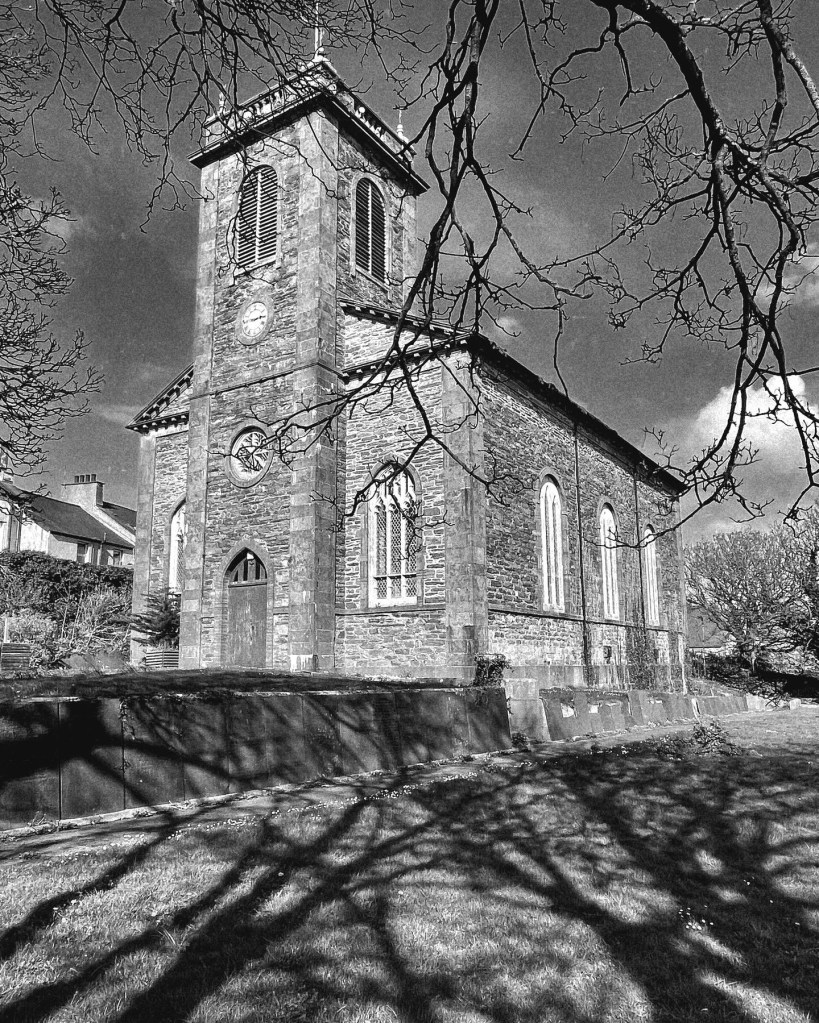
Ancient site – present church built in 1800. Angharad Llwyd (1833) states Eleth “flourished from A.D. 640 to 700.”
From ‘The lives of the British saints; the saints of Wales and Cornwall and such Irish saints as have dedications in Britain’ by Baring-Gould, S. (Sabine), (1834-1924):
“ELAETH, king, saint, and bard, was the son of Meurig ab Idno, of the race of Coel Hen, by Onen Greg (‘Ash-tree the Hoarse’), daughter of Gwallog ab Lleenog, one of the three ‘Battle-pillars of Britain.’ Gwallog is sometimes also given as father of Dwywai, wife of Dunawd.
Elaeth Frenin [Elaeth the king] seems to have been in the earlier part of his life king or chieftain of a district somewhere in the north of England, but having been overpowered by his enemies, and having lost his territory, he sought refuge in Anglesey, and became a Saint or monk of Bangor Seiriol at Penmon. Whilst there he founded the church of Llan Elaeth Frenin, now known as Amlwch, in that island.
His Holy Well there, Ffynnon Elaeth, was formerly held in high repute for its cure of various ailments, and also for its fish divination. An eel was kept in it, and a person living close by, acting as “priest,” drew his auguries from the motions and actions of the eel when it appeared. Sometimes it remained out of sight for days, and the inquirer was in consequence detained there until it thought good to make its appearance.”
Llwyd refers to: “‘Cyngogion Elaeth’ …ancient moral verses, said in the Myvyrian Archaiology, to have been composed by him.”
Two of Elaeth’s religious poems are preserved in ‘The Black Book of Carmarthen’ (the earliest surviving manuscript written solely in Welsh from the 13th century; bound in black and associated with the Priory of St. John the Evangelist and Teulyddog at Carmarthen, currently part of the collection of the National Library of Wales.
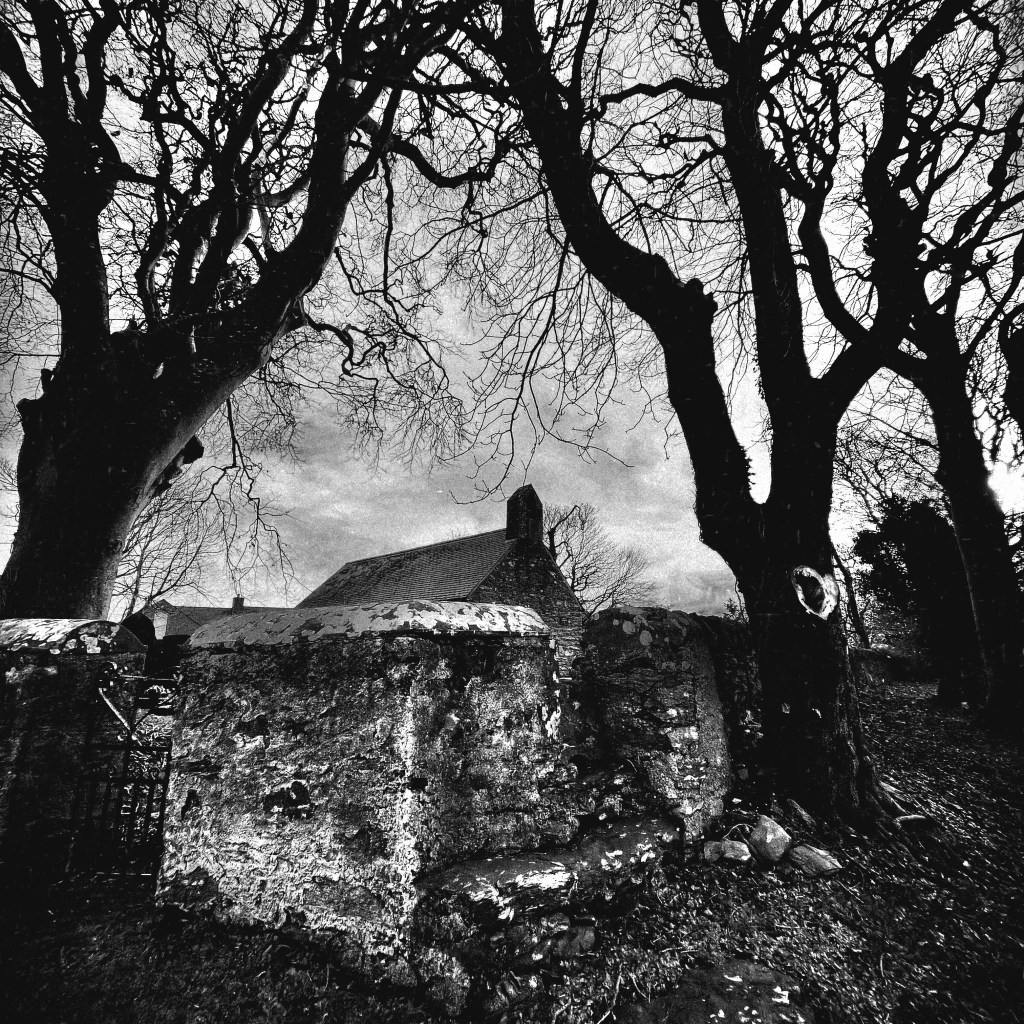
Rwy’n credu bod eglwys wedi bod ar y safle ers y 13eg ganrif. Mae’r eglwys un gell bresennol yn dyddio o’r 18fed ganrif gyda thu mewn Sioraidd hwyr.
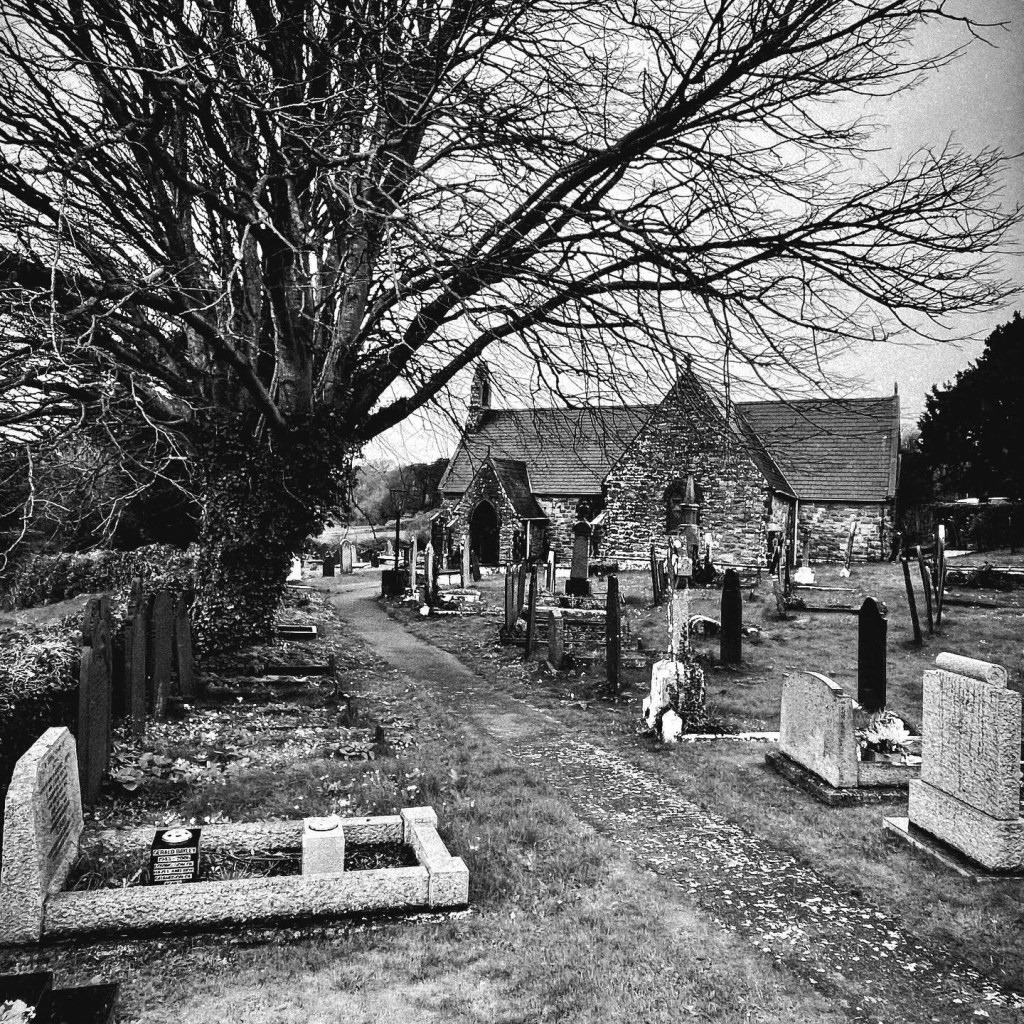
St Cawrdaf Church, Llangoed, Anglesey. This a Medieval site but the present cruciform church was rebuilt in the 17th century and 1881. Cawrdaf died in ca. 560. The son and successor of Caradog, chieftain of Brecknock and Hereford, Saint Cawrdaf ended life as a monk under Saint Illtyd. Their Feast Day is 5 December.
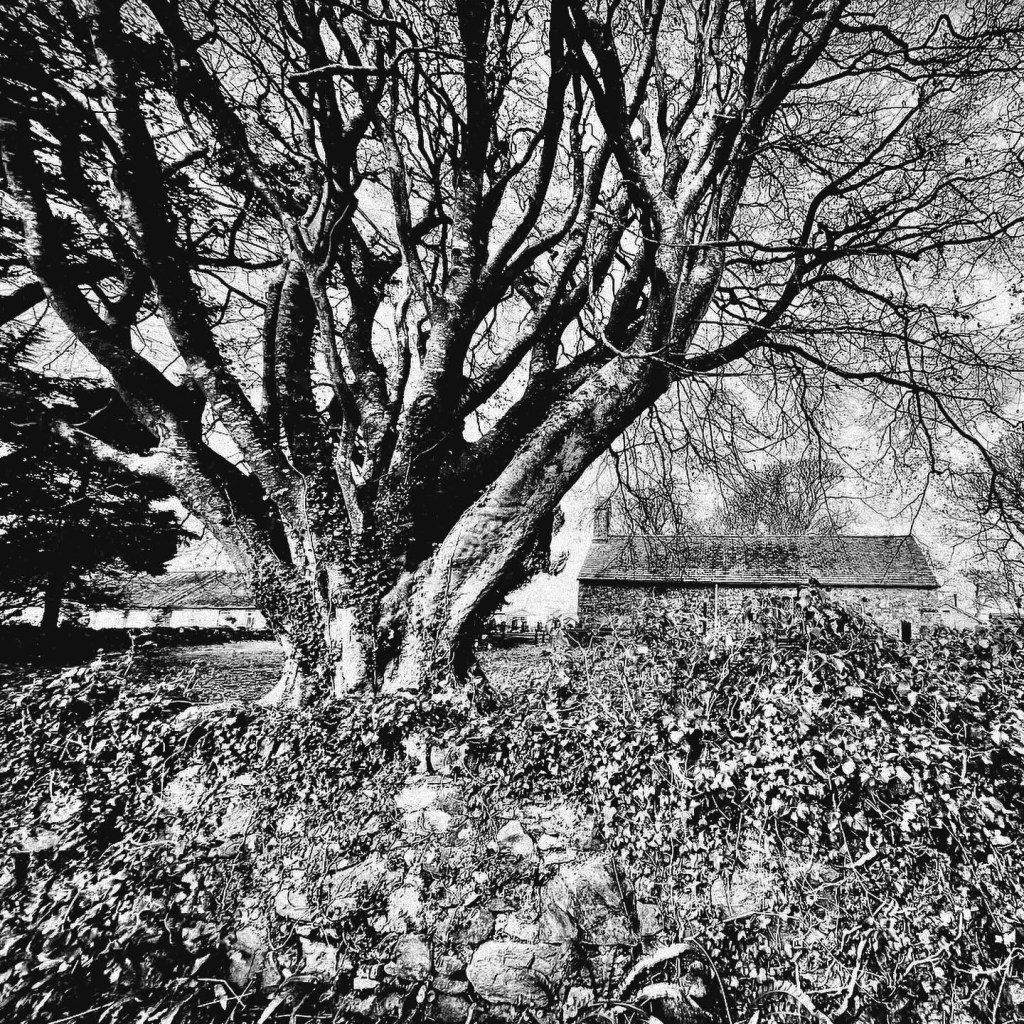
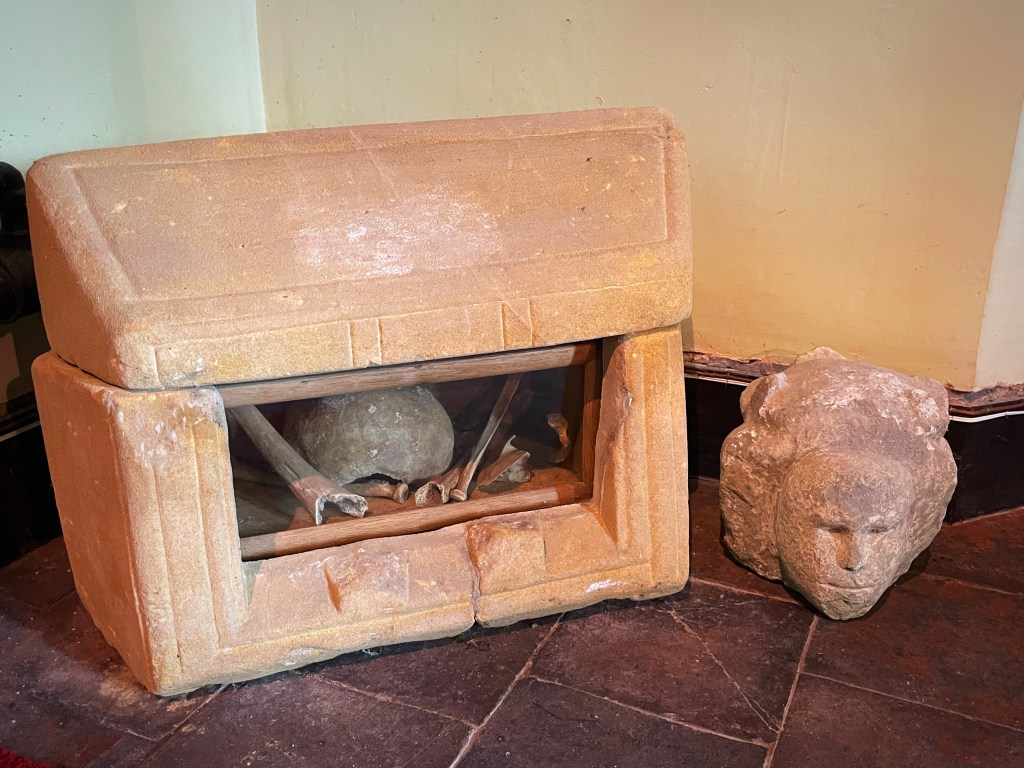
Mae’r adeilad yn dyddio o’r 15fed ganrif, ac mae’n cynnwys ffont garreg gerfiedig o’r 12fed ganrif (sy’n cynnwys pennau dynol) a chaead arch addurnedig o’r 13eg ganrif. Mae’r gloch wedi’i harysgrifio: 1582. Roedd yr hynafiaethydd, Henry Rowlands (y mae ei fedd yr wyf yn ymweld ag ef yn Llanedwen), yn ficer y Santes Fair ar ddiwedd yr 17eg ganrif a dechrau’r 18fed ganrif.


Adeiladwyd yr eglwys ganoloesol ar domen uchel a allai fod yn gynhanesyddol yn ôl Comisiwn Brenhinol Henebion Cymru. Yr eglwys hardd, ascetig hon yw’r unig olion sy’n weddill o drefgordd a ddifethwyd gan y Pla Du. Mae’r ffont gwreiddiol o’r eglwys (isod) nawr yn eglwys Llanfaelog.

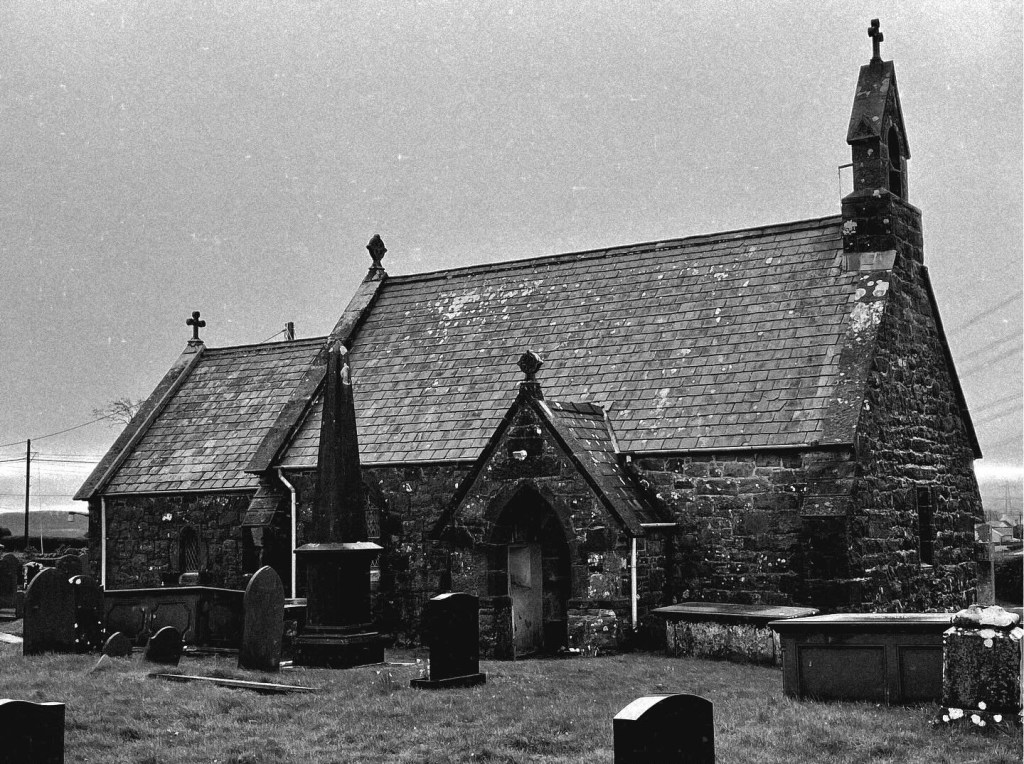
Daw enw’r plwyf o’r eglwys a gysegrwyd i Sant Mihangel, ac o’r ffaith ei bod wedi bod yn un o seddau’r beirdd neu’r Derwyddon ers talwm. Dywedir fod y lle yn arfer bod yn hoff enciliad y beirdd Cymreig. Mae’r groes ddirgel hynafol yn y fynwent yn llawer cynharach na’r eglwys bresennol.
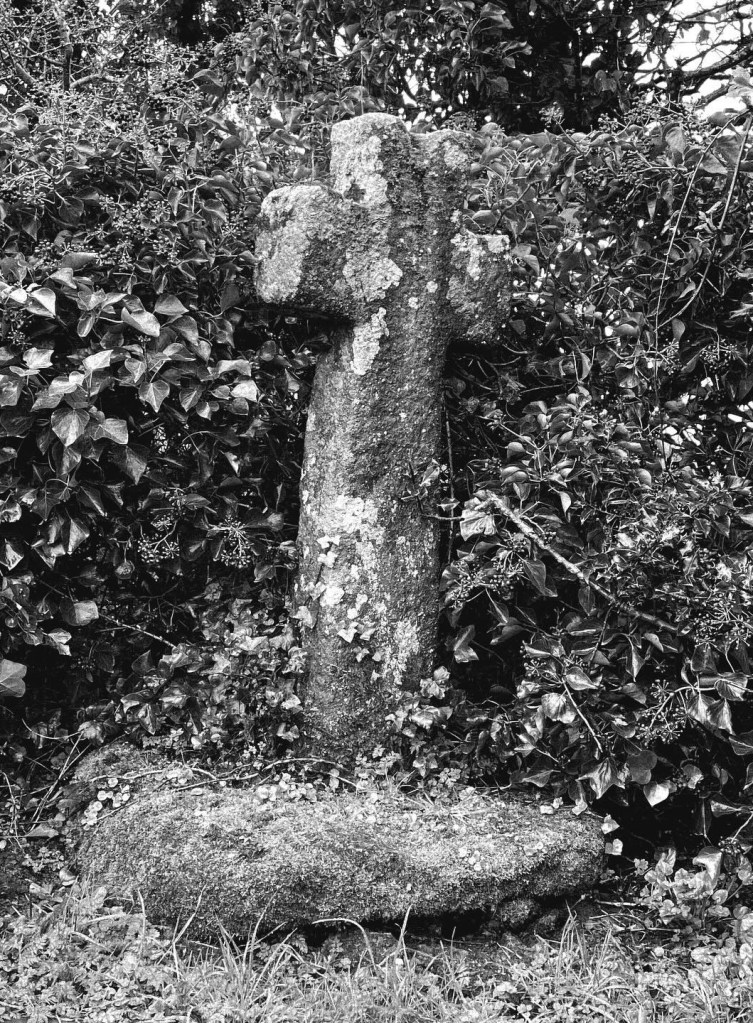
The parish derives its name from the church dedicated to St. Michael, and from its having anciently been one of the seats of the bards (beirdd) or Druids. It is said the place was formerly a favourite retreat of the Welsh bards hence the name. The site is medieval but the church was rebuilt in 1811 and 1888. The north door of the nave and north/south windows of the chancel are medieval. There’s an early carved stone on the belfry. The ancient mystery cross in the churchyard is much earlier than the present church.

St Rhyddlad’s Church, Llanrhyddlad, Anglesey. Ancient site from 570 CE rebuilt near the original site in 1858. St Rhyddlad is said to be the daughter of the King of Leinster (an ancient province of Ireland). The site overlooks the Irish Sea and Holyhead Mountain. Near the charming Porth Swtan (or Church Bay as the English call it). We need to fiercely protect the original names for these ‘tourist’ spots.

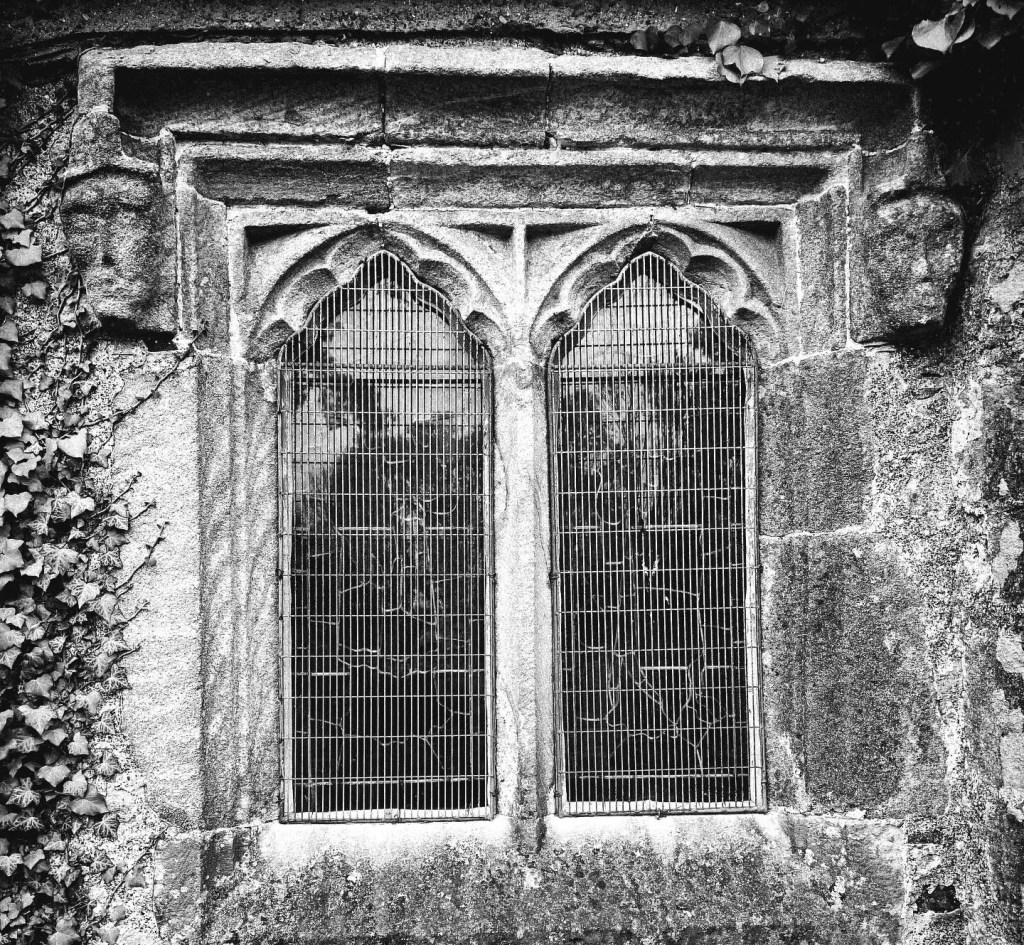
Pennau cerrig cerfiedig o boptu ffenestr a ailosodwyd yn y bymthegfed ganrif. Mae gan y rhain affinedd â’r pennau hirgul tebyg yn hen eglwys Sant Nidan ar yr ynys.
Carved stone heads either side of a reset fifteenth century window. These have an affinity with the similar elongated heads at the old church of St Nidan on the island.
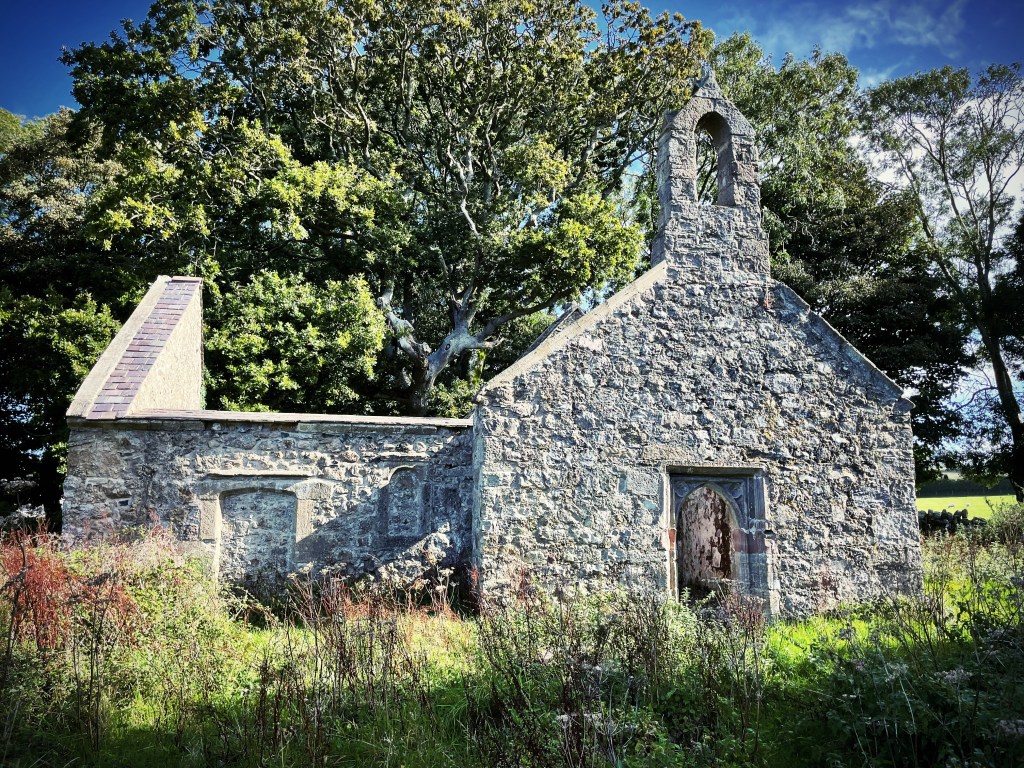
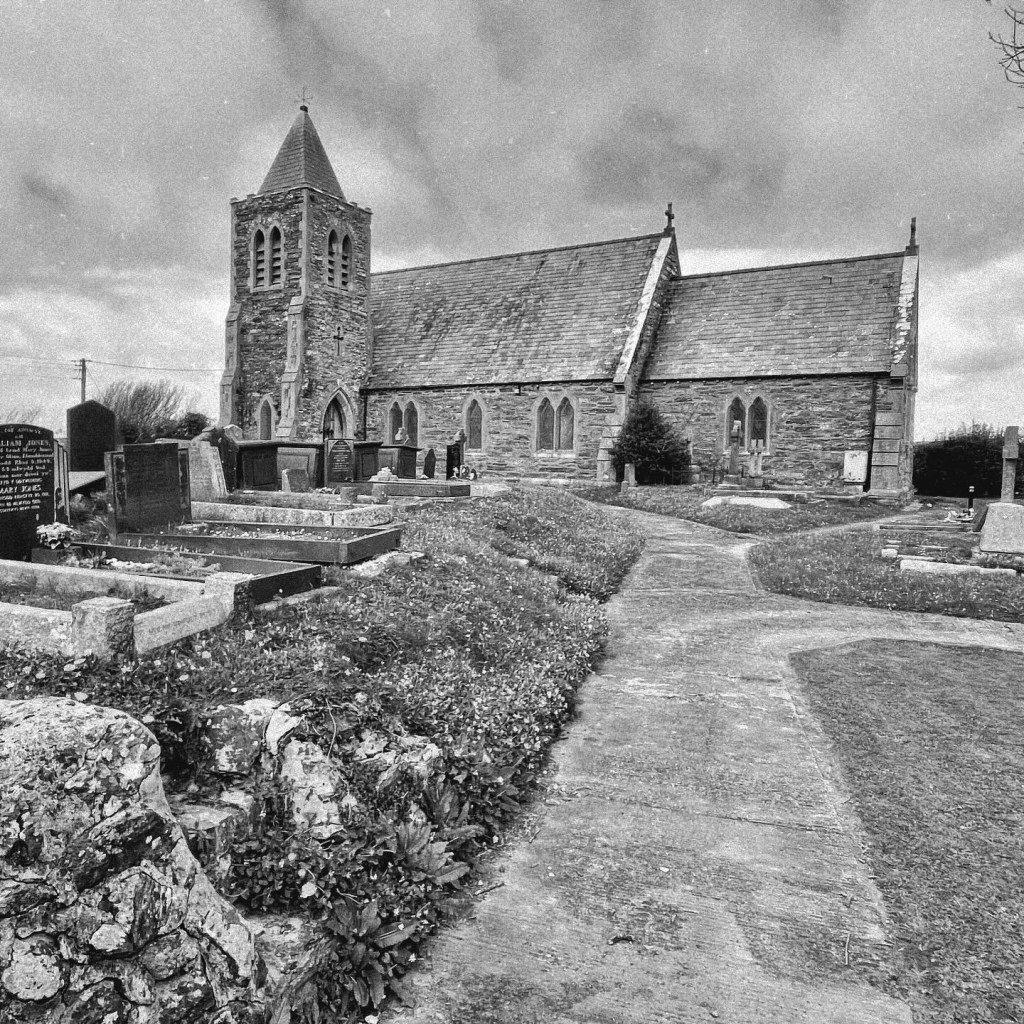
St Marcellus & St Marcellinus, Llanddeusant, Anglesey. St Marcellus and St Marcellinus (as their names suggest) were not Celtic saints; they may have been 4th century bishops from the Mediterranean. The Medieval church was replaced in 1868. The 12th century font is from the old church.
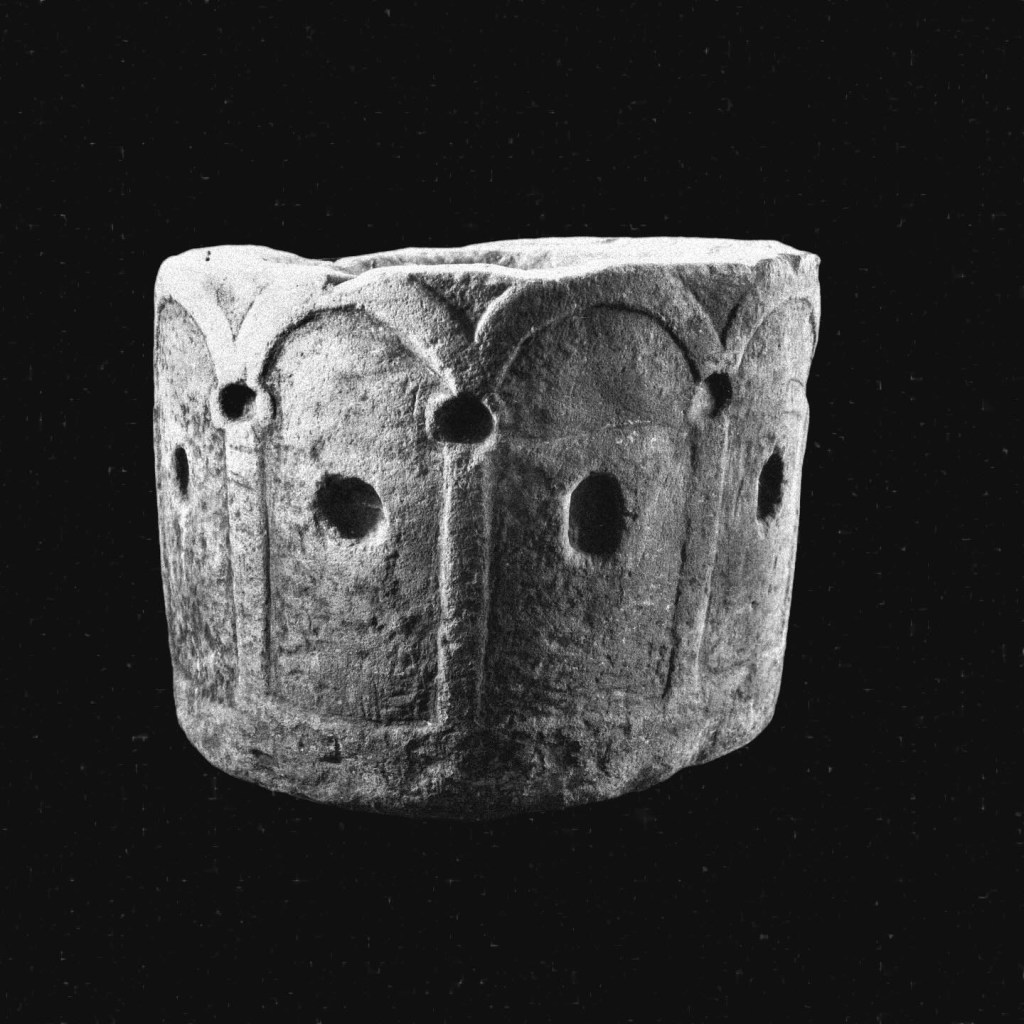

St Ffraid, Treaddur Bay, Anglesey. Celtic goddess to Catholic Saint. Legend has it she was carried over the Irish Sea on a square of green turf and arrived at Trearddur Bay, Anglesey. This Celtic cross from 2000 (with Brigid’s / Bride’s cross and a carving of her hand carrying a flame) is on the site of Towyn-y-Capel; Capel Sant Ffraid: site of Brigid’s Chapel and Excavated Cemetery (the sand dunes surrounding the site of the cross form the surface of what was a burial ground), Treaddur Bay. The site was noted for the tiered cist burials that eroded from the mound. Over sixty burials were recorded from the seventh to twelfth century.
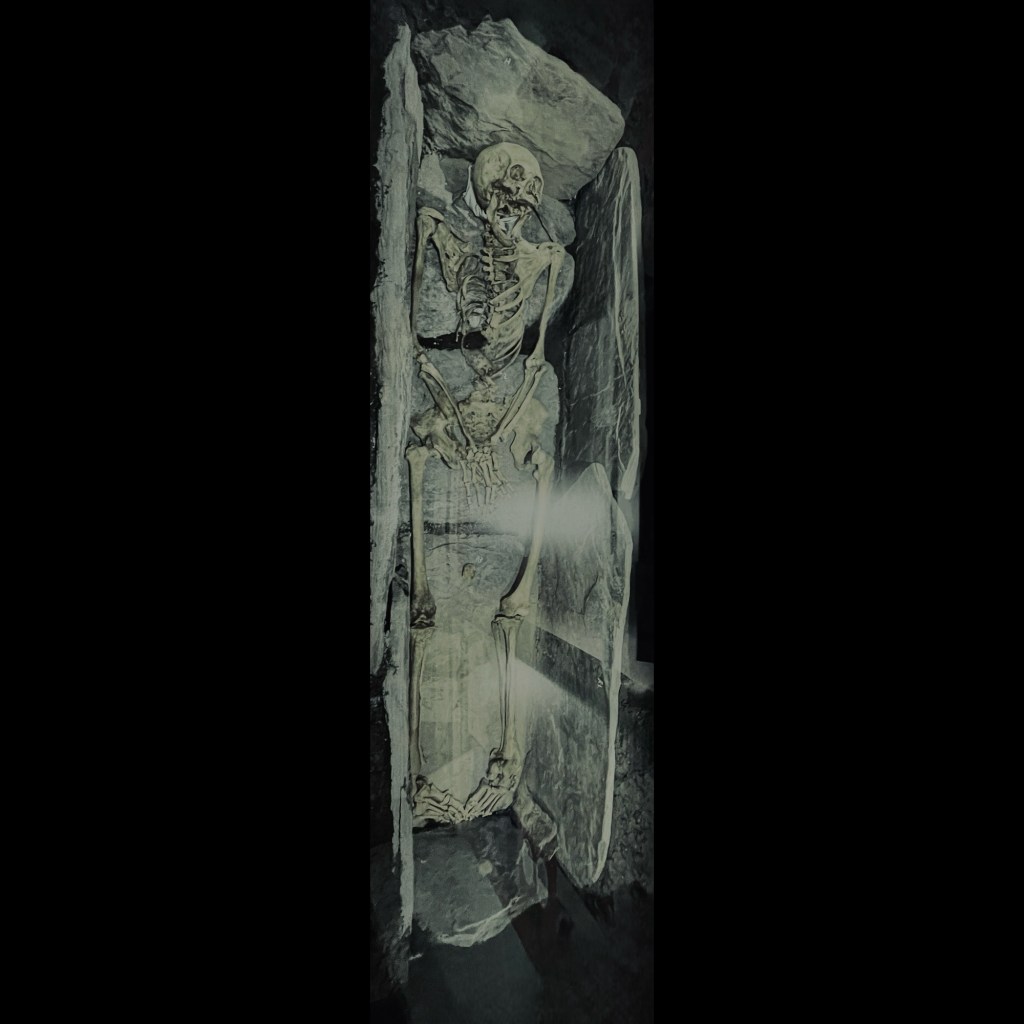
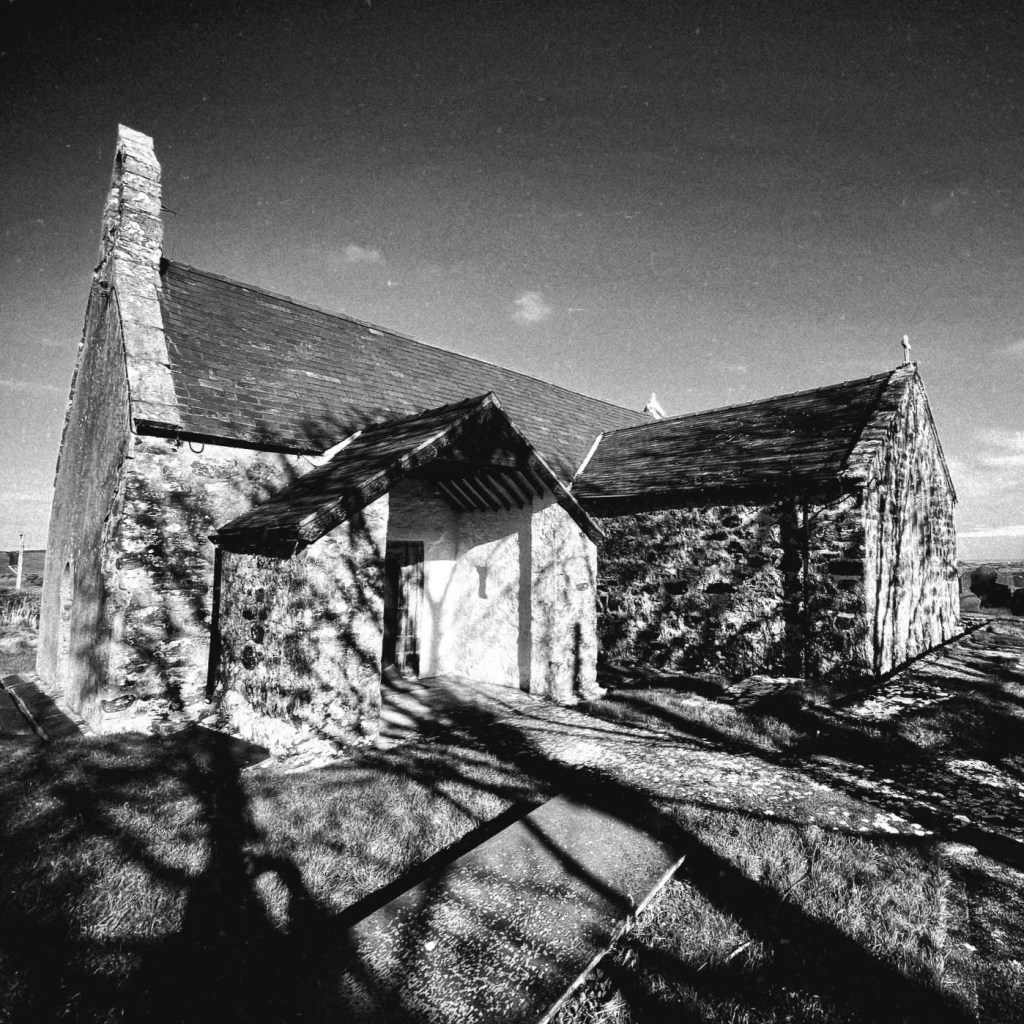
Roeddwn wrth fy modd ei fod ar agor er mwyn gweld y garreg goffa o’r 14eg ganrif i Iestyn, o’r un gweithdy a’r garreg i Pabo Sant yn Eglwys Sant Pabo, Llanbabo. Mae yna hefyd ffont hardd o’r 12fed ganrif.
St Iestyn’s Church, Llaniestyn, Anglesey. St Iestyn is said to have founded the church in the 7th century. The earliest parts of the present building date from the 12th century with 14th century additions.
The 14th-century memorial stone to Iestyn is from the same workshop as the stone to St Pabo at St Pabo’s Church, Llanbabo. There is also a beautiful 12th-century font.


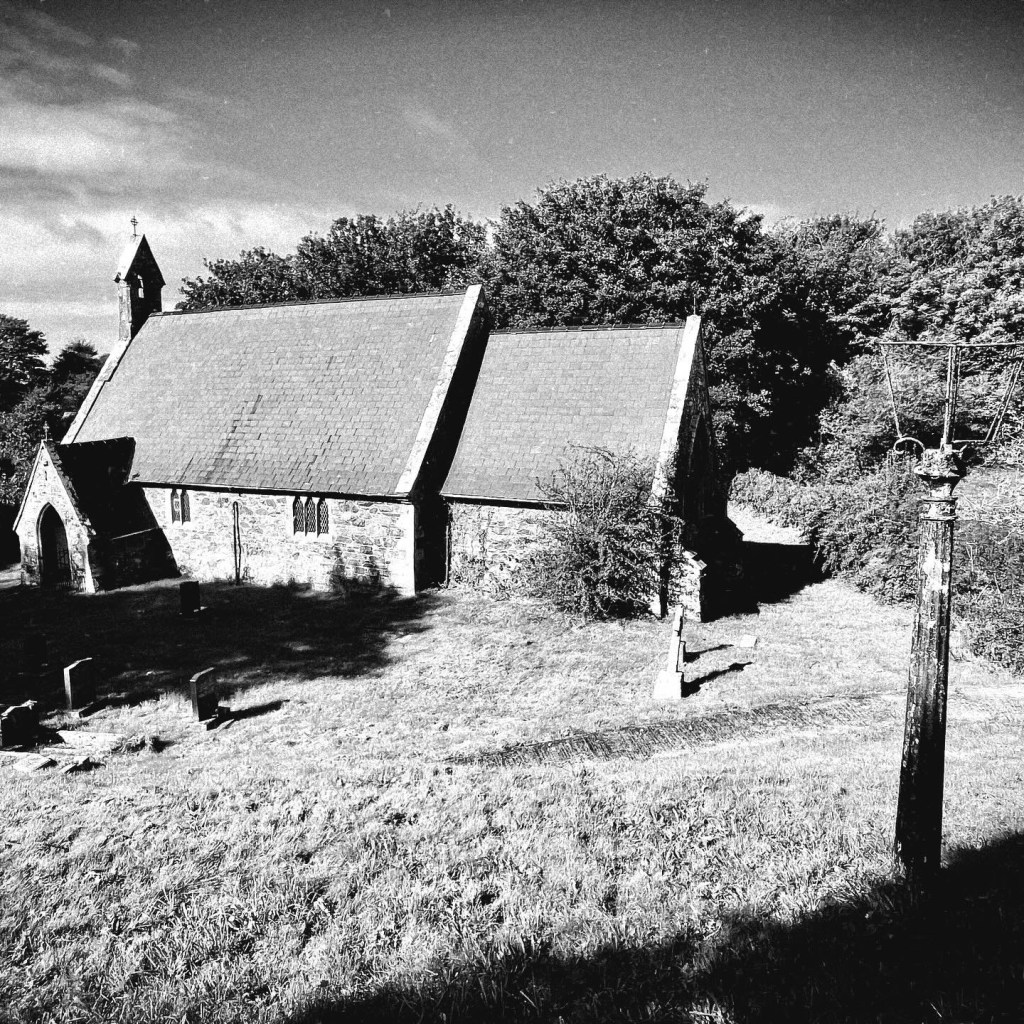
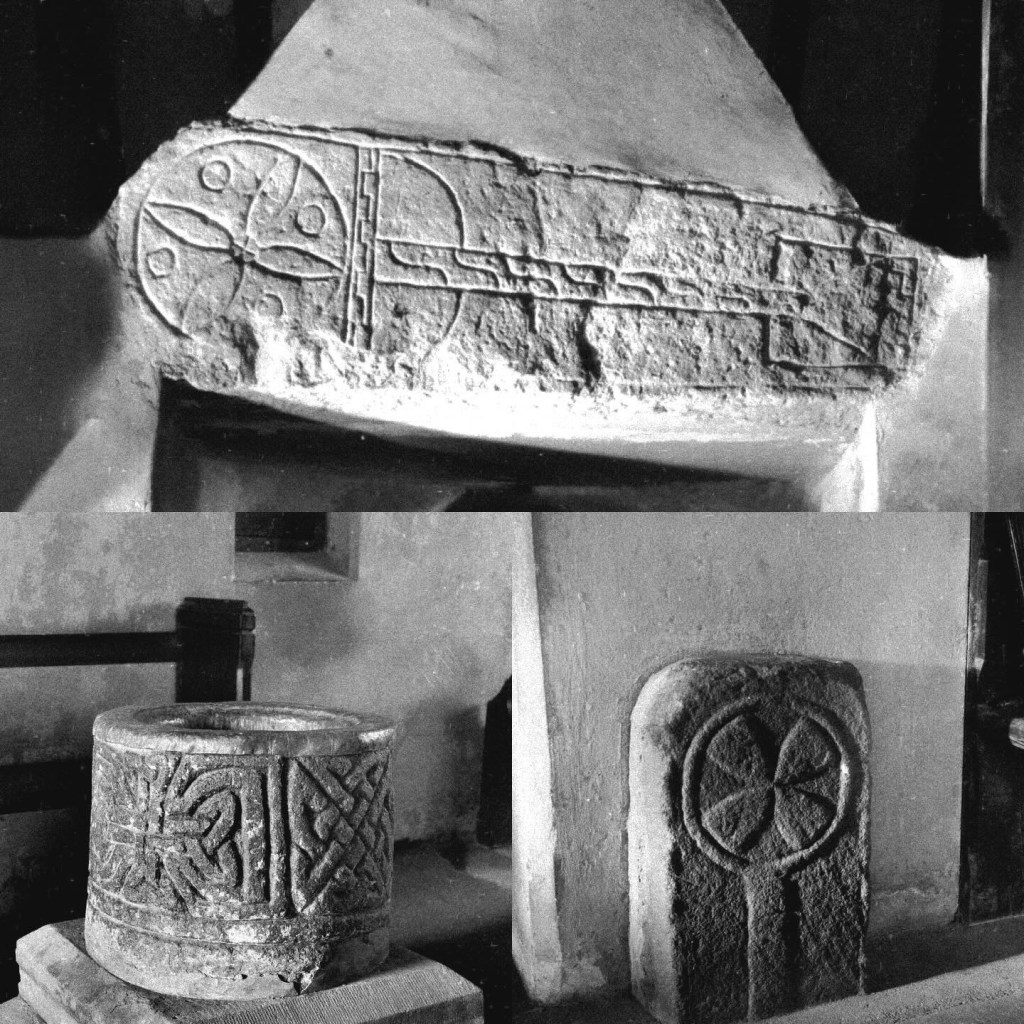
St Ceinwen (i.e. “fairest of the fair”) was daughter of Brychan Brycheiniog and sister of St Dwynwen and St Dyfnan. The church was established in the 7th century. There is a holy well in the dip of the churchyard. The present building dates from 1860 but has retained very early inscribed stones and font (photo montage from Coflein for educational purposes).

St Ana (Anau) Coedana, Anglesey. There used to be a medieval church here but it was rebuilt in 1892. It is surrounded by yew trees but I’m not terribly fond of this one. Angharad Llwyd (1833)on the earlier church: “The church, a small ancient structure, is supposed to have been built in 630, and dedicated to St. Ane, son of Caw Cawllog. Saints day kept on January 13.
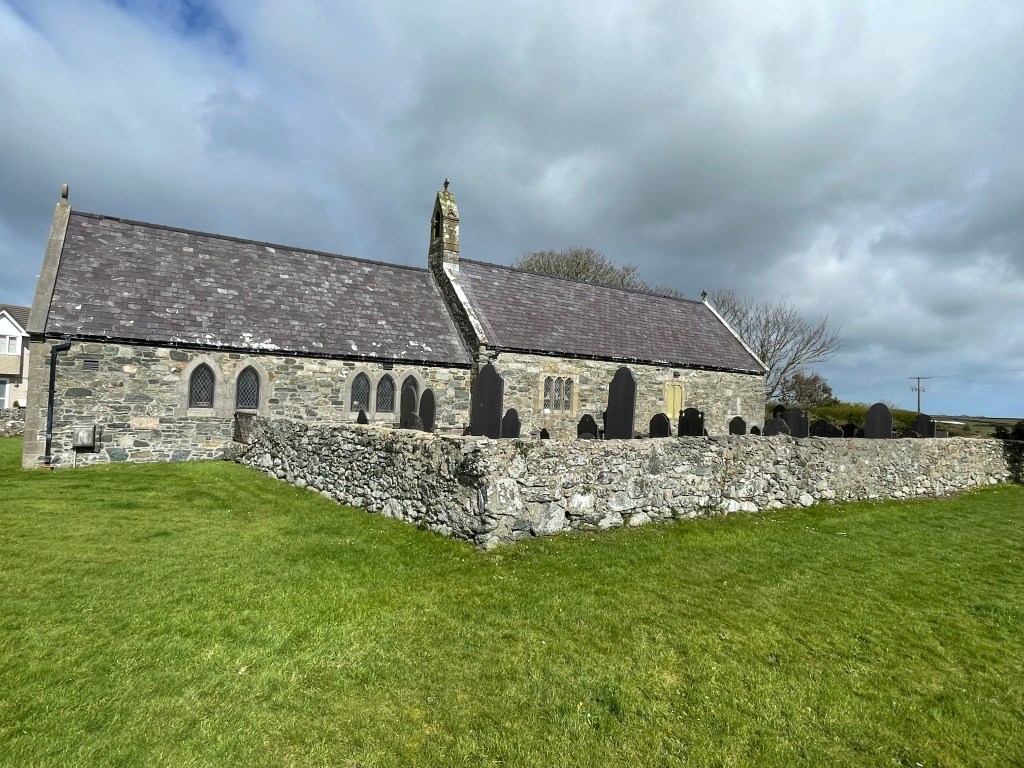
St Michael, Llanfihangel-yn-Nhowyn, Anglesey. Ancient site rebuilt in 1867 in 15th century Gothic style on the old foundations. Llanynghenedl church (see previous post) was moved here as the extension. Angharad Llwyd (1833): “On the common are vestiges of such primaeval habitations as those noticed by Rowlands in his Mona Antiqua; and near Towyn-trewyn is a crom-lech. The church is an ancient and venerable structure, built upon a lofty eminence, and forming a conspicuous and interesting object for many miles round.” No
cromlech to be seen now unfortunately.
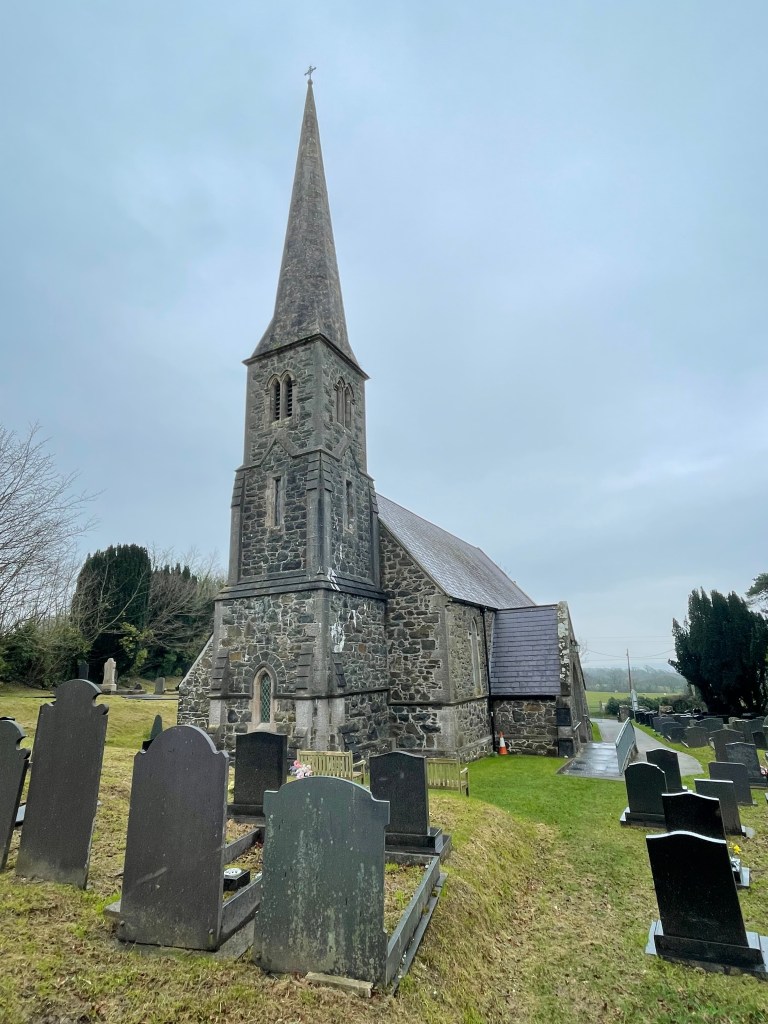
St Gwenllwyfo, Llanwenllwyfo, Dulas, Anglesey. The original church (now in ruins) is Medieval. Llanwenllwyfo means the church of St Gwen of the elms. The new church with its tall spire was built in 1856. The church is known for the 16th century stained glass from Flanders (donated in 1877). These were restored at Canterbury in 2001-2. There is a particularly beautiful panel featuring St Veronica and her sudarium in the East Window.

“Gobeithir y cewch gyfle i feddwl a myfyrio wrth ymweld yr adeiladau arbennig yma. Maent yn gofebau byw adeiladwyd ar bris mawr ac a gedwir hyd heddiw i’w pwrpas gwreiddiol sef i ogoneddu Duw.”
Yn ôl Enwogion Cymru, sant oedd Fflewin oedd yn byw yn nechrau’r chweched ganrif. Yr oedd yn un o feibion Ithel Hael, a chyda’i frawd Gredifael y penodwyd ef i lywyddu mynachlog Pawl Hen, neu Paulinus, yn Nhygwyn ar Dav, yn sir Gaerfyrddin.
Ceir fynediad i’r eglwys bresennol trwy fuarth. Mae carreg fedd ganoloesol wedi’i hailddefnyddio mewn sil ffenestr. Roeddwn wrth fy modd hefo Ffliwt Fflewin!
According to Enwogion Cymru, Fflewin was a saint who lived in the early part of the sixth century. He was one of the sons of Ithel Hael, and with his brother Gredifael was appointed to preside over the monastery of Pawl Hen, or Paulinus, at Tygwyn ar Dav, in Carmarthenshire.
During 1859-74 the Rector was the Rev’d. Morris Williams MA who received the name ‘Nicander’ when he won the Chair at an Eisteddfod in 1849. His many works can be found in the Church Hymn Book.
The present church is accessed through a farmyard. A medieval gravestone has been reused in a window sill.

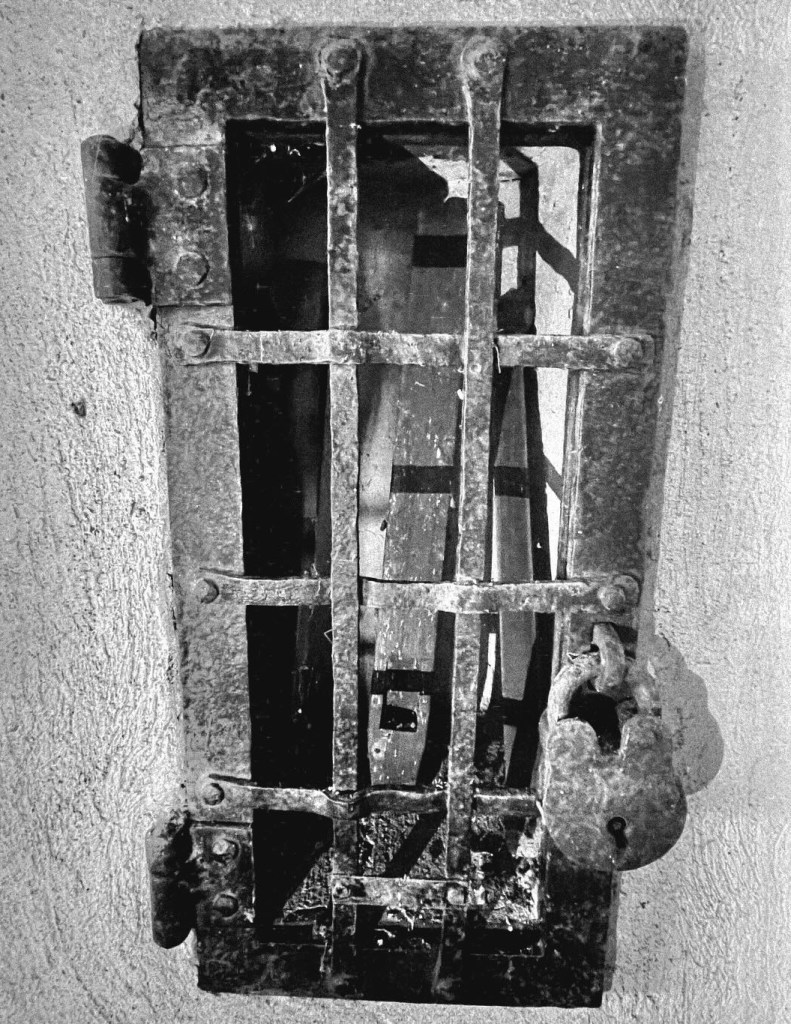
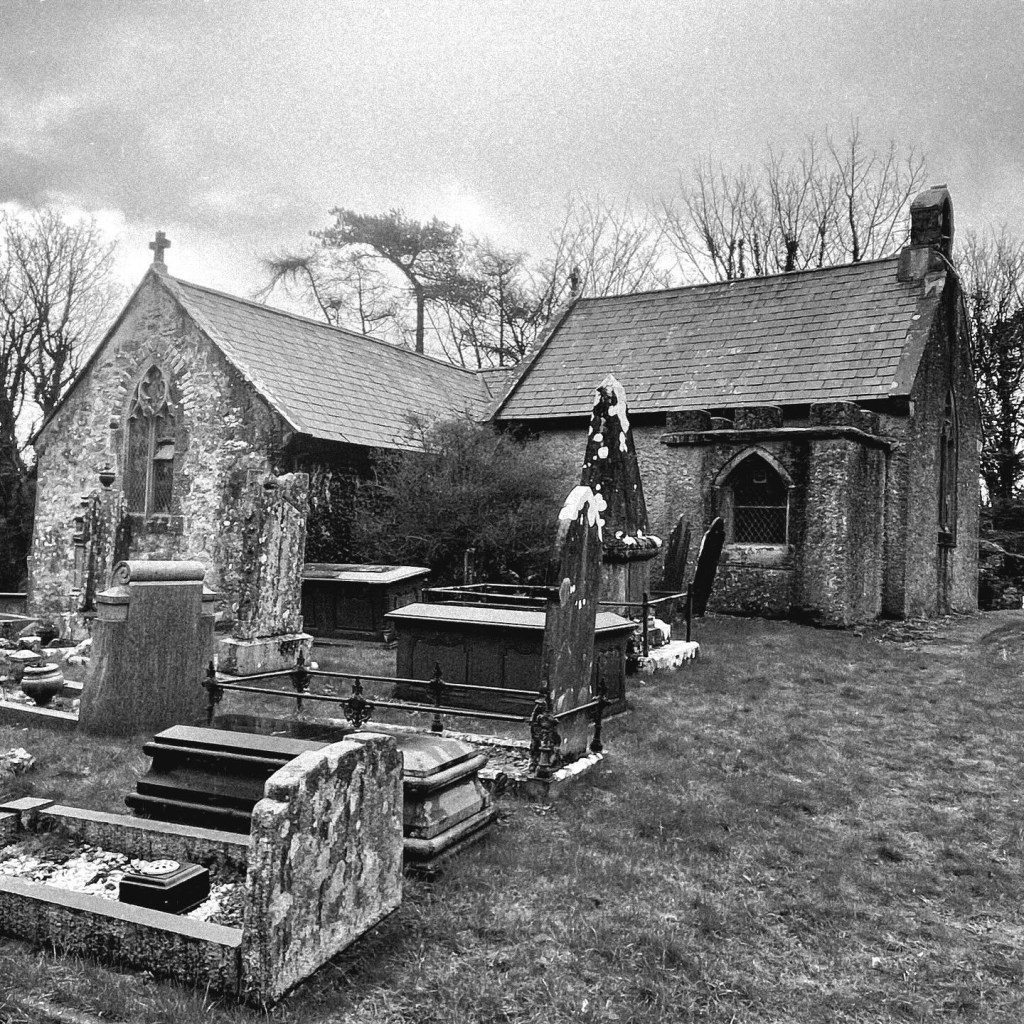
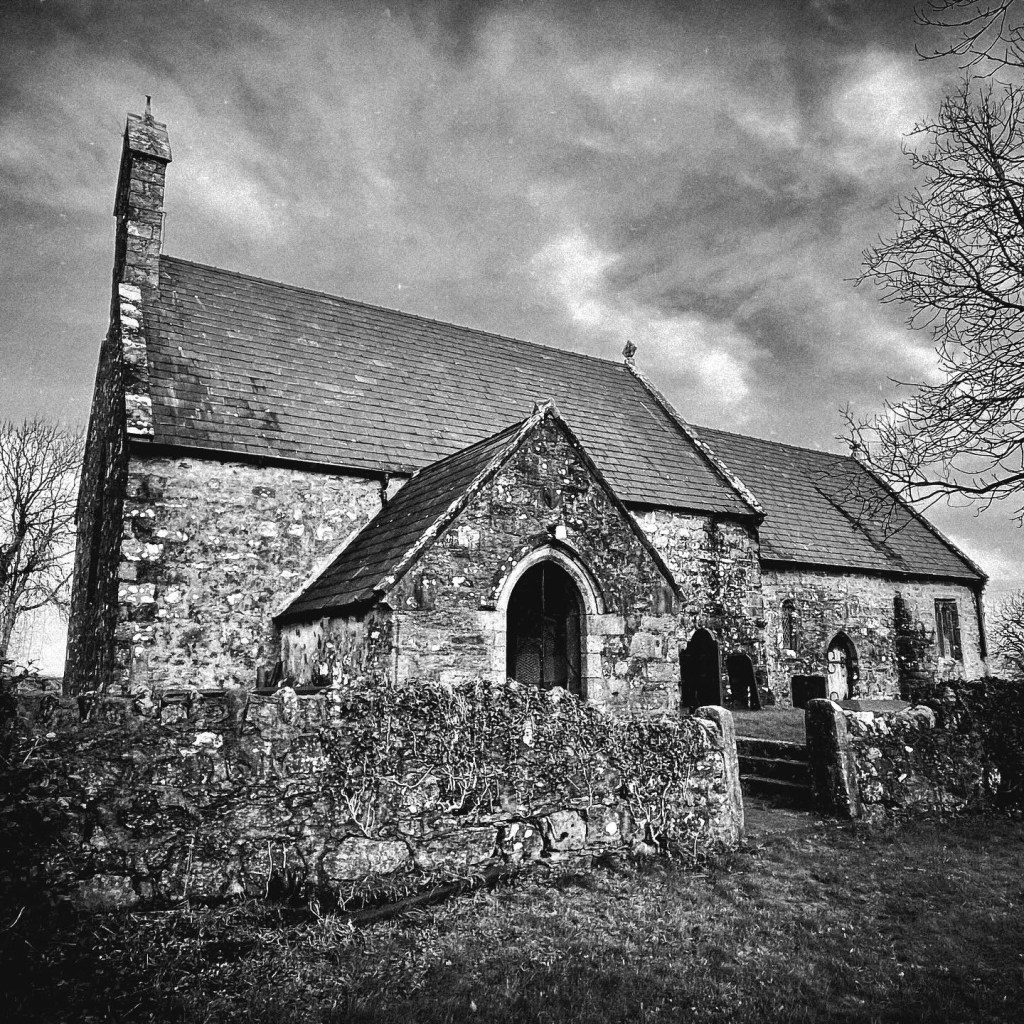
Mae’r corff a’r gangell o’r ddeuddegfed ganrif, capel i’r gogledd a ychwanegwyd yn yr unfed ganrif ar bymtheg, ac ychwanegwyd festri gogleddol a phorth deheuol yn y bedwaredd ganrif ar bymtheg. Mae’r bwa cangell a ffenestr rwystredig yn wal y de yn ddeuddegfed ganrif. Ceir croeshoeliad carreg, wedi’i gerfio’n amrwd, yn ôl pob tebyg yn y drydedd ganrif ar ddeg.
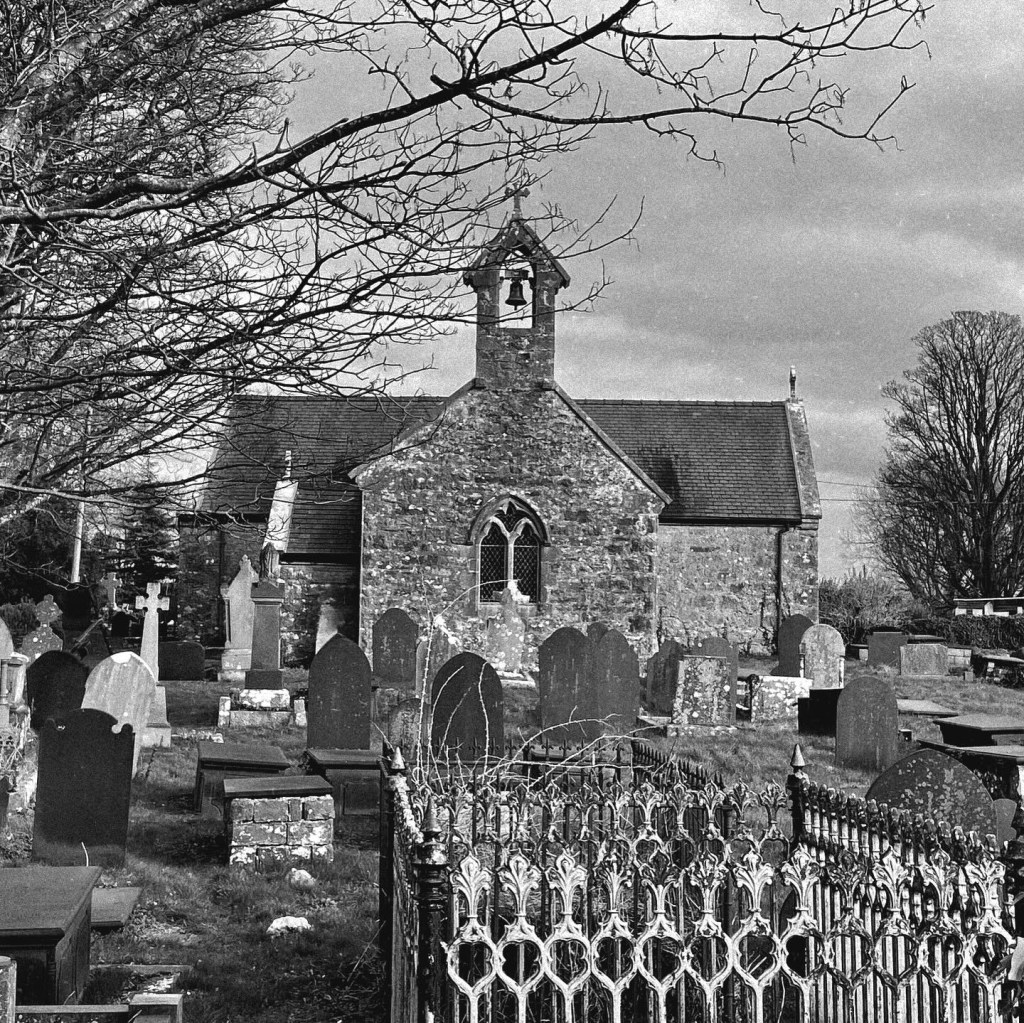
The bell dates from the late 13th century. It bears the Latin inscription AVE MARIA GRACIA PLENA in Lombardic letters.
The church is associated with the 1859 wreck of the Royal Charter off Anglesey when it was used as a temporary mortuary.
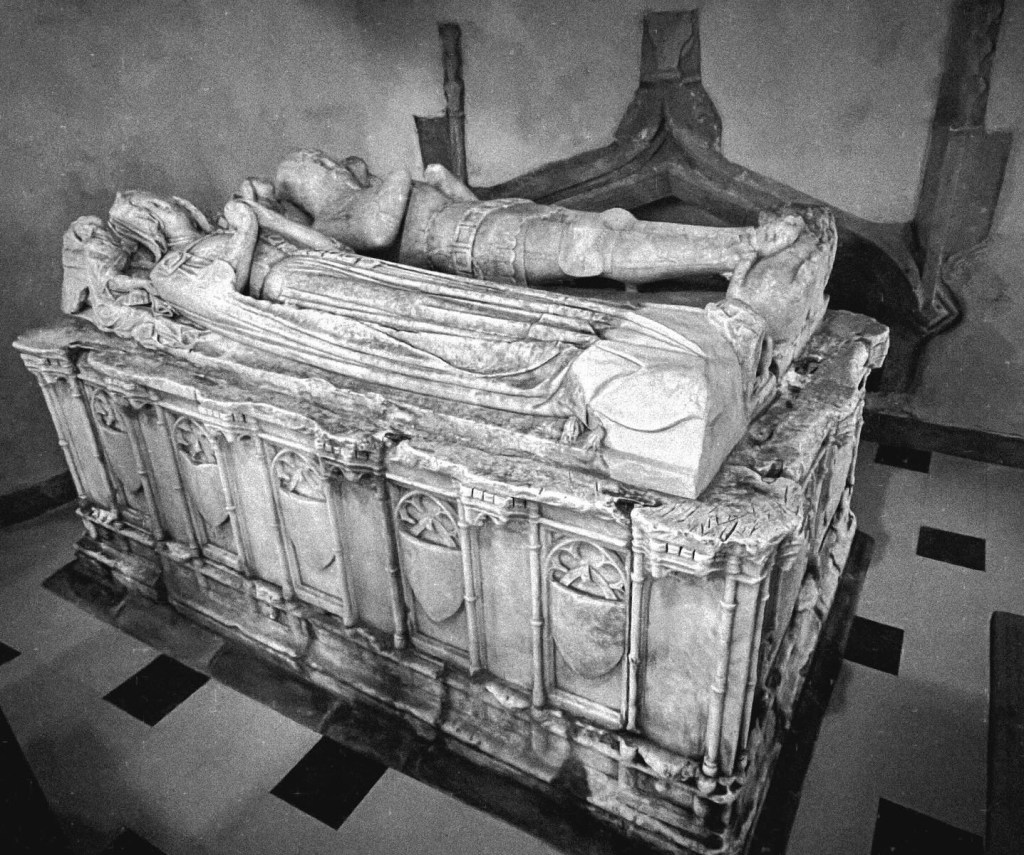
Lleolir cist feddrod alabastr Gronw Fychan (cefnder Owain Glyndŵr) a’i wraig Myfanwy o ddiwedd y bedwaredd ganrif ar ddeg y tu mewn i gapel gogleddol yr eglwys. Roedd Gronw Fychan yn hen-ewythr i Owain Tudur ac yn gyndad i deuluoedd Tuduraidd diweddarach Ynys Môn.
St Gredifael’s Church, Penmynydd. Medieval church from ca. 1400 with north chapel and south porch added in the early fifteenth century. The windows are original and there are some Norman carved stones of chevron pattern built in to the South wall of the chancel.
The late fourteenth century alabaster tomb chest of Gronw Fychan (cousin of Owain Glyndŵr) and his wife Myfanwy is located inside the north chapel of the church. Gronw Fychan was the great-uncle of Owain Tudor and ancestor of the later Tudor families in Anglesey.

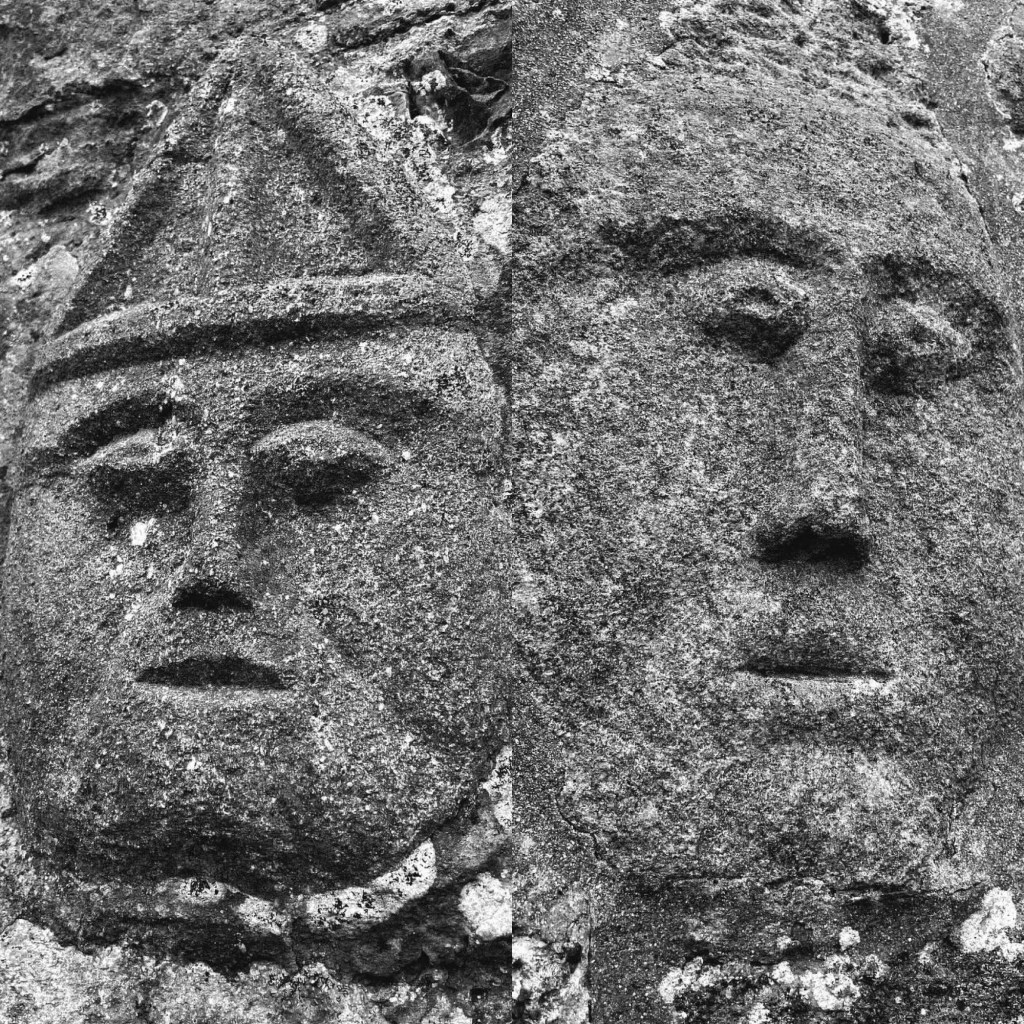
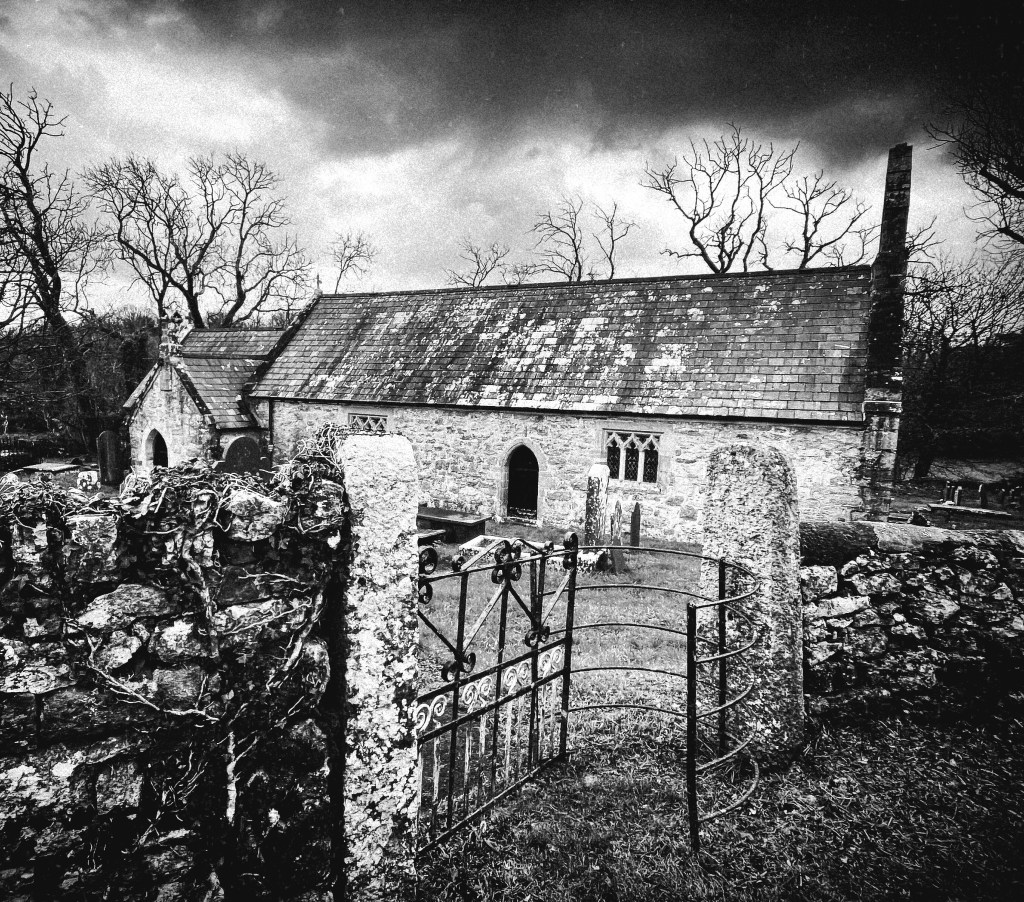
Mae’r eglwys bresennol yn cynrychioli’r eglwys Ganoloesol wreiddiol, yr ychwanegwyd y Gangell iddi yn y 15fed ganrif, pan fewnosodwyd y bwa cangell yn y wal dwyreiniol wreiddiol. Roedd croes gynnar yn y fynwent ond dim ond y rhan isaf sy’n aros nawr yn anffodus.
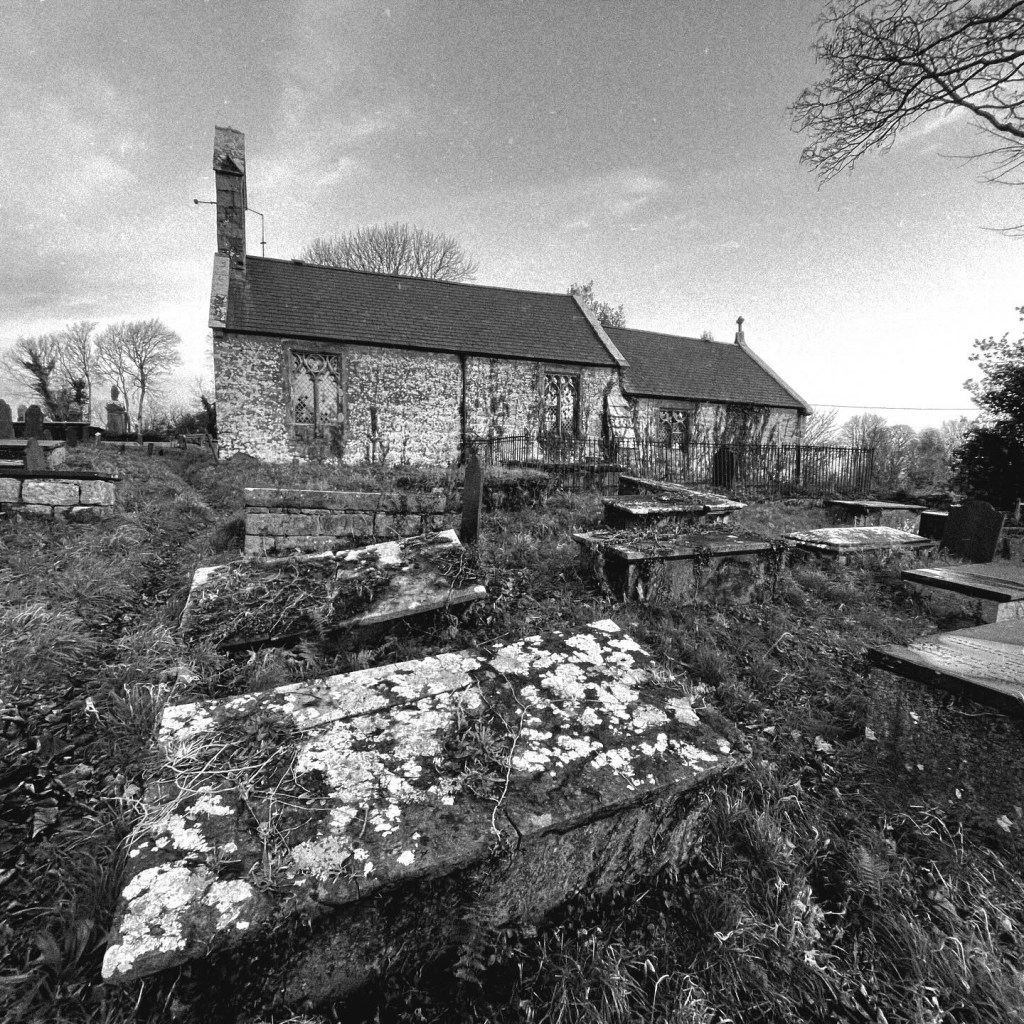
The stone is dated to 525 A.D. and the name is one of four personal names found on inscribed stones in Anglesey. The stone was moved into the church between 1908 and 1937.
The inscription on the stone reads HIC IACIT MACCVDECCETI, and the translation is given as “of Maccudecceti, here he lies”.
The name is a late form of an Irish name, MAQQI DECEDDAS and means “son of Decens”. Decens was the titular divinity of the Decanti tribes and the territory of the Welsh Decanti was centred on Deganwy which lies just across the sea from Penrhosllugwy.
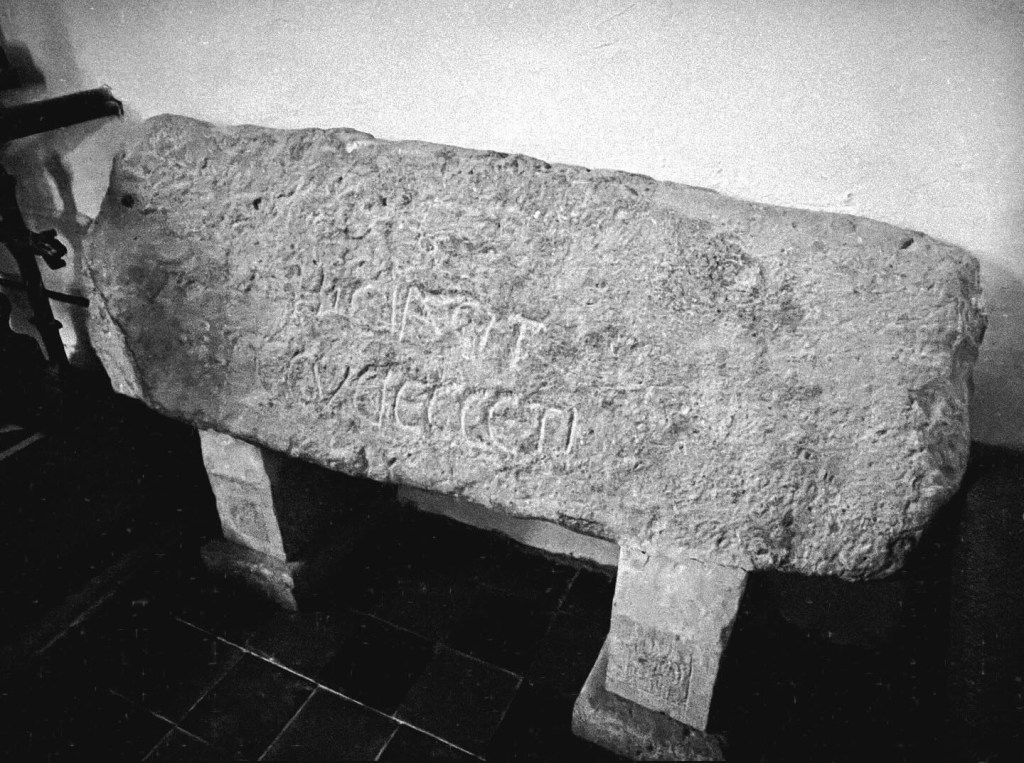

Eglwys siap croes sy’n cynnwys corff cymharol fychan o 1140, tŵr canolog a thranseptau o ddiwedd y ddeuddegfed ganrif, a changell fawr. Croesau Celtaidd o 1000. Mae gan ddrws y de ddraig wedi’i cherfio ar y tympanum. Bwâu Romanésg trawiadol tu fewn yn ogystal a Sheela na gig a darluniad o Gofannon, Duw y Gof.
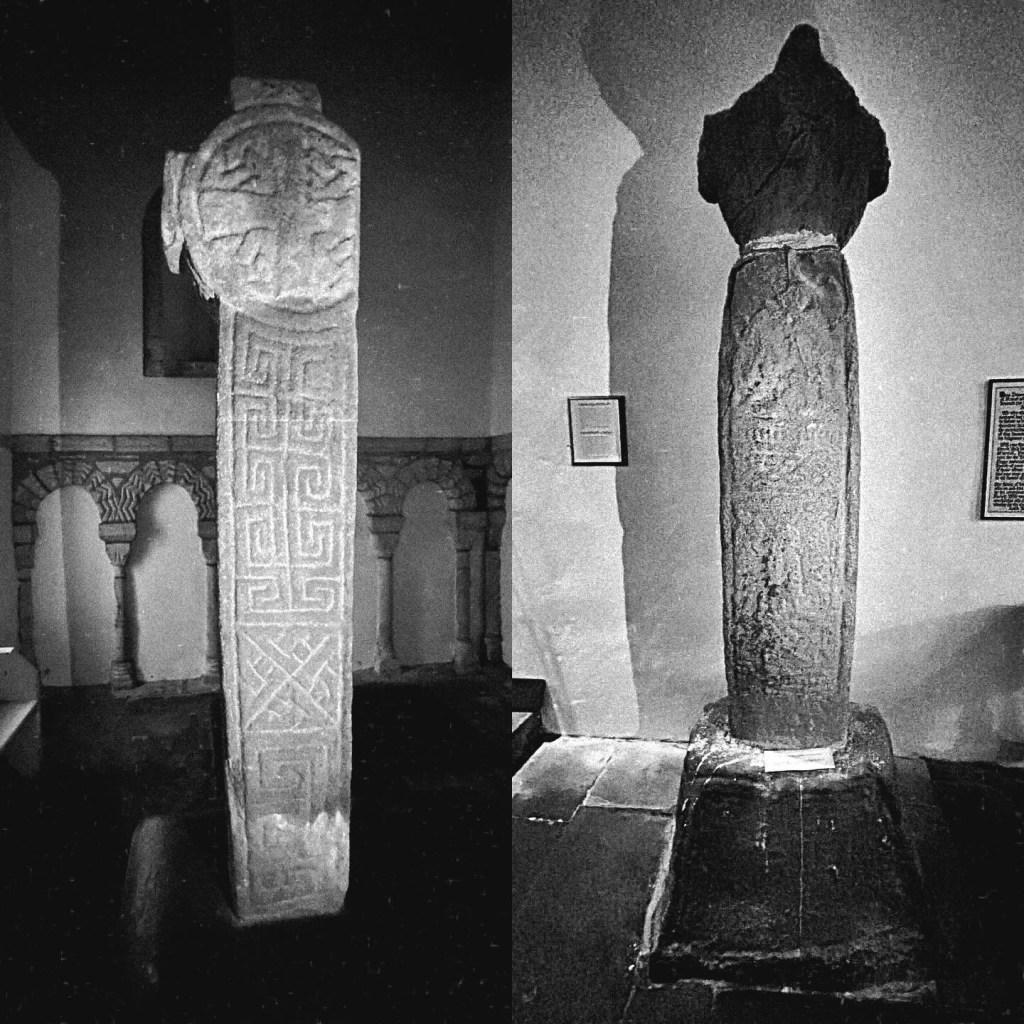
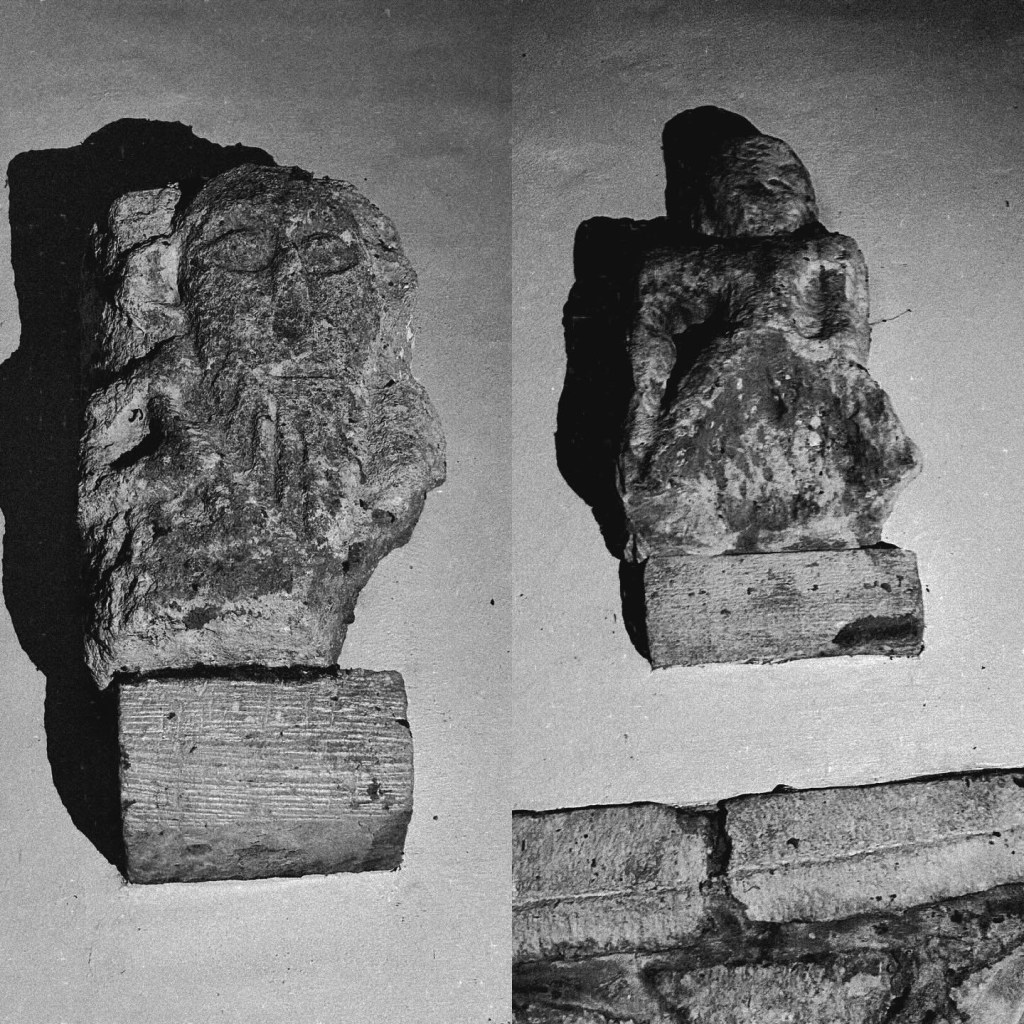

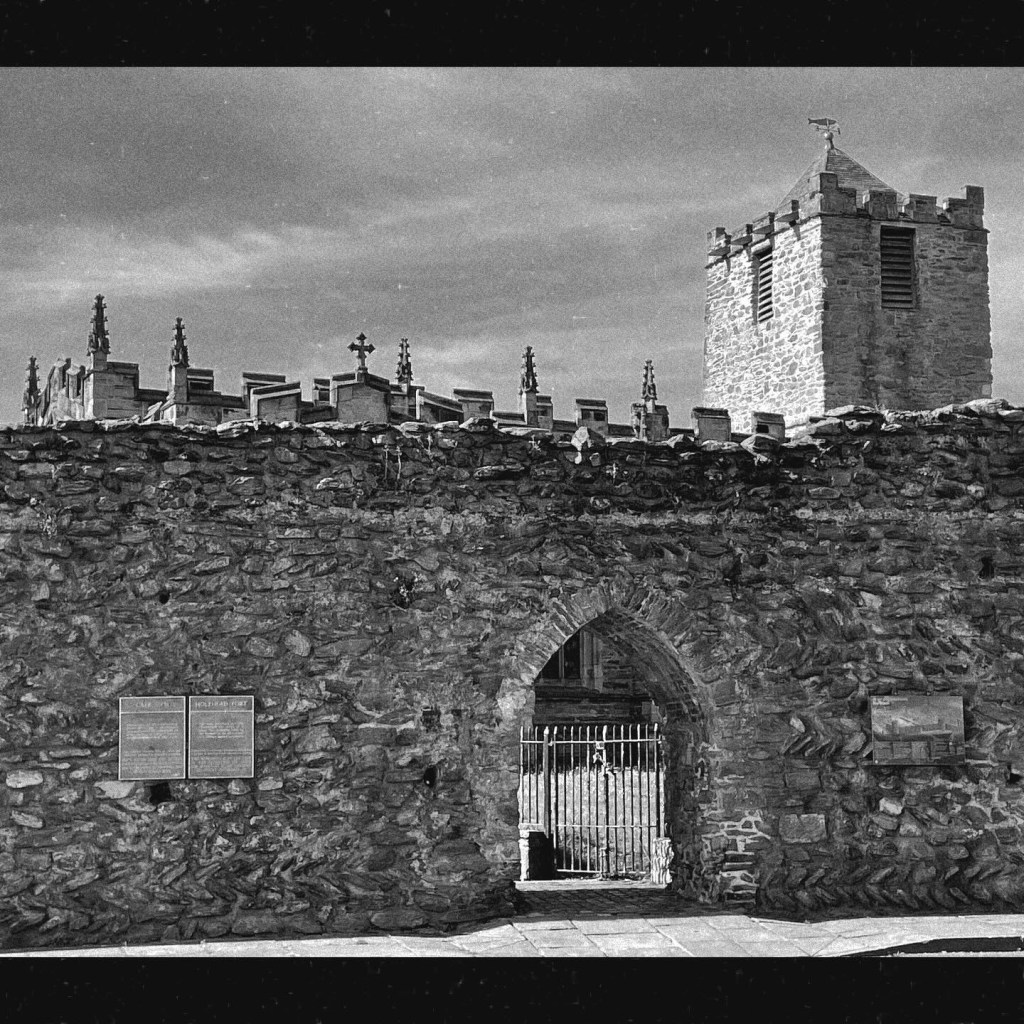
Mae eglwys hynafol Caergybi Sant Cybi a sefydlwyd yn 540 OC o fewn muriau’r gaer Rufeinig anghyfannedd, Caer Gybi.

Mae’r rhannau hynaf o’r adeilad yn dyddio o’r 11eg neu’r 12fed ganrif. Ailadeiladwyd y gangell yn y 15fed ganrif. O fewn ceir penaethiaid nenfwd lliwgar a oedd yn rhodd gan y bardd RS Thomas a addolai yma yn ei ymddeoliad cyn priodi ei ail wraig yn yr eglwys. Claddwyd yr artist Kyffin Williams ym mynwent yr eglwys.
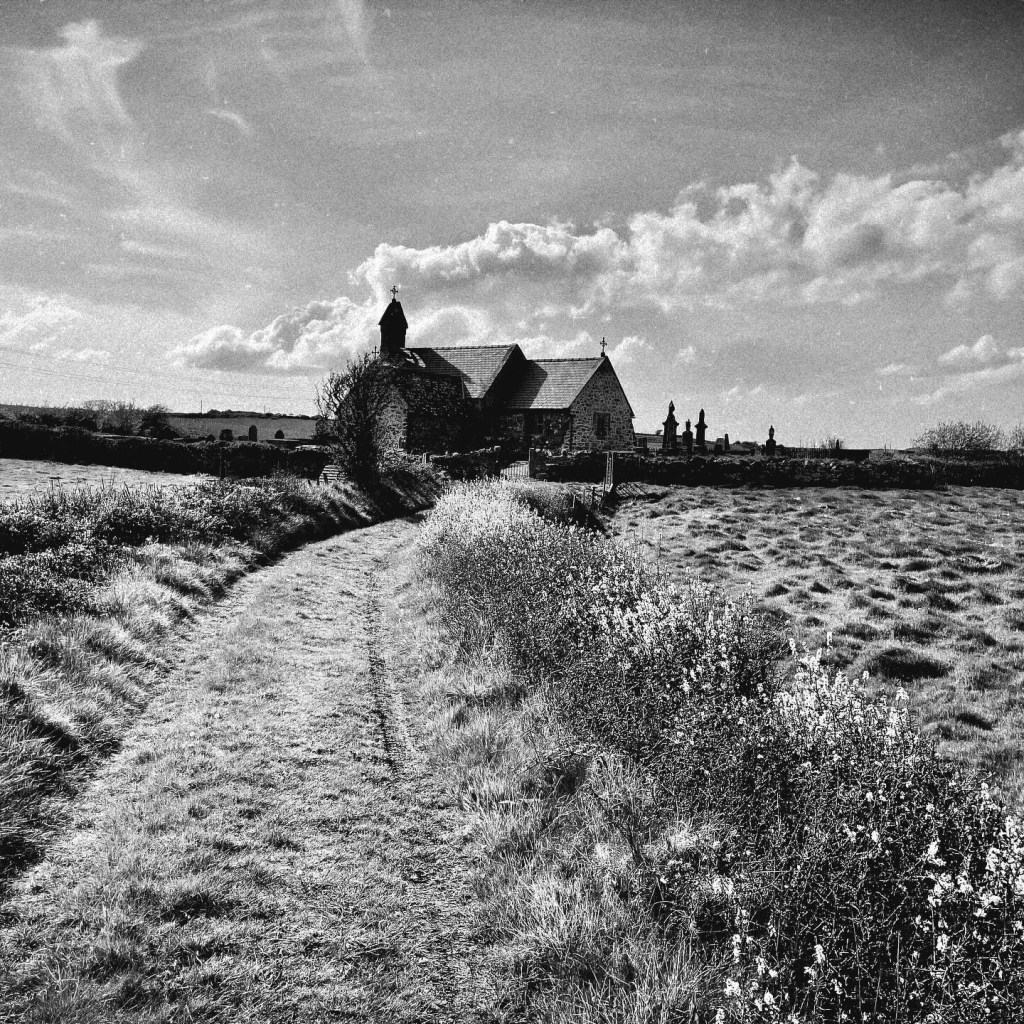
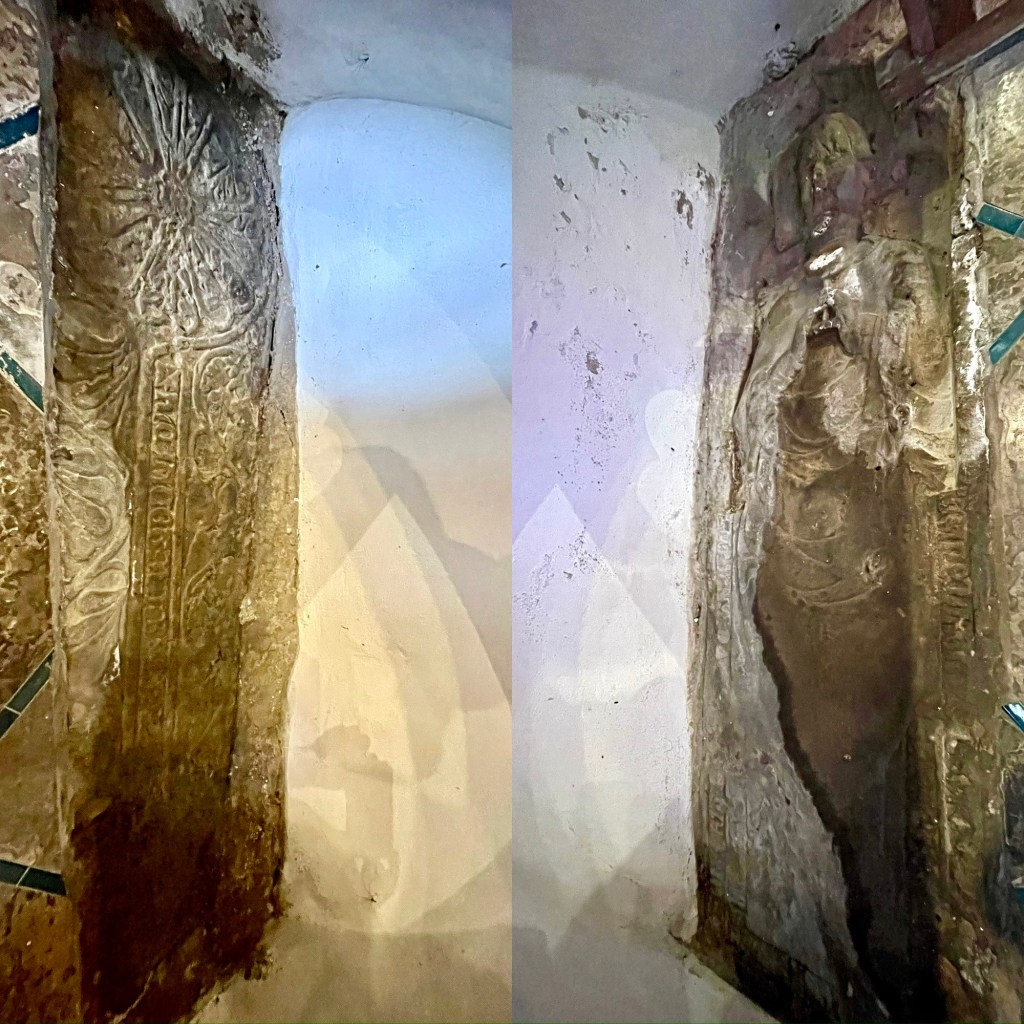
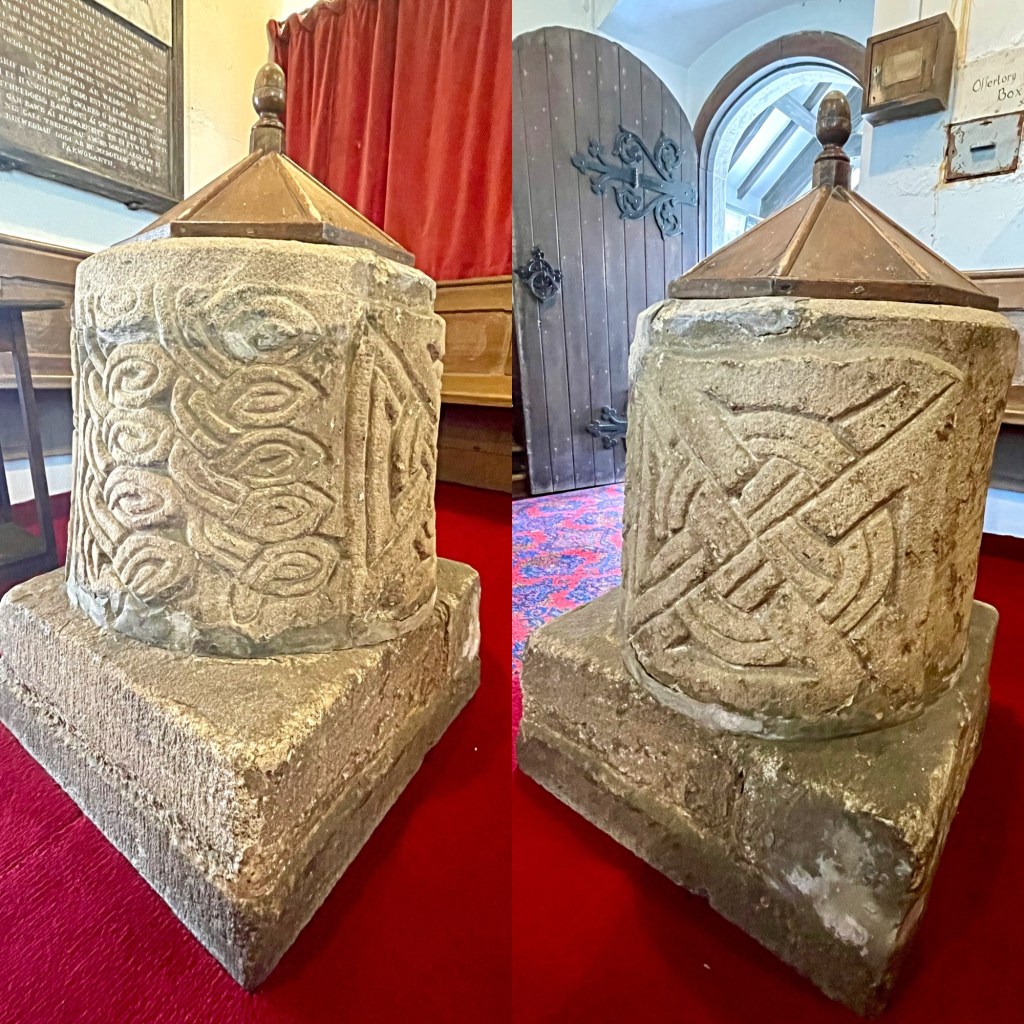
The carved font with ringed cross is 11th century. It states on the Friendless Churches website: “…scholars believe the font was originally an altar and held relics. Perhaps even the bones of St Peulan himself. If this is so, Peter Lord wrote ‘as an altar of the pre-Norman period, it is a unique survivor in Wales, and, indeed, in Britain.’”
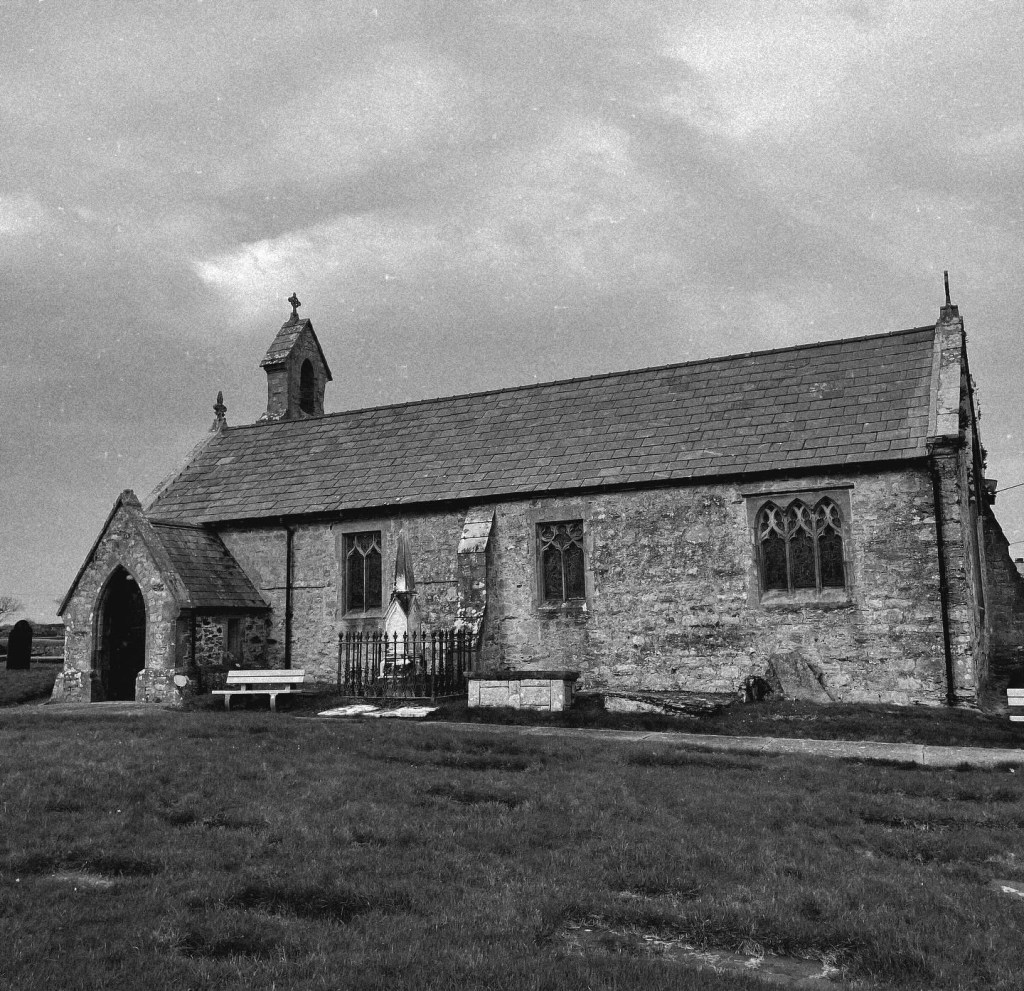
Gravestones have been used as a step in the stile and there are carved heads as label-stops on the east window. This one is my favourite on the island.
Mae’r rhan hynaf o’r adeilad yn dyddio o’r 12fed ganrif. Mae’r eglwys wedi’i hadeiladu ar domen gydag achos hynafol yn arwain ati. Mae’r ffont gerfiedig gyda chroes gylch yn dyddio o’r 11eg ganrif. Mae cerrig beddau wedi cael eu defnyddio fel cam yn y gamfa ac mae pennau cerfiedig fel label-stopiau ar ffenestr y dwyrain. Dyma fy ffefryn ar yr ynys.
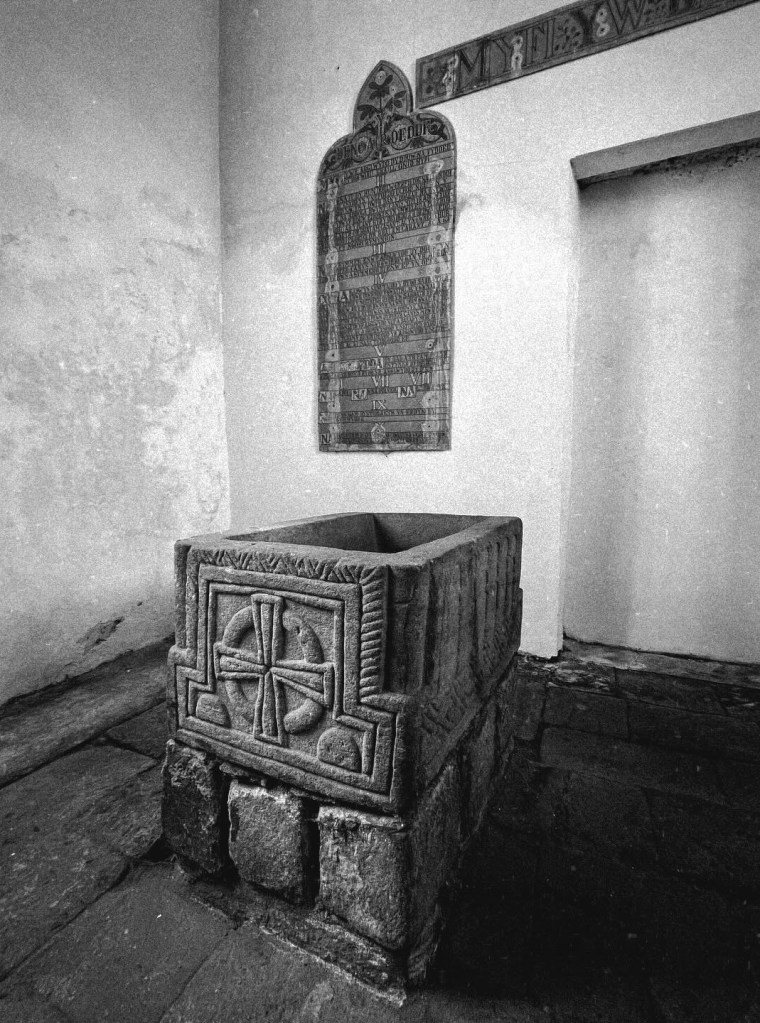


Mae’r eglwys o dras hynafol yn ôl Angharad Llwyd (570). Sonnir amdano ym Mhrisiad Norwich yn 1254 ond mae’r corff a’r gangell barhaus bresennol yn dyddio o’r 14g. Mae’r drws a’r capel deheuol yn dyddio o’r 15fed a’r 17eg ganrif yn y drefn honno. Peidiodd â chael ei defnyddio ar gyfer addoliad rheolaidd ym 1899 pan adeiladwyd yr eglwys fodern filltir i ffwrdd. Mae’r cofebau baróc o fewn yn eithaf mawreddog ar gyfer eglwys wledig mor anghysbell. Mynediad trwy gamfa a dau faes amaethyddol.
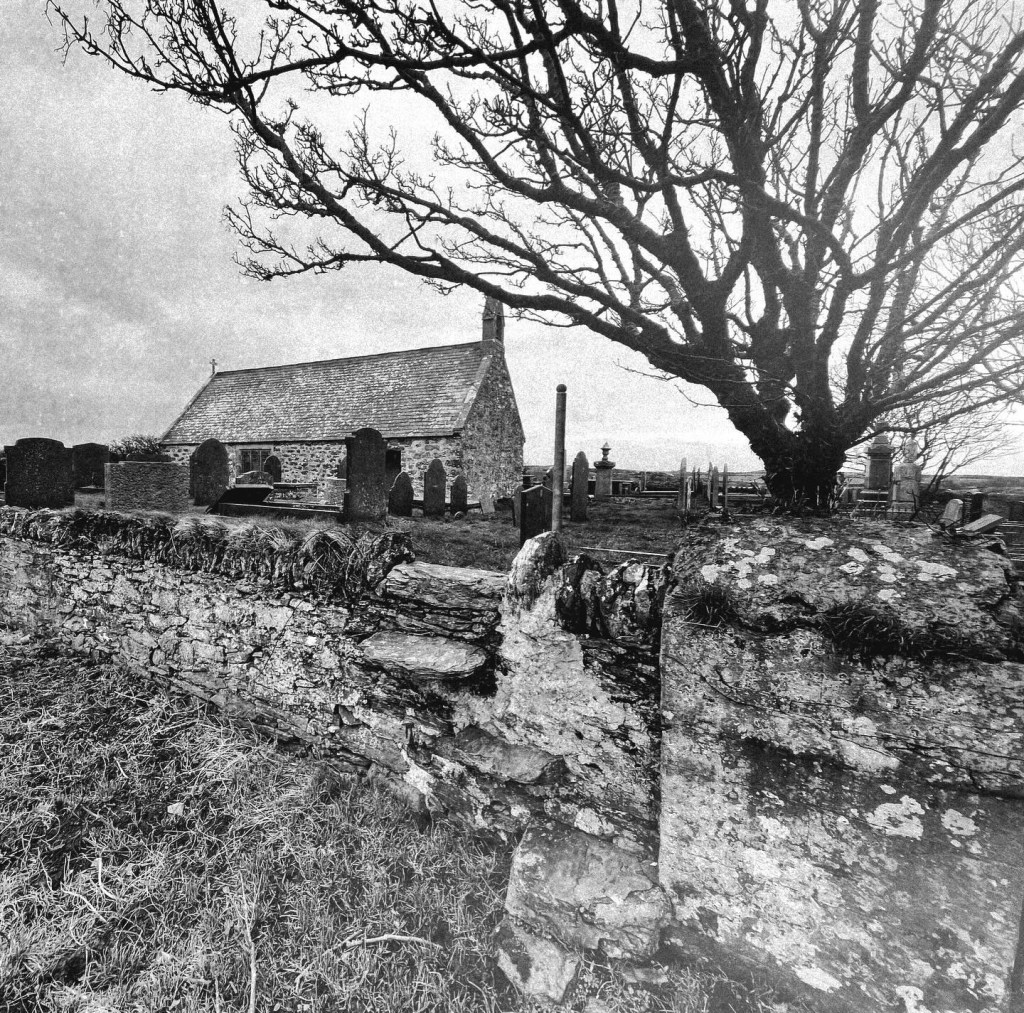
Adeiladwyd yr adeilad presennol yn y 14eg ganrif, ar safle eglwys o’r 12fed ganrif o fewn mynwent amgaeedig is-betryal ar domen uchel. Cysegrwyd yr eglwys yn y 1970au. Mae’r bedyddfaen o’r 12fed ganrif o’r eglwys bellach yn St Cybi yng Nghaergybi. Mynediad trwy fferm, cae a chamfa.
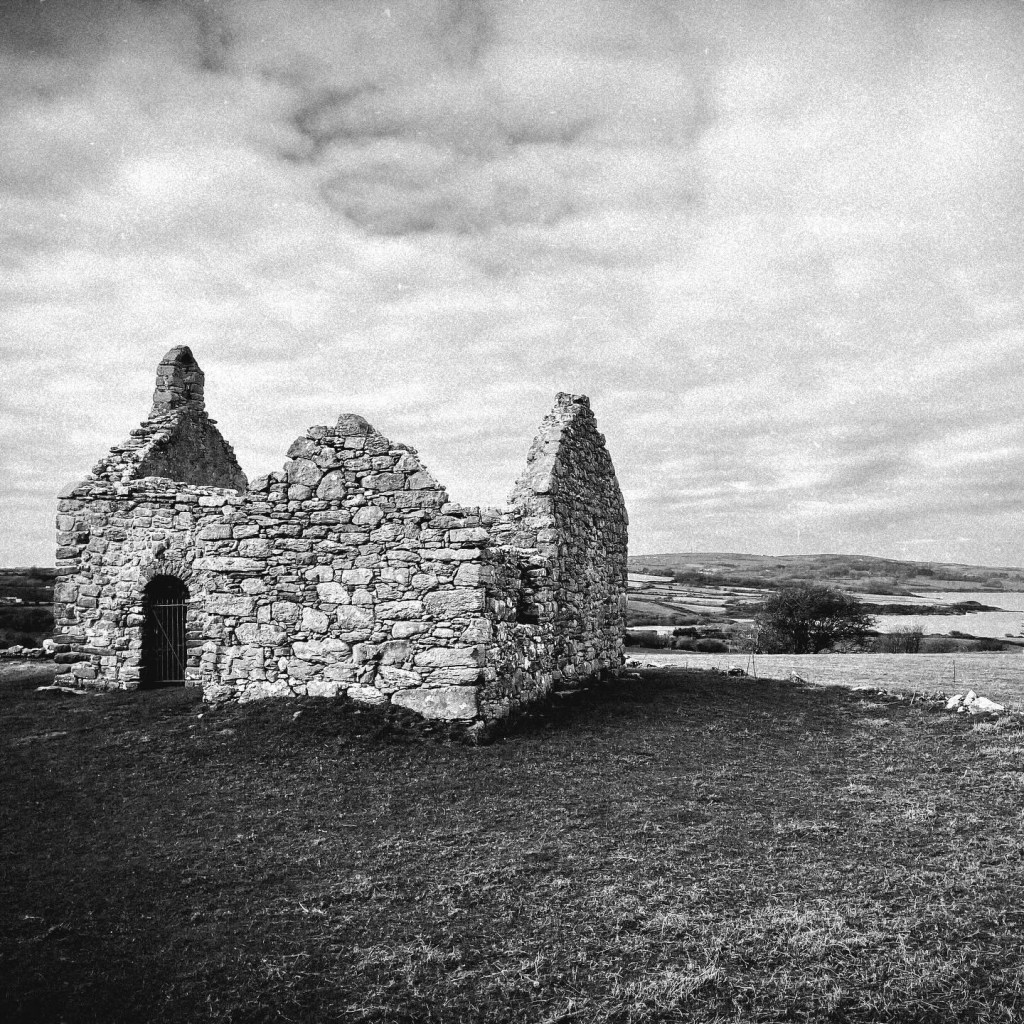
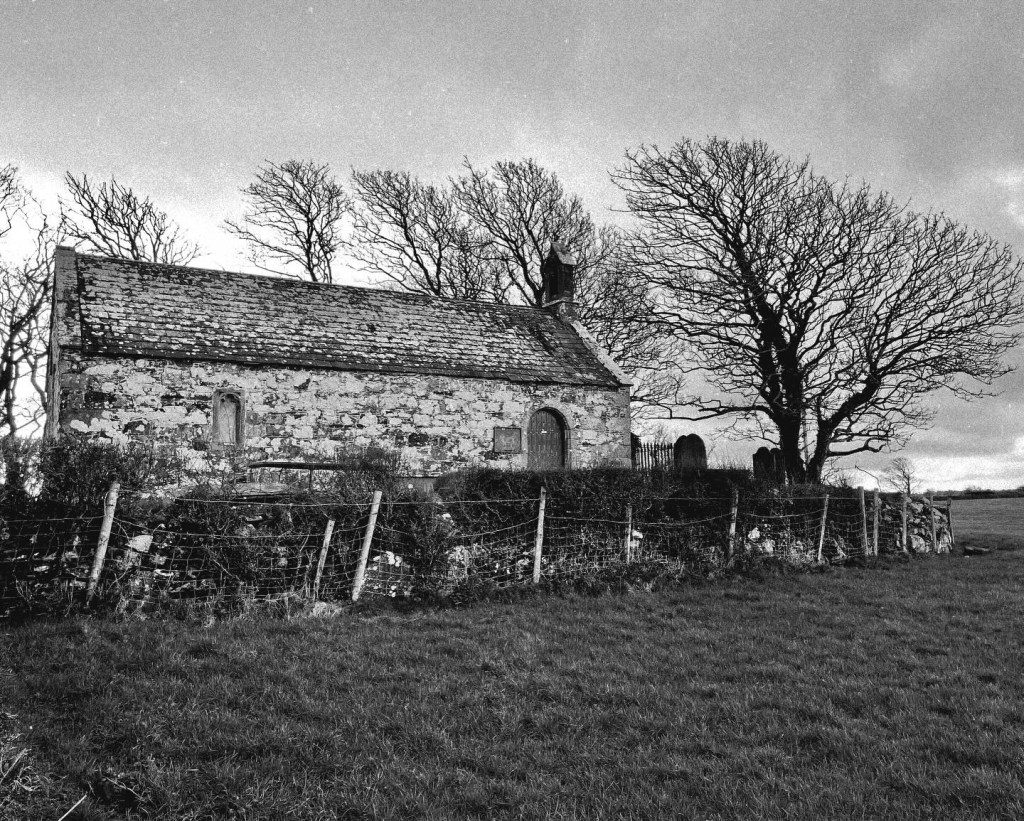
Safle o’r 7fed ganrif. Ailadeiladwyd yr adeilad presennol yn y 19eg ganrif gan ddefnyddio deunyddiau o eglwys y 14eg ganrif ac ar y sylfeini gwreiddiol. Mae’r fynwent yn gylchol ac yn cael ei chodi 5-6 troedfedd uwchben lefel gyffredinol y ddaear. Mae’r ffenestr ddwyreiniol yn dyddio o’r 14eg ganrif. Roedd Ceidio yn blentyn i’r Brenin Caw o Alt Clud / Strathclyde – Yr Hen Ogledd. Credir mai talfyriad o Rhodwydd (“twmpath amddiffynedig”) yw “Rhod-” a “-geidio” yw ffurf treigledig enw’r sant; h.y., “twmpath amddiffynedig Ceidio”.

Mae’r waliau o rwbel calchfaen, wedi’u hailosod, gyda dresin graean. Adeiladwyd y Nave a’r Atodiad yn y 14g; ar ddiwedd y 15fed ganrif ailadeiladwyd ac ehangwyd y Gangell, a mewnosodwyd y drws deheuol presennol.
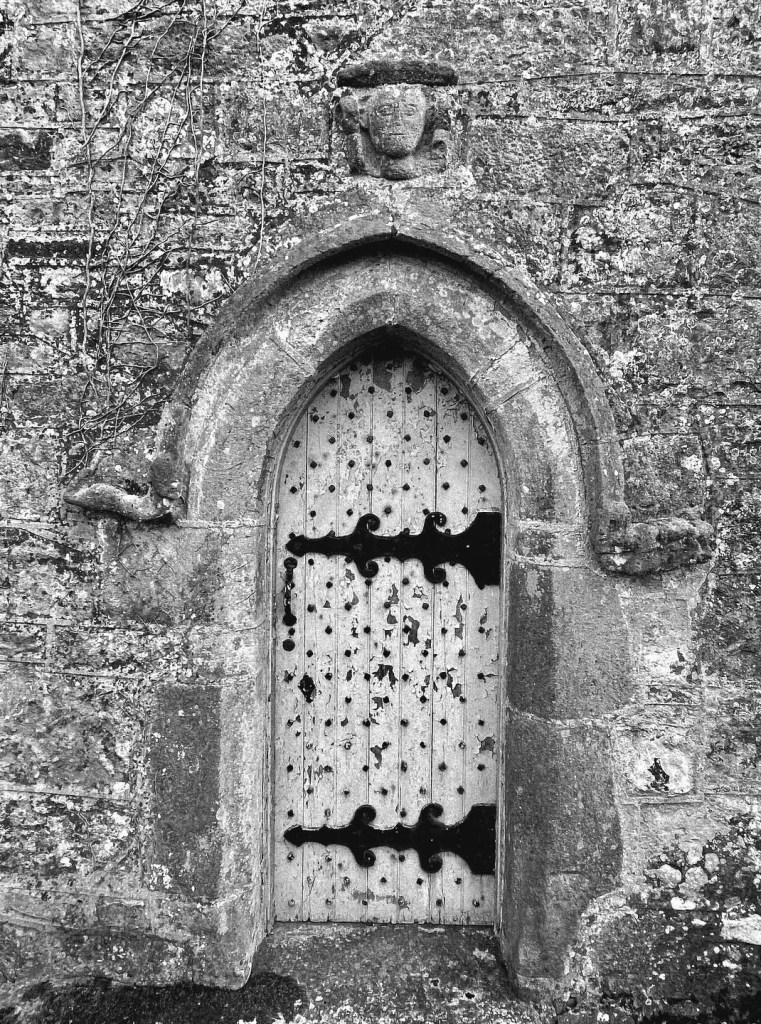
Excerpt from ‘Carved Corbels, Brackets, and Label Stops in Anglesey Churches: A Survey’ by Canon Hulbert-Powell (in the 1944 Transactions of the Anglesey Antiquarian Society and Field Club): “The chancel and south door date from the fifteenth century…The north doorway has two interesting dripstone terminations. They represent the so-called wild man of the woods, who was gradually evolved from the classical “homo silvestris” of Pliny. This is a subject very frequently carved in churches. The carving on the east-side of the door shows the “wild man,” or “wodehouse” as he was called, lying naked on his chest; in paintings he generally has long hair. He is often associated with animals. Belief in the existence of this individual was universal in the middle ages. Here it is suggested that he is no ordinary man by the unusual size of his head. He is usually represented with a beard but there is no trace of it here. On the west side the carving, much weatherworn represents the wild man engaged in a vigorous struggle with a dragon. One arm has seized the dragon by the mouth, while the other grips his leg. The wild man is frequently found fighting with an antler. Anglesey was far more wooded in the Middle Ages and there were possibly solitaries who lived in the forest and would be regarded with awe by the natives. There is a suggestion of a motive bred long ago in the Norse imagination of fighting beasts and strange dragons, which were the early symbolism of religious mysticism.
Above the doorway a Medieval bracket has been inserted in the wall; it is roughly carved with a human head with large ears suggesting scandal. “

From ‘A History of the Island of Mona’ (1833) by Angharad Llwyd:
“CERCHIOG, OR BETTWS Y GRÔG, is situated ten miles from Holyhead. It is not mentioned in the extent so often quoted; the name implies “abounding with oats”. The church, a small neat edifice, is a chapel of ease to Llanbeulan, and dedicated to the Holy Rood. Saints day kept on the 14th of September. The duty is performed by the Rev. William Roberts of Llanbeulan…The resident population in 1821 was 191…”
Beth sy’n goroesi o eglwys a ffynnon Holy Rood, Ceirchiog ger Bryngwran, Ynys Môn (caewyd yn 1840). Dim ond sylfeini’r eglwys blwyf ganoloesol hirsgwar sydd ar ôl o fewn mynwent segur.

Wedi’i gysegru i fab Brenin Powys o’r 6ed ganrif. Sefydlwyd yr eglwys gyntaf yn Llanynghenedl tua 620. Codwyd eglwys newydd yn 1862. Cyn hyn, dywedodd Harry Longueville Jones fod yr adeilad cynharach yn dyddio o’r 13eg – 14eg ganrif. Yn ôl Comisiwn Brenhinol Henebion Cymru (1937), roedd yr eglwys o’r 19eg ganrif yn cynnwys cangell barhaus ac eglwys gyda festri gogleddol a phorth deheuol ar yr hen sylfeini. Cwympodd yr eglwys i segur oherwydd twf pentref cyfagos y Fali. Ym 1988, datgymalwyd ac ailgodwyd Sant Enghenedl fel estyniad i St Mihangel, Llanfihangel yn Nhowyn, sy’n gwasanaethu fel eglwys RAF Fali. Mae’r porth yn parhau yn ogystal â rhannau o sylfeini’r adeilad ym mynwent yr eglwys gyda’i hen gerrig beddi.
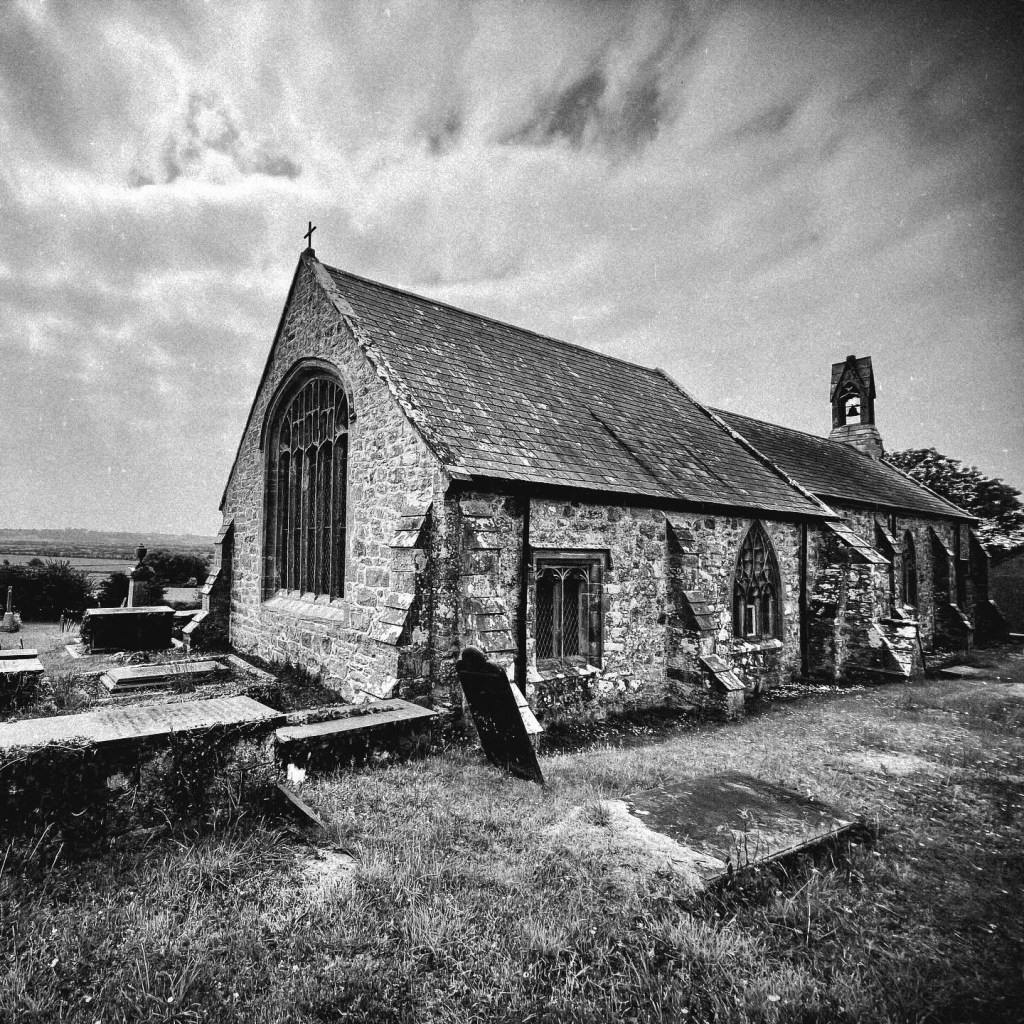
Yn ôl pob tebyg o’r 12fed ganrif. Ar dir uchel uwchben Cors Malltraeth. Ailadeiladwyd yn hanner cyntaf y 13eg ganrif er credir i’r safle gael ei sefydlu yn 610. Addurnwch cloch-cote gyda chorbelau. Ceir bedyddfaen nodedig o’r 12fed ganrif. Ychwanegwyd y ffenestr ddwyreiniol fawr yn yr 16eg ganrif.

Mae rhan o’r eglwys yn dyddio o’r 13eg ganrif. Ystyr ‘Llan’ wrth gwrs yw lloc crwn o amgylch yr eglwys ac mae hon yn enghraifft hyfryd. Wedi’i leoli hanner milltir oddi ar ffordd B i lawr trac yng nghanol Ynys Môn gyda llawer o frigiadau creigiog.
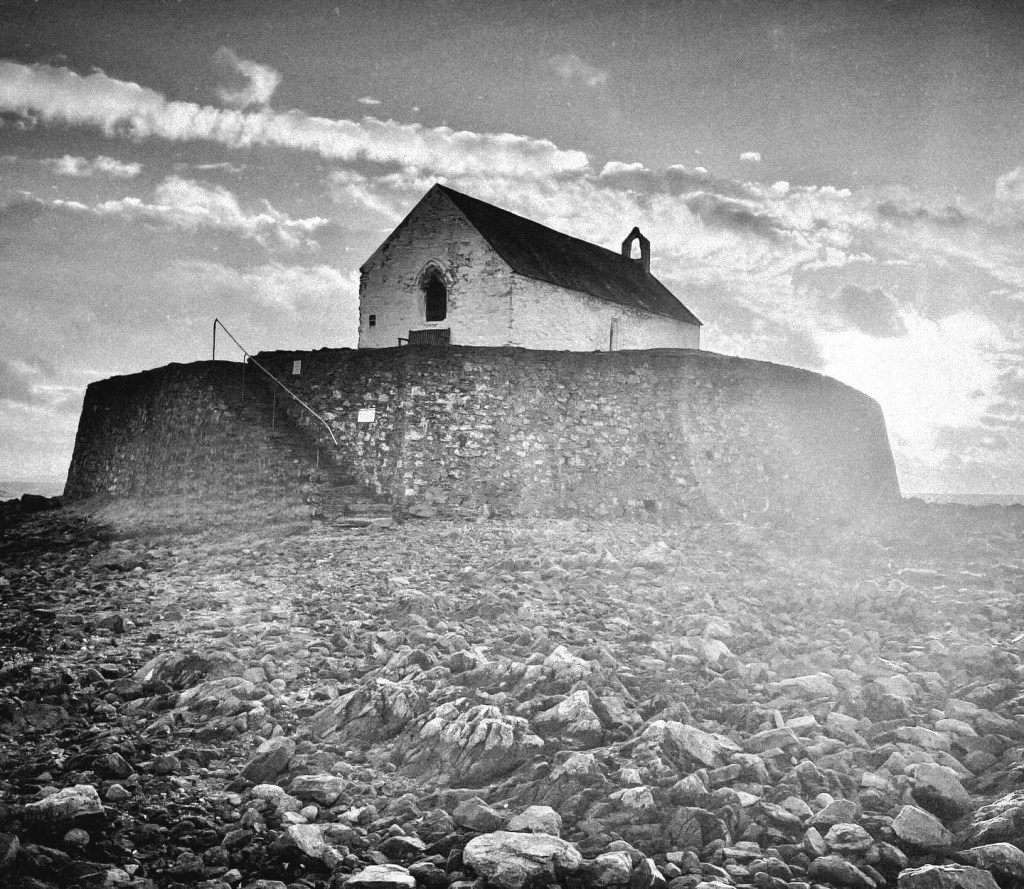
“The church, which consists of a continuous chancel and nave, was built in the 12th century; the western part of the S. wall is of this date, the remainder, and the E. and W. walls, are of the 14th century. In the early 16th-century a N. aisle and arcade, of equal length with the church, were added…The 15th century S. doorway has casement moulded jambs and a slightly pointed head in a square frame with a moulded label; the spandrels are much weathered but originally contained trefoils.”
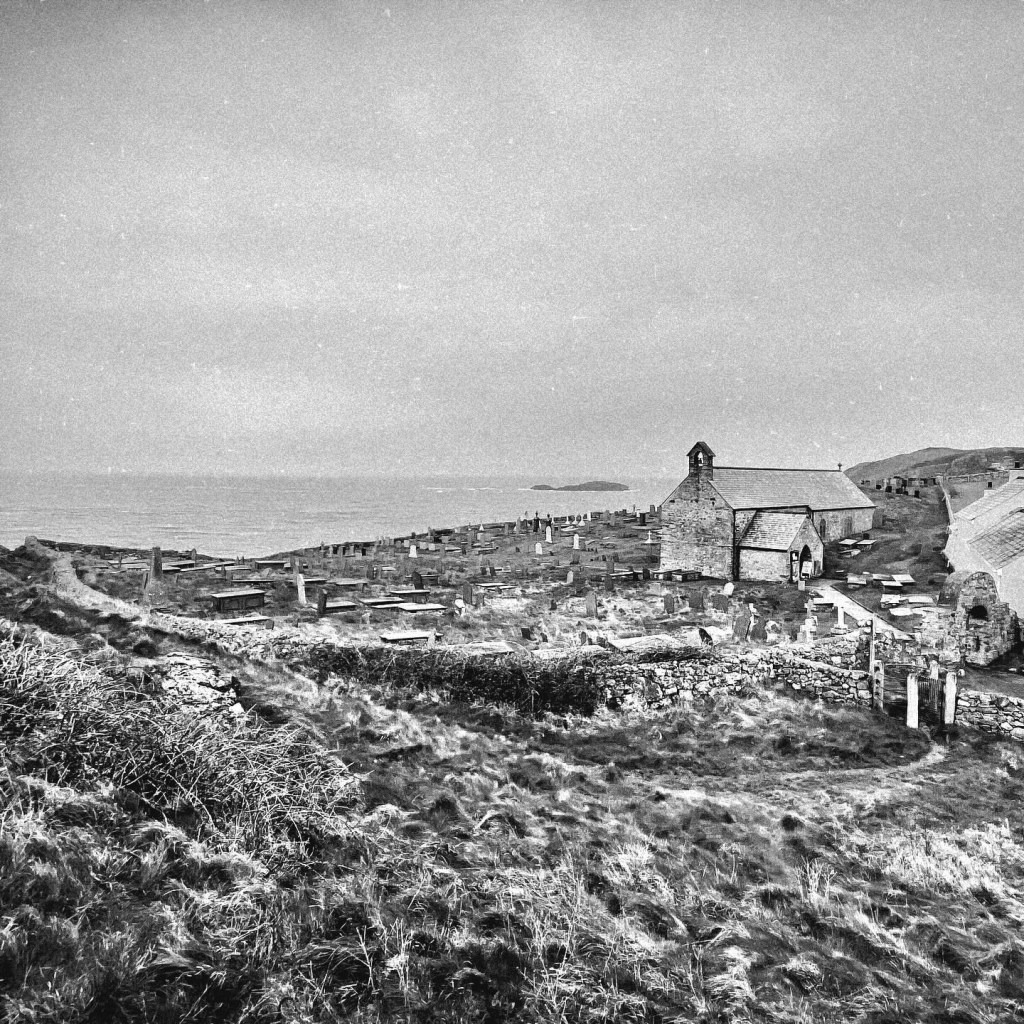
(Associated with St. Patrick who is said to have sheltered after a shipwreck in a cave near the well on the cliffs nearby). Possibly the first church to be built on Anglesey in the 5th century. It was replaced by a stone building in the 12th century and the present building dates from the 13th – 14th centuries with 20th century restoration. The Dalai Lama called the site “the most peaceful spot on earth”. The Icthus stone (9th – 11th century) featuring simple carvings was uncovered in the 19th century. Possibly a repurposed standing stone. There is a 12th Century carved stone font. St Patrick’s well and cave are down a steep cliff below the church.
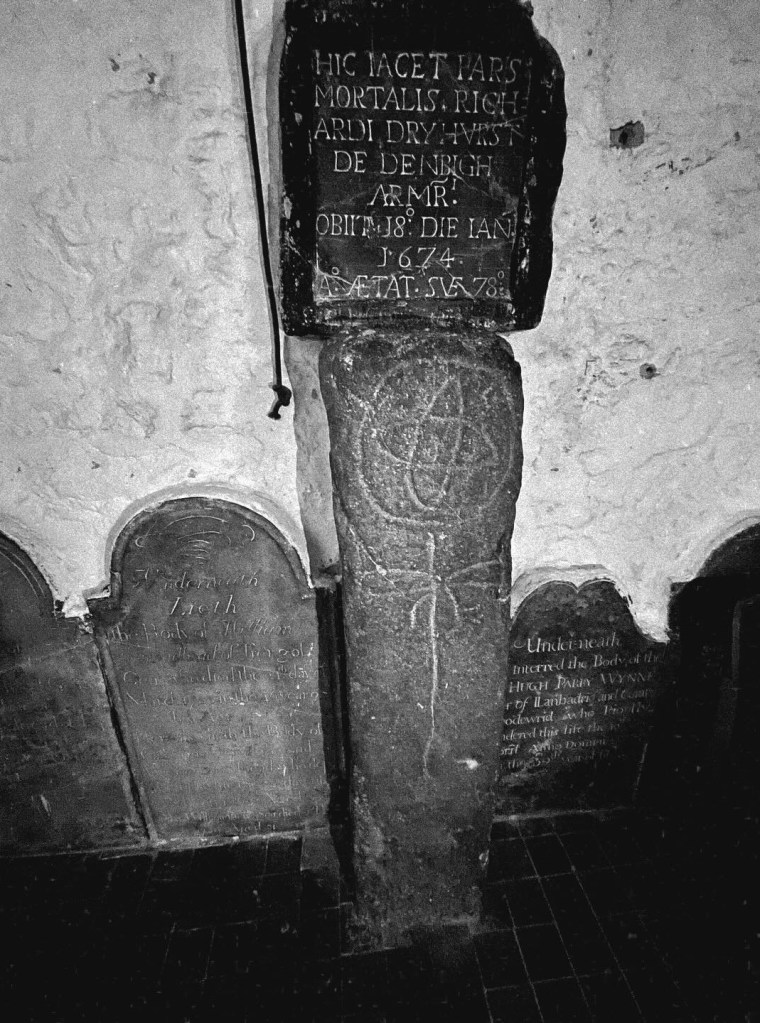
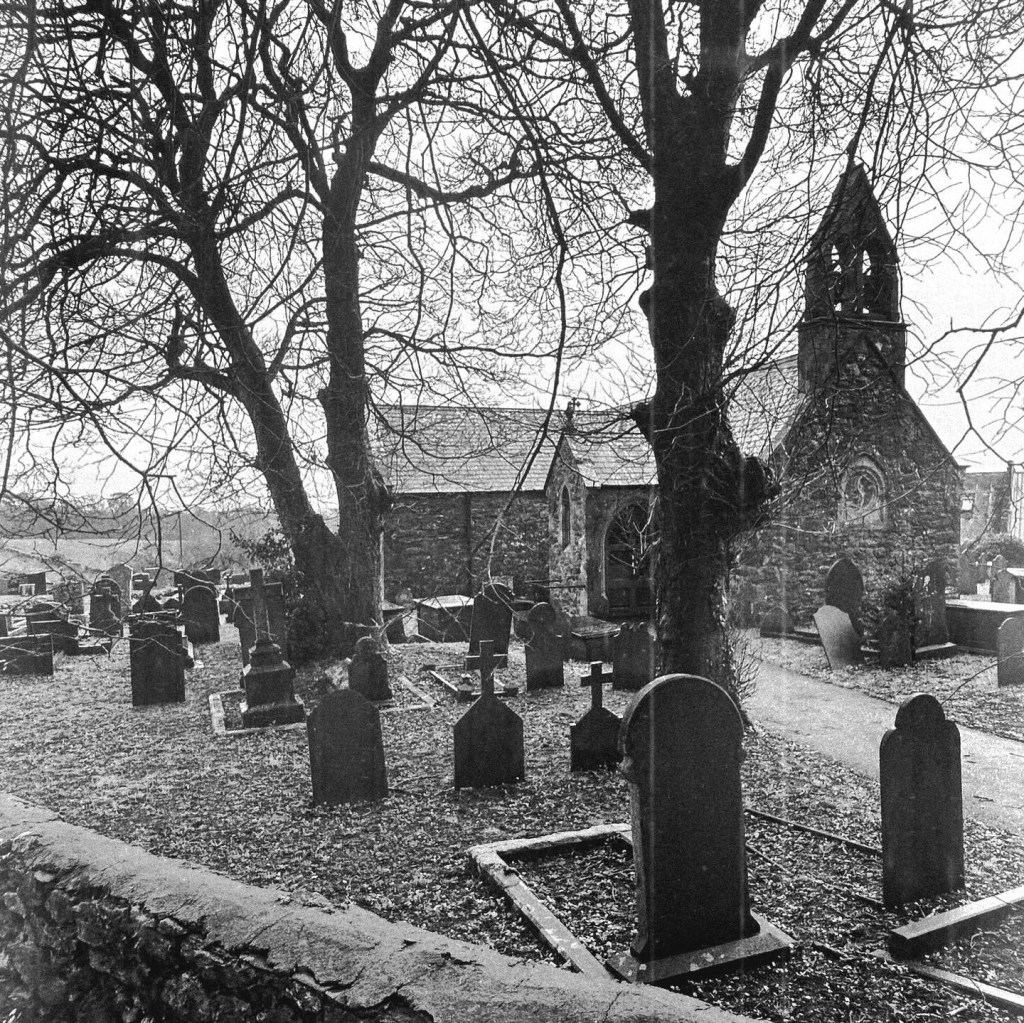
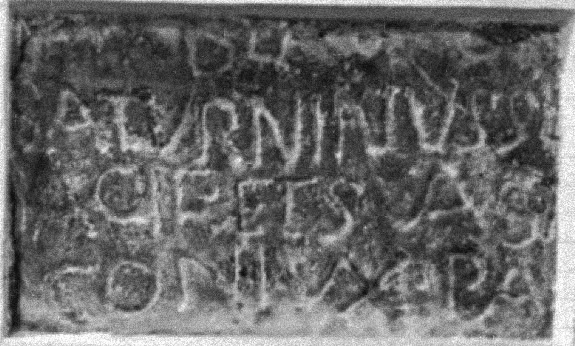
“HIC BEATUS (-) SATURNINUS SE(PULTUS) (I)ACIT ET SUA SA[NCTA] CONIU(N)X PA(X) (VOBISCUM SIT)”

St Ffinan’s Church, Llanffinan, Anglesey. The site dates back to the 7th century. There was certainly a church at this location in the 12th century but the present simple Romanesque revival style building was erected in 1841, to designs of architect John Welch. Some of the medieval foundations survive and there is a 12th century carved font within.
Angharad Llwyd (1833) states:
“The church, a small neat edifice, said to be built about 620, is dedicated to Ffinan, a disciple of Eidan, Bishop of Landisern, who succeeded him in that bishopric. Rowlands says that he, Ffinan, might have built this church, to follow the good works of his pious master, who erected that of Llandisvern. The day of celebration is kept on September 14.”
E. G. Bowen in ‘The Settlements of the Celtic Saints in Wales’ presumes that St. Nidan and St. Ffinnan were two of Cyndeyrn’s North Wales disciples (with churches on Anglesey) before Cyndeyrn returned to Strathclyde.
The church is near Plas Penmynydd. This location was known as the home of the Tudors. The family can be traced back to five brothers – one of these was father of Owain Tudor. Owain joined the army of Henry V and married his widow Katherine de Valois. They had two sons – one became the Duke of Richmond and married Margaret Beaufort. His son, Henry, returned from France with an army to defeat Richard III on Bosworth Field in 1485. He then became Henry VII.
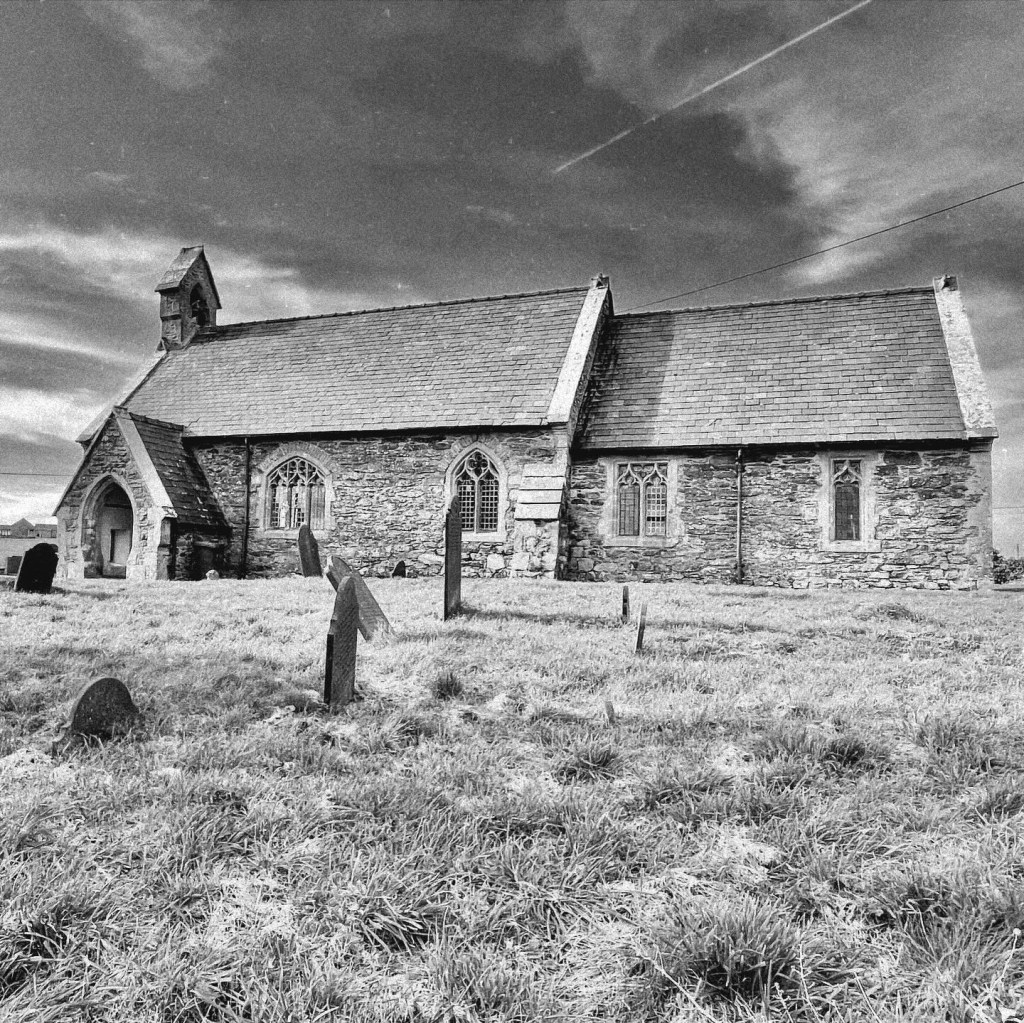
St Mwrog, Llanfwrog, Anglesey. Ancient site. The Medieval church was replaced with the current building in 1864. Angharad Llwyd (1833) described the former church as “a small ancient edifice, in a very dilapidated condition, containing some curious remains of old oak carving” (see image of chest from Coflein). The present church is actually quite attractive with a Gothic roof and thin slates. It feels like an ancient site to me – the circular ‘Llan’ set as an island with the road twisting around it (see old map). It is no longer in use by the Church in Wales and seems to be an artist’s studio these days.
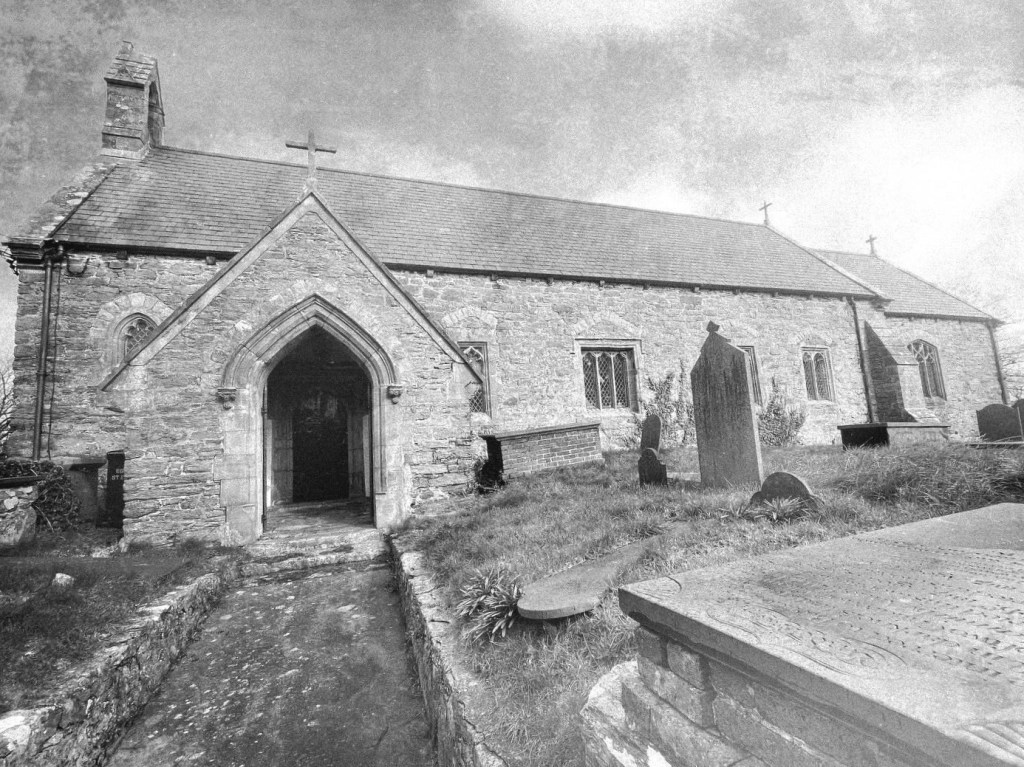
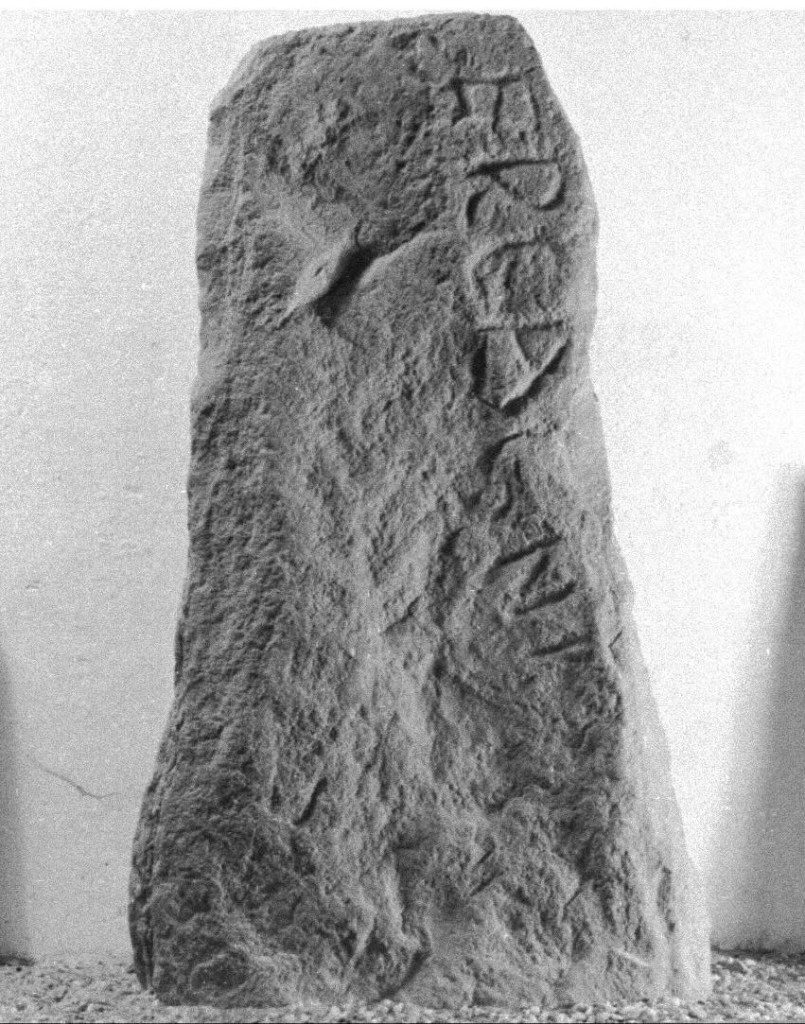
St Edern, Bodedern, Anglesey. St Edern established a church in the area in the 6th century, the oldest parts of the present building date from the 14th century. The church houses the ‘Ercagni Stone’ from the site of the old church half a mile away.
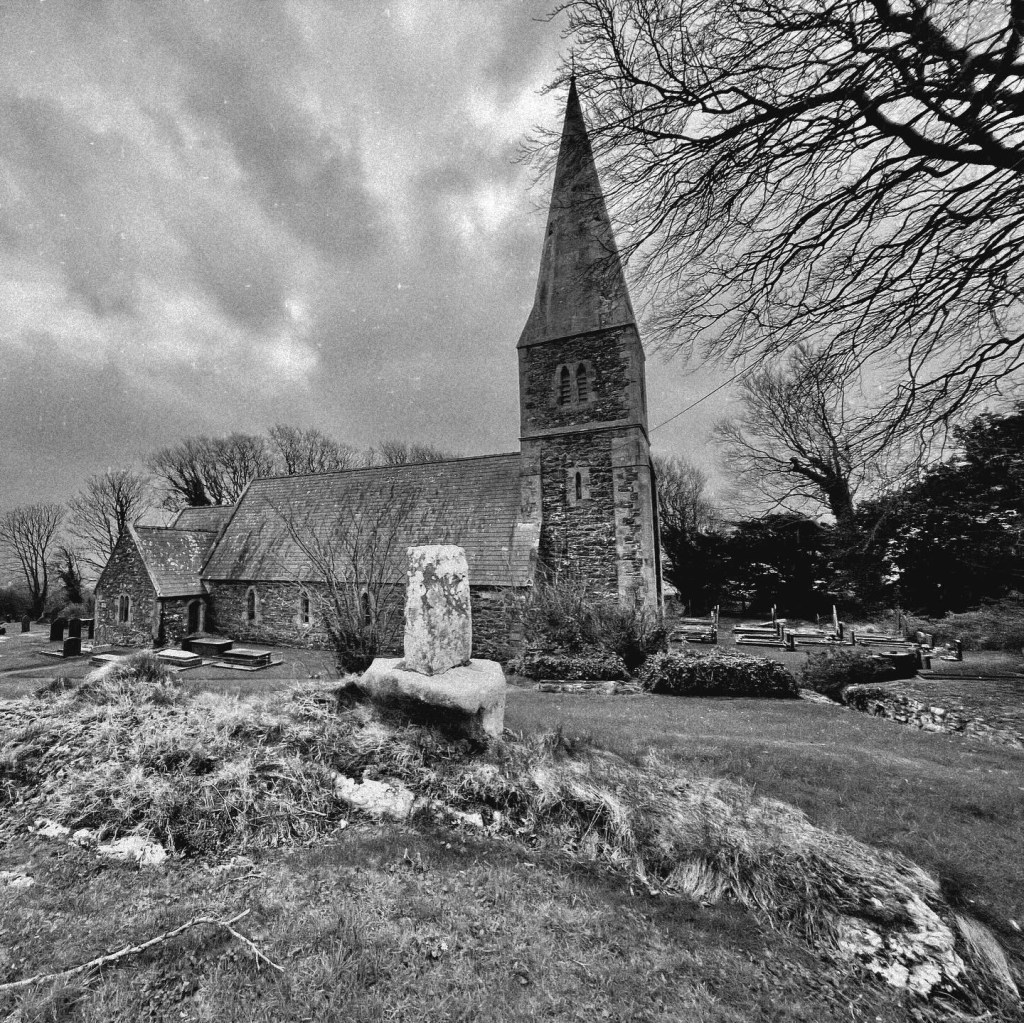
There may have been a monastery known as Merthyr Caffo at this site. The present church was built in 1847 near the site of the Medieval church on the rocky outcrop / mound to the northwest of the churchyard. The present lychgate utilises the 15th century doorway from the earlier church.
There are 9th and 11th century inscribed gravestones and the shaft of a 9th century cross (the latter at the site of the old church) in the churchyard. Further early inscribed stones (including a cross mounted horizontally; some spirals; and a holed stone) and magnificently sinister carved stone head can be found in the churchyard wall.
There is also a prehistoric bowl-marked stone on the outcrop near the old cross base atop the mound. See: Paul Devereux, lan Jones & George Nash (2016) The Curious Case of St Caffo’s Church, Anglesey, Wales, Time and Mind, 9:2, 159-166.
Angharad Llwyd in ‘A History of the Island of Mona’ (1833): “The church is dedicated to Caffo, son of ‘Caw of Brydain, the Lord of Cwm Cawlyd’. There is a well in this parish, called ‘Ffynon Gaffo’, at which were young cocks offered, to prevent the crying of children, and were well accepted by the priests.” It was also called Crochan Gaffo (Caffo’s cauldron). Apparently there is another well close to the church, Ffynnon Pechod (Sinner’s well), where people were whipped before washing their sins clean.
Y garreg goffa hon yw’r cyfan sydd ar ôl ar safle’r hen eglwys Ganoloesol. Arferai fod yn gapel hwylus i Lantrisant. Roedd sylfeini’r hen eglwys i’w gweld o hyd yn 1937 ond nid heddiw. Cadwyd yr wyl er anrhydedd i’r sant ar 28 Chwefror.

Eglwys hardd o ddechrau’r 15fed ganrif ar waelod bryngaer Din Sylwy o’r Oes Haearn gyda golygfeydd godidog o Ynys Seiriol ac Y Gogarth. Mae’r pulpud pren cerfiedig hardd yn dyddio o 1628. Mae ffynnon gerllaw.
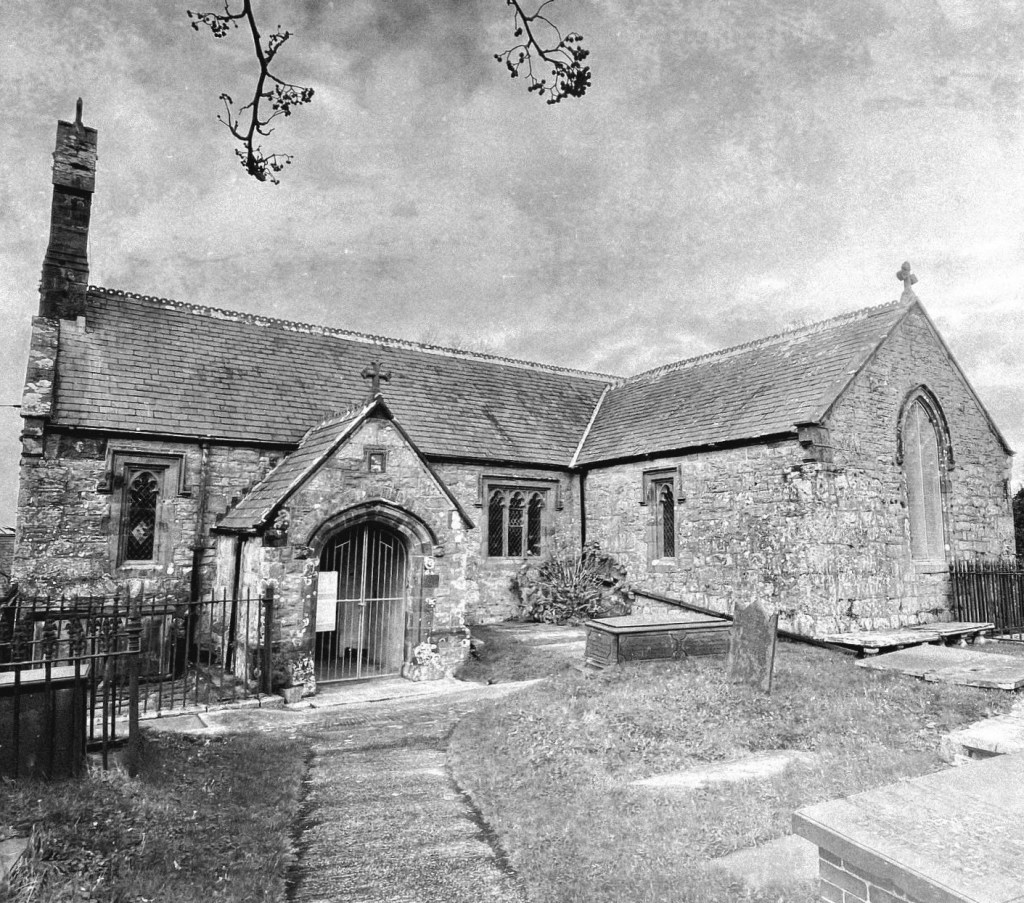
St Mary, Pentraeth, Anglesey. Restored in 1821 but parts of the nave and chancel are thought to be Medieval. There are 14th and 15th century windows. A barrel shaped font and fragments are set in the porch.

I have mostly been sharing Medieval churches on Anglesey recently but have relaxed the rules for this example as the present church (1845) is on the foundations of the earlier one and there are 14th century windows and door. Also, stones set in the walls are even earlier. From ‘Carved Corbels, Brackets, and Label Stops in Anglesey Churches: A Survey’ by Canon Hulbert-Powell (in the 1944 Transactions of the Anglesey Antiquarian Society and Field Club):
“Heneglws was entirely rebuilt but the animal carvings with chevrons above the doors suggest an earlier date (possibly 12th century). It is uncertain what animal they are intended to represent. The Inventory suggests lions.”
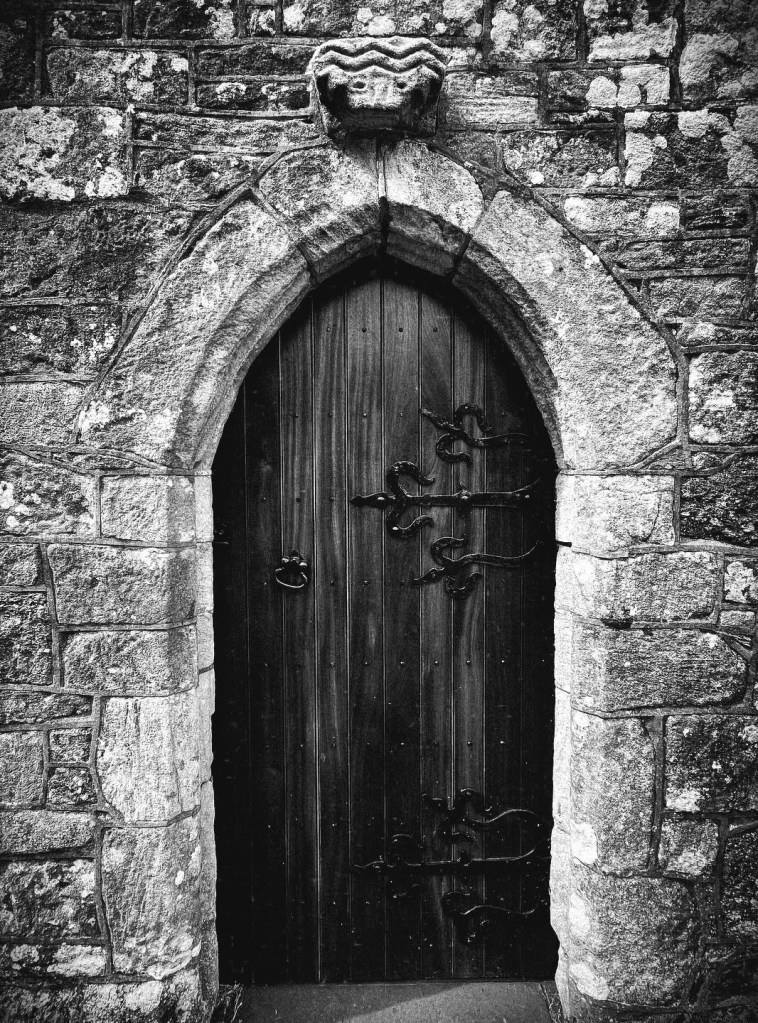

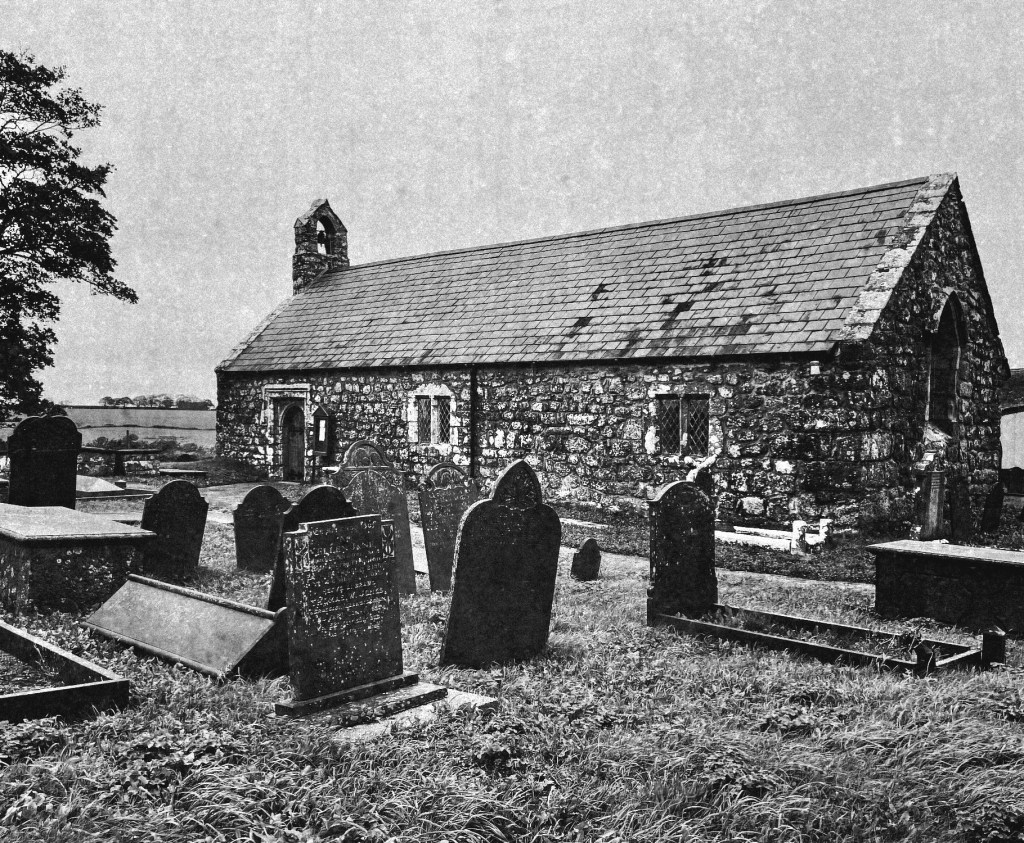
Eglwys fechan ganoloesol sy’n dyddio o’r 14eg ganrif.
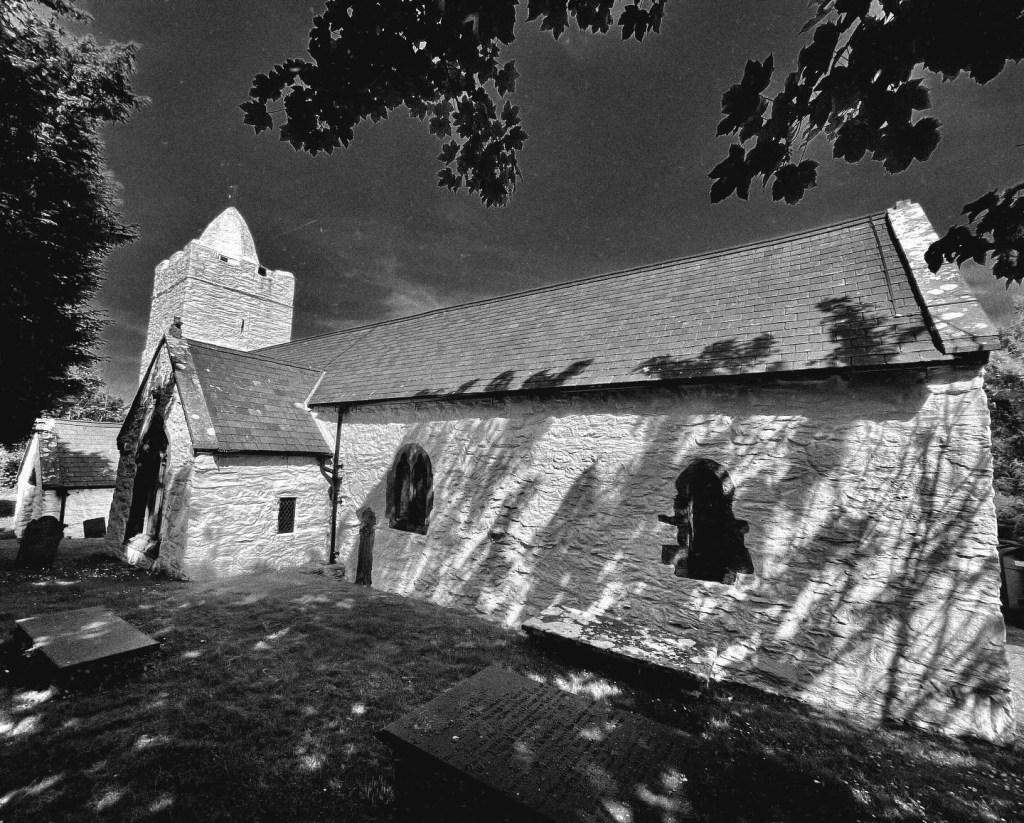
Saif yr eglwys gwyngalchog ymhlith coed ywen mewn mynwent gylchol. Ar un adeg gorchmynnodd William Bulkeley, dyddiadurwr, Brynddu, i gloch yr eglwys Normanaidd hon gael ei thawelu am fod ei chodi yn y twr siâp gwenyn anarferol yn suro ei gwrw. Y top cwbwl i’r belfry sgwâr yw’r unig un o’i fath ar Ynys Môn. Gellir gweld carreg ag wyneb dynol wedi’i cherfio’n amrwd, o’r Oesoedd Canol, uwchben transept y de.
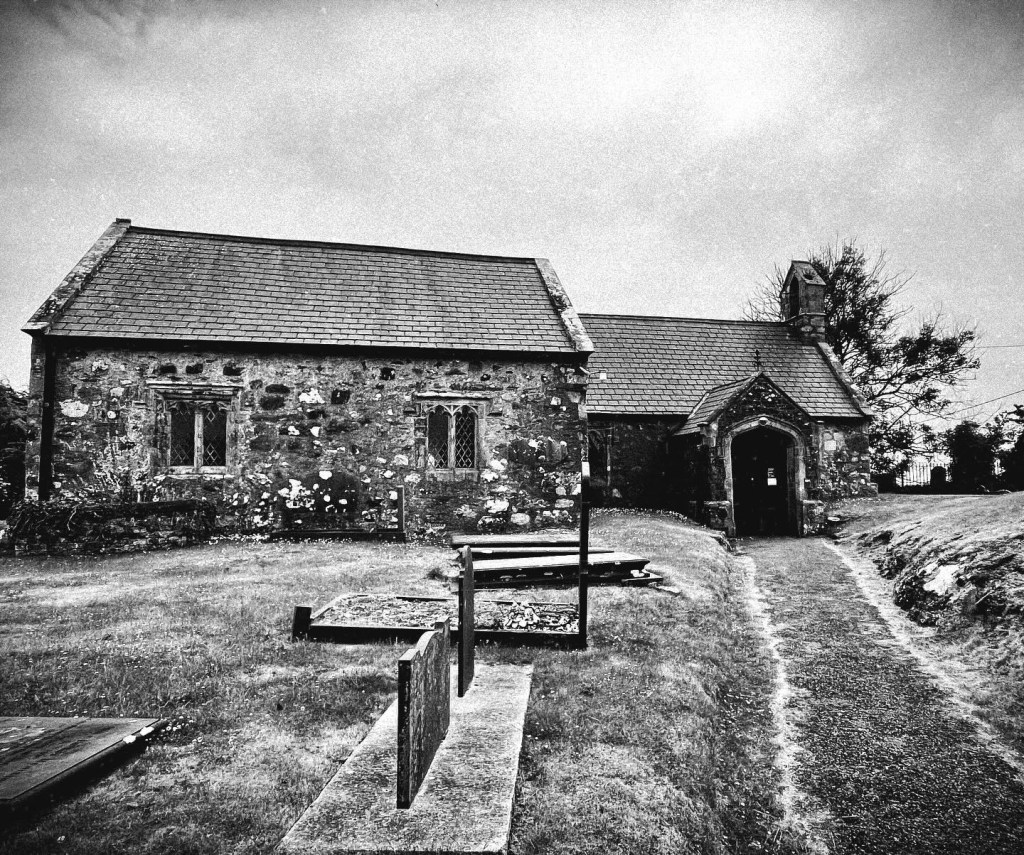
Mae’n bosibl mai dyddiad yr eglwys a’r gangell yw’r 14eg ganrif. Ychwanegwyd capel y Gogledd yn 1500. Yn 1674 ailadeiladwyd rhan fwy o’r corff a’r gangell. Arferai fod ffynnon ger yr eglwys ond llanwyd hon yn y 1960au ac nid oes olion olrhain.
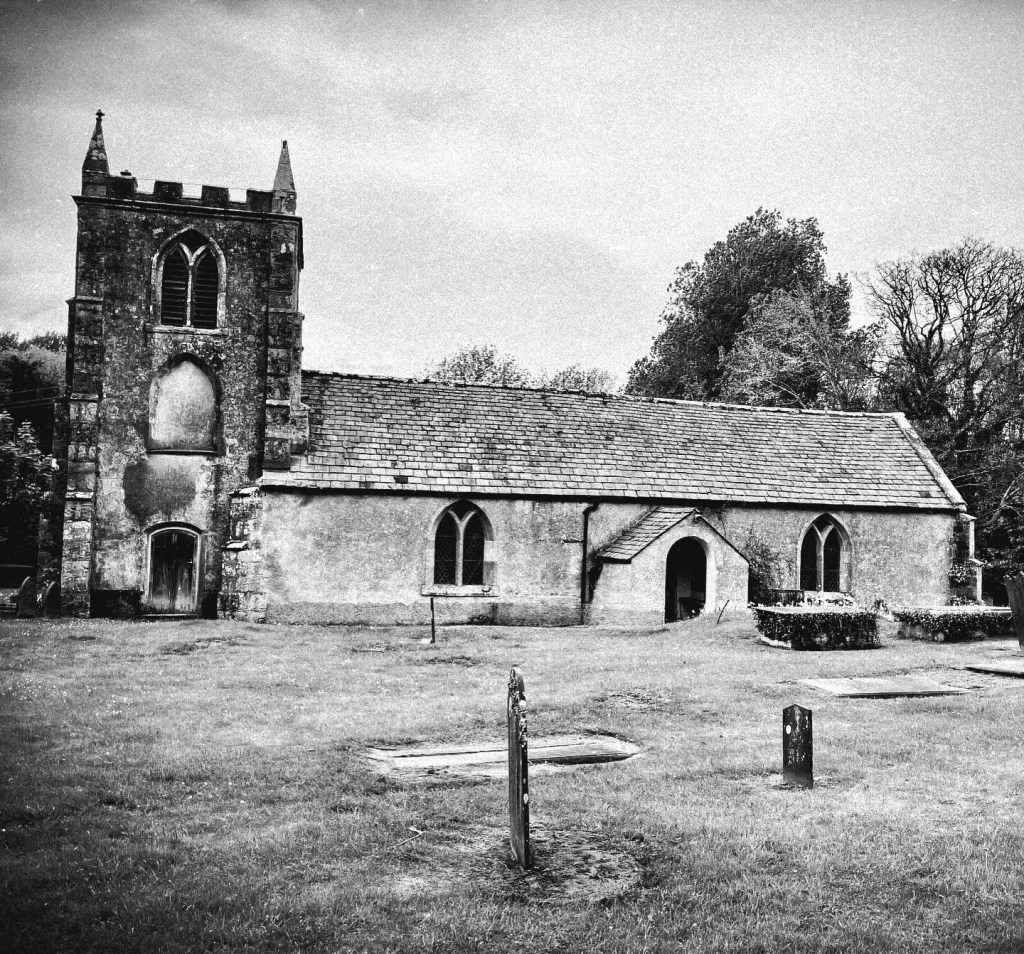
I wanted to see the 9th and 11th century graves incorporated in the buttresses. Note the spirals with the horizontal cross.
Text on information board: “The church is thought to be unique in Anglesey in having been founded, probably in the 9th century, possibly as early as the 6th, by family interest rather than the more usual community influence.
Two sisters, Ceinwen and Dwynwen, founded Llangeinwen Church and that, now ruined, on the nearby island of Llanddwyn. Both churches were subsequently dedicated to their founders, itself unusual, the only other female saints honoured in the Welsh calendar being of biblical origin.”
Mae’r adeilad presennol yn Llangeinwen o’r 12fed ganrif (gydag ychwanegiadau diweddarach o’r Oesoedd Canol a’r 19eg ganrif). Roeddwn i eisiau gweld beddau’r 9fed a’r 11eg ganrif yn cael eu hymgorffori yn y bwtresi. Sylwch ar y troellau gyda’r groes llorweddol.
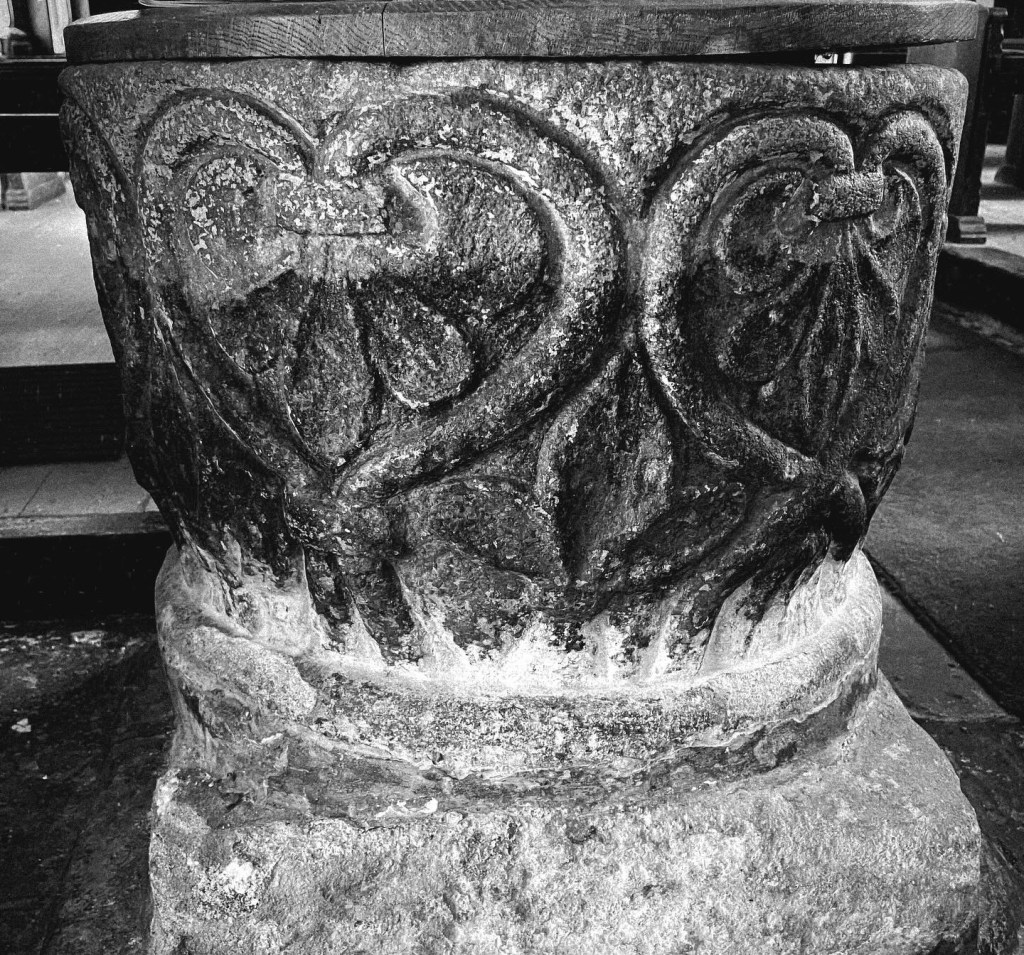

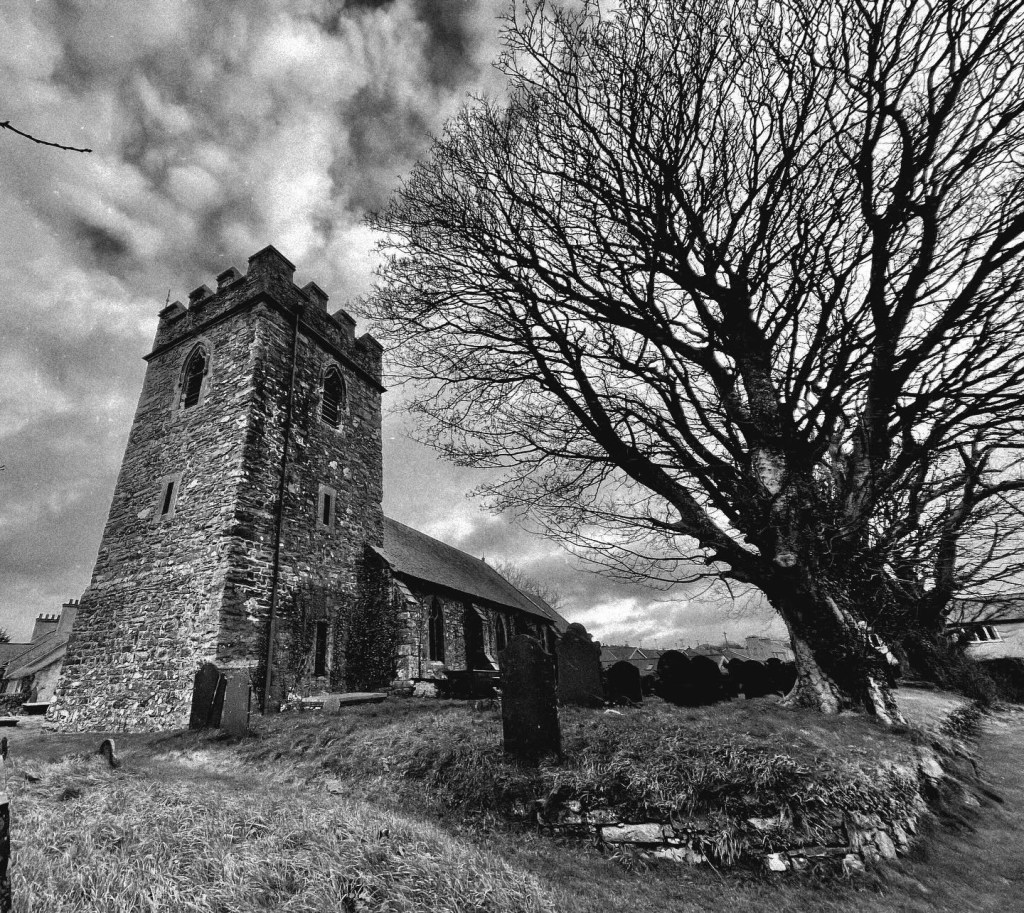
Mae’r drws dwyreiniol yn y tŵr a rhannau eraill o’r tŵr yn dyddio i’r 12fed ganrif. Fe’i hadeiladwyd ym 1850.

St Edwen, Llanedwen, Anglesey. St Edwen founded her cell here in 640 AD. The present church was designed by Henry Kennedy and built in 1856, incorporating some masonry from the previous building.
Angharad Llwyd (1833): “The churchyard is one of the most beautiful in North Wales. The church is a small but neat edifice, of great antiquity, originally built in 640, and dedicated to St. Edwen, sister or niece to Edwyn, King of England; her wakes kept on the 6th of November.”
Rev. Henry Rowlands (1655–1723) rector of Llanidan on Anglesey, and author of ‘Mona Antiqua Restaurata: An Archaeological Discourse on the Antiquities, Natural and Historical, of the Isle of Anglesey, the Ancient Seat of the British Druids’ is buried here.
Henry Cyril Paget, 5th Marquess of Anglesey (16 June 1875 – 14 March 1905), the infamous and fabulous Dancing Marquis, is also buried here.
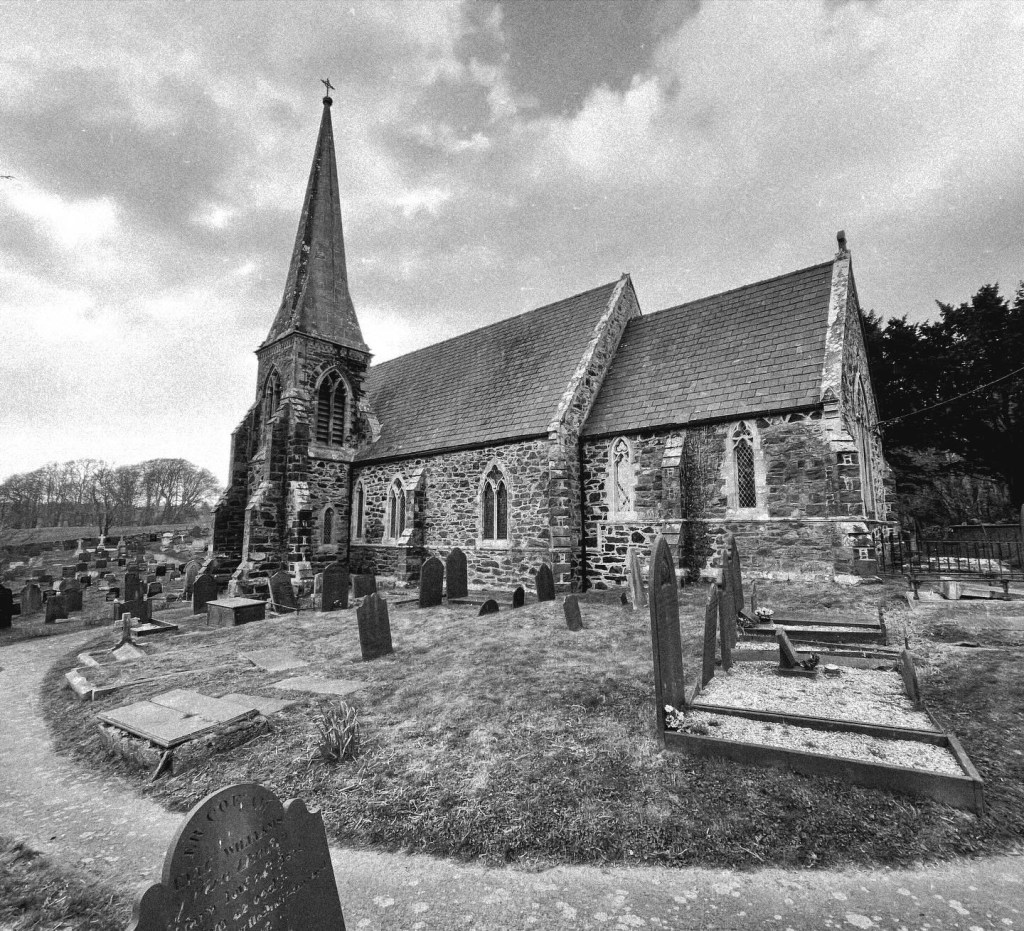
St Mary’s Church in Llanfairpwllgwyngyllgogerychwyrndrobwllllantysiliogogogoch, Anglesey. There was an earlier church dedicated to the Virgin Mary on the site. Before this, the dedication was to a Celtic saint but I can’t find further information on this if you can help me. I know that before the dedication to St. Mary (Llan Fair) the settlement was called Pwll Gwyngyll (the pool near the white hazel). In 1853, during the heyday of Victorian restorationism, the old church was rebuilt using stone rubble. How I wish there was some trace left of the old church. See the only drawing I’ve been able to find of it from 1810 – it had an apse! This would make it unique amongst Anglesey churches. On a personal note, I was raised going to this church (up to three times a Sunday) and I played the organ here as a child / teenager. My maternal grandparents are buried in the churchyard overlooking the Strait.

Mae’r adeilad fel y gwelwn ni heddiw wedi cael ei adfer yn helaeth ond mae’n debyg bod yr eglwys a’r gangell yn sefyll ar y sylfeini gwreiddiol yn rhannol o’r 14eg ganrif. Mae’r hen ffont segur, o’r 14eg ganrif wedi’i osod y tu allan rhwng porth y de a’r transept. Mae gan y porth ddrws bwa pigfain o’r 14eg ganrif wedi’i ailosod. Dywedir i’r gloch, dyddiedig 1666, gael ei haddurno â band o sgrôl winwydden.
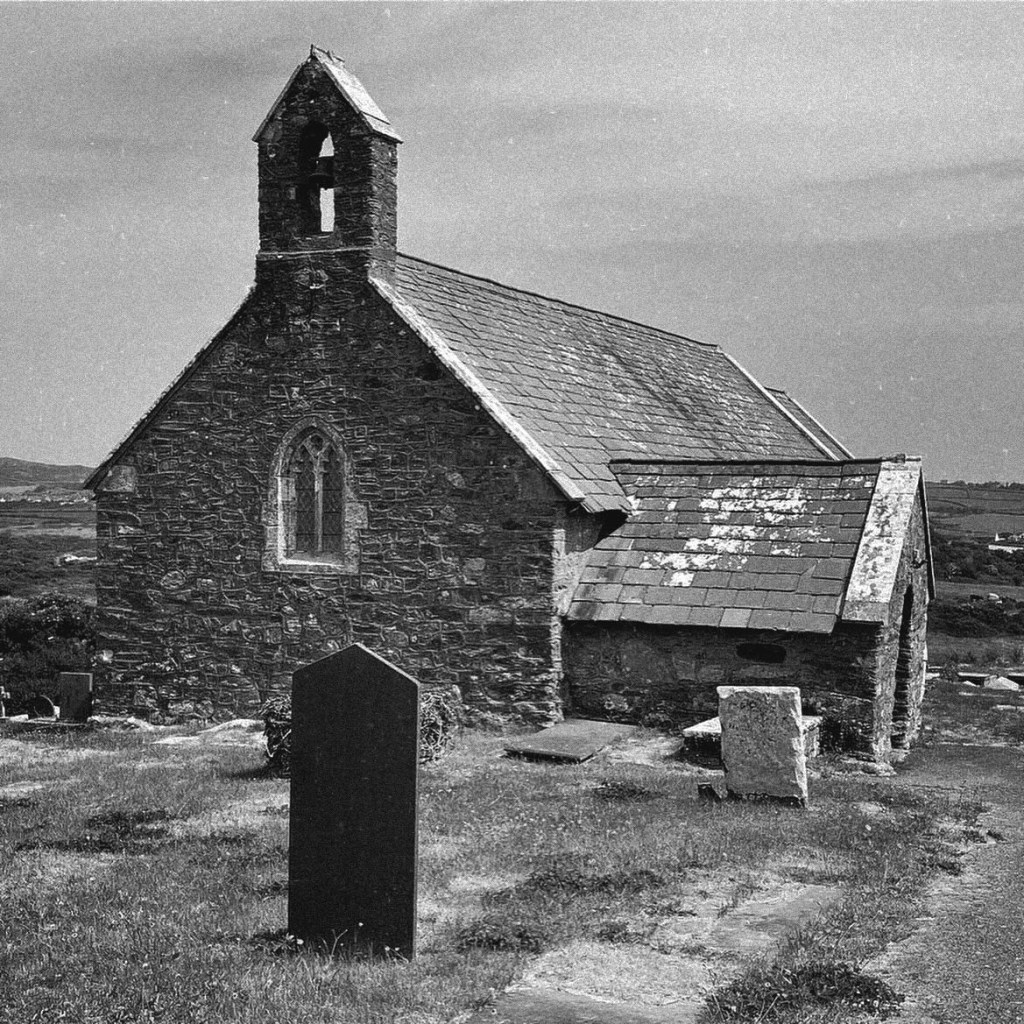
St. Maethlu, Llanfaethlu, Anglesey. Looking out towards the Irish Sea. The present nave represents the original 15th century church with the chancel being added in 1874. Many memorials are from the 1600 and 1700s.

St Machraeth Church, Llanfachraeth, Anglesey. Medieval site rebuilt ca. 1878 but incorporating some of the earlier carved stone heads.
Angharad Llwyd (1833): “The church, dedicated to St. Machraeth, is an ancient structure, in the early style of English architecture, of which it exhibits some good details, and is ornamented with a handsome east window, of excellent design.”
Canon Hulbert-Powell in ‘Carved Corbels, Brackets, and Label Stops in Anglesey Churches: A Survey’ (1944 Transactions of the Anglesey Antiquarian Society and Field Club) refers to two carved stone heads reset in an absurd position as they were originally drip-stone terminations of the east window of the earlier church.

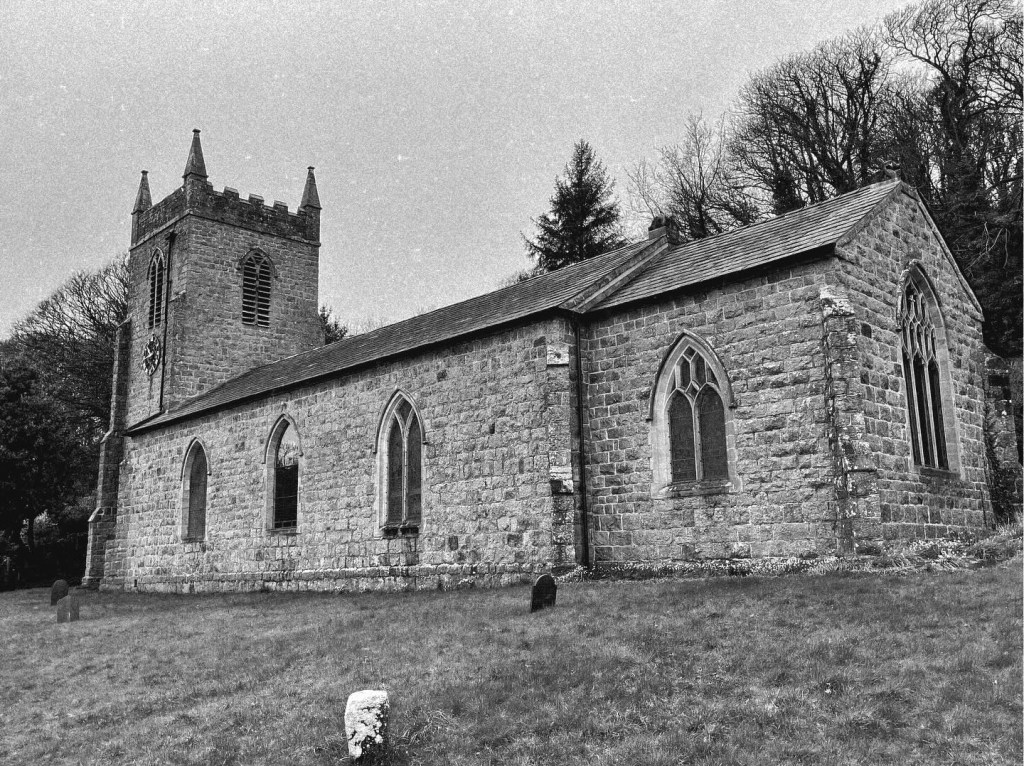
St Cyngar, Llangefni, Anglesey. Ancient site established by St Cyngar (a descendant of Arthog and Cynedda Wledig) near St Cyngar’s well. The present building was built in 1824. There is a 5th century inscribed stone and 12th century font within.
The stone of Culidorus was discovered underneath the foundations of the old church of St. Cyngar in Llangefni when it was demolished in 1824 to build the present church. It is not known for certain who Culidorus was but there is the possibility that he may have been an early Christian Priest possibly from the Roman Christian Church of Britain especially as the stone was originally found inside the church.
It is crude slab of granite and the Latin inscription would have been engraved using a pecking tool. The whole inscription is encased in a border which is single at the base but at the top of the stone, there are chevrons in between each and this represents a rare example of decoration for a stone of this kind. The stone was found in a mutilated condition and as a result of this, only a part of the inscription can be easily read. The stone has been inscribed horizontally with six lines of Latin text written in Roman capitals in an uneven form suggesting that lines three and four may have been added at a later date. The inscription can be translated thus: ‘(The stone) of Culidor (or Culidorix), and his wife Oruvita. (Here) he lies, (son) of Secundus.’
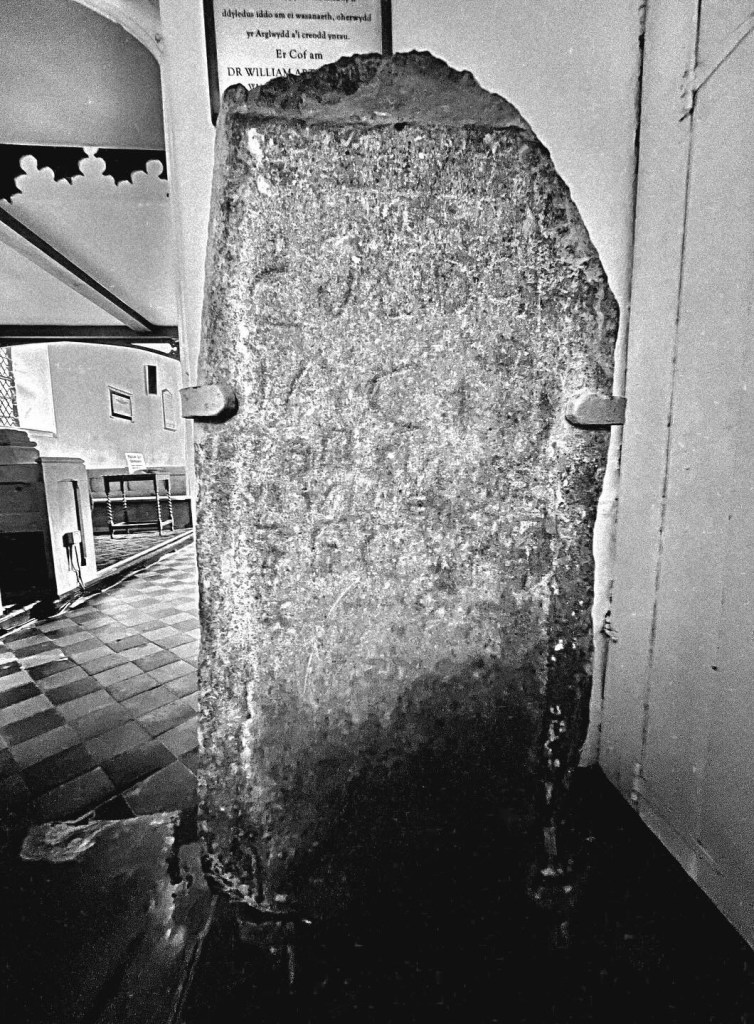

Eglwys ganoloesol (a sefydlwyd cyn 1254). Credir fod y muriau yn dyddio o tua 1500 er i’r adeilad gael ei adfer yn y 19eg ganrif ar ôl i’r eglwys gael ei tharo gan fellten. Ariannwyd yr adferiad gan Henry Edward John Stanley, y trydydd Barwn Stanley o Alderley (1827-1903) a drodd at Islam. Mae ei roddion sydd eu hangen yn amodol yn ymgorffori dyluniad Islamaidd. Mae gan y ffenestri gwydr lliw (fel eglwys St Peirio, Rhosbeirio) batrymau geometrig o wydr lliw o ganlyniad.

Saint Cwyllog was daughter of Caw, king of Alt Clud, and sister of Saint Gildas and Saint Caffo who settled on Anglesey in her old age. She sought sanctuary in Gwynedd when the Angles attacked the north country, and she found refuge in the court of Maelgwn Gwynedd. It is said Cwyllog was wife of King Arthur’s nemesis Medrawd, and founded her church here after the Battle of Camlann.
Sant Cwyllog a sefydlodd yr eglwys yn y chweched ganrif. Credir bod rhannau o’r muriau yn dyddio o 1200 ond y nodweddion cynharaf y gellir eu dyddio yw’r bymthegfed ganrif gydag atodiad gorllewinol o’r unfed ganrif ar bymtheg. Roedd Sant Cwyllog yn ferch i Caw, brenin Alt Clud, ac yn chwaer i Sant Gildas a Caffo Sant a ymsefydlodd ar Ynys Môn yn ei henaint. Ceisiodd loches yng Ngwynedd pan ymosododd yr Eingl ar wlad y gogledd, a daeth o hyd i loches yn llys Maelgwn Gwynedd. Dywedir fod Cwyllog yn wraig i nemesis Medrawd, brenin Arthur, a sefydlodd ei heglwys yma ar ôl Brwydr Camlann.
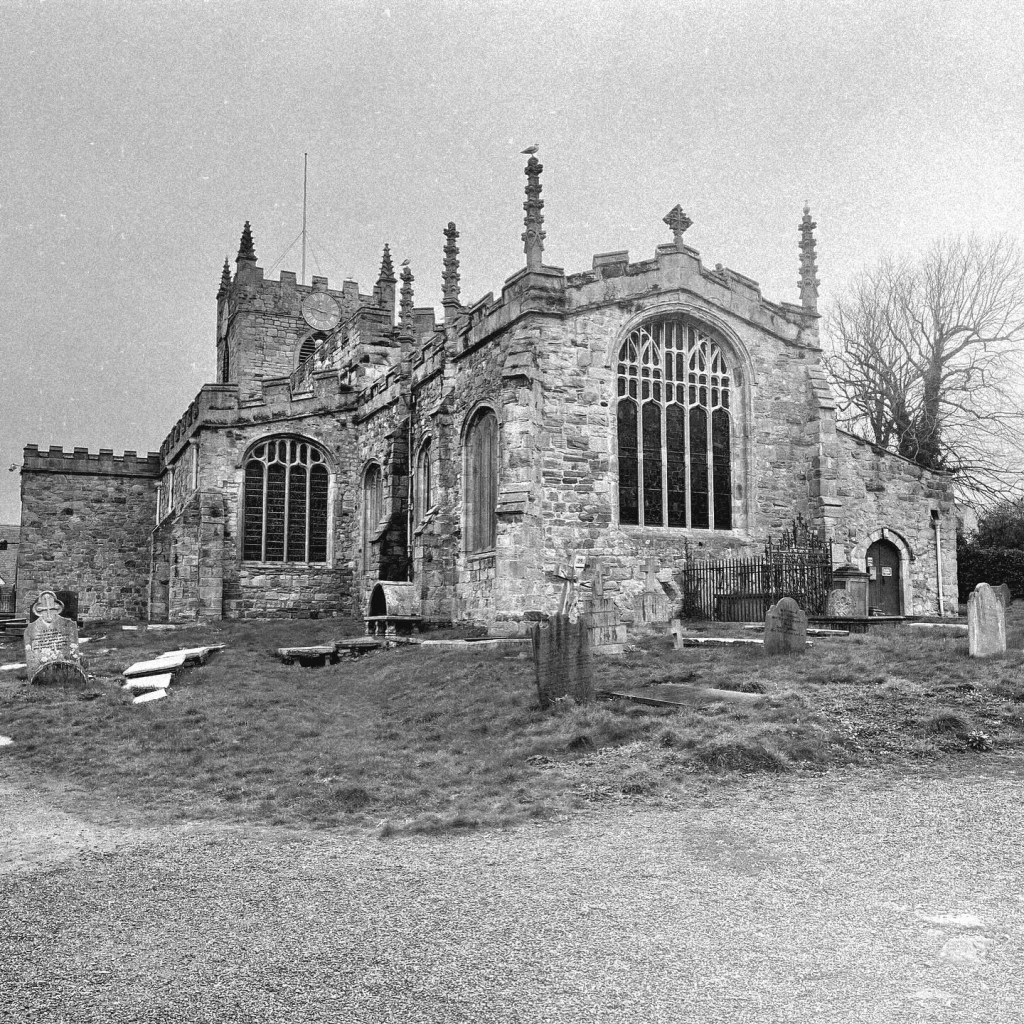
Mae blwch y gwyliwr o’r 18fed garif: mae’n debyg ei fod yno i gysgodi’r gweinidog pan odd rhaid iddo gynnal claddedigaeth mewn tywydd gwlyb; efallai ei bod hefyd wed ei ddefnyddio i warchod y fynwent yn erbyn lladron cyrff! Mae yna hefyd sawl pen cerfiedig!
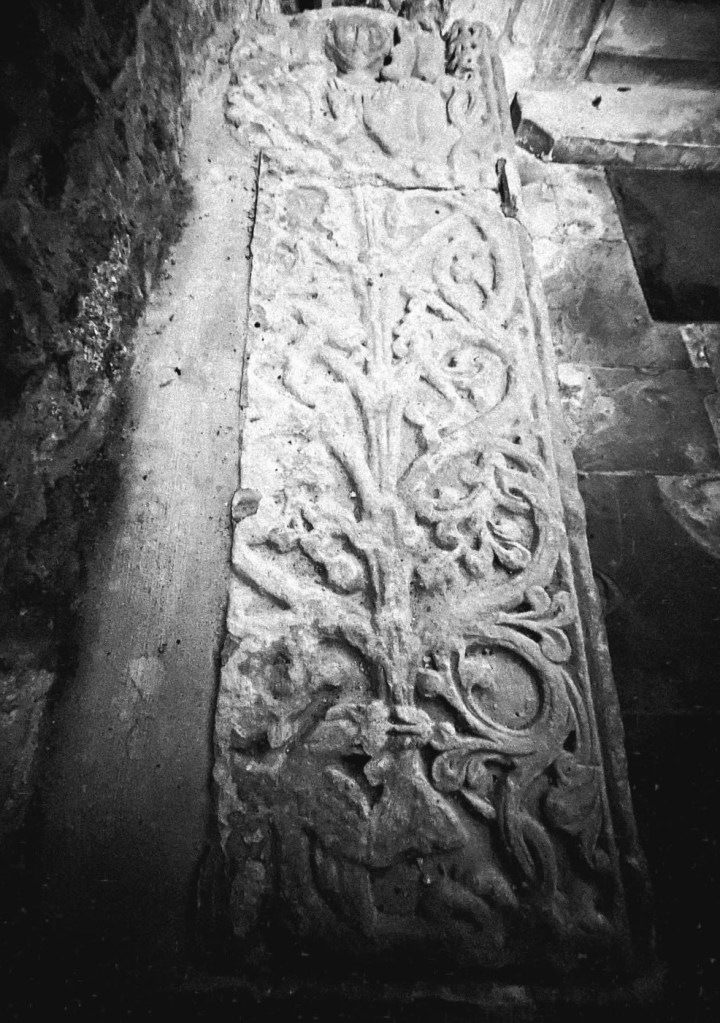
In the south porch there is a royal tomb much older than the church itself. This is the stone coffin – sarcophagus – and effigy of Princess Joan, natural daughter of King John of England, who was married to Llywelyn ap lorwerth, Prince of North Wales. She died in 1237 and a community of friars was set up at Llanfaes where her remains rested. After this friary ceased the coffin was sadly mistreated as the inscriptions record and only early in the 19th century did her coffin come into the sanctuary of the church. The slab is elaborately decorated with a floriate design with the hands of Joan drawn together, palms outward, in prayer. At her feet is a wyvern, a rare bird of prey, twisting to bite its tail.
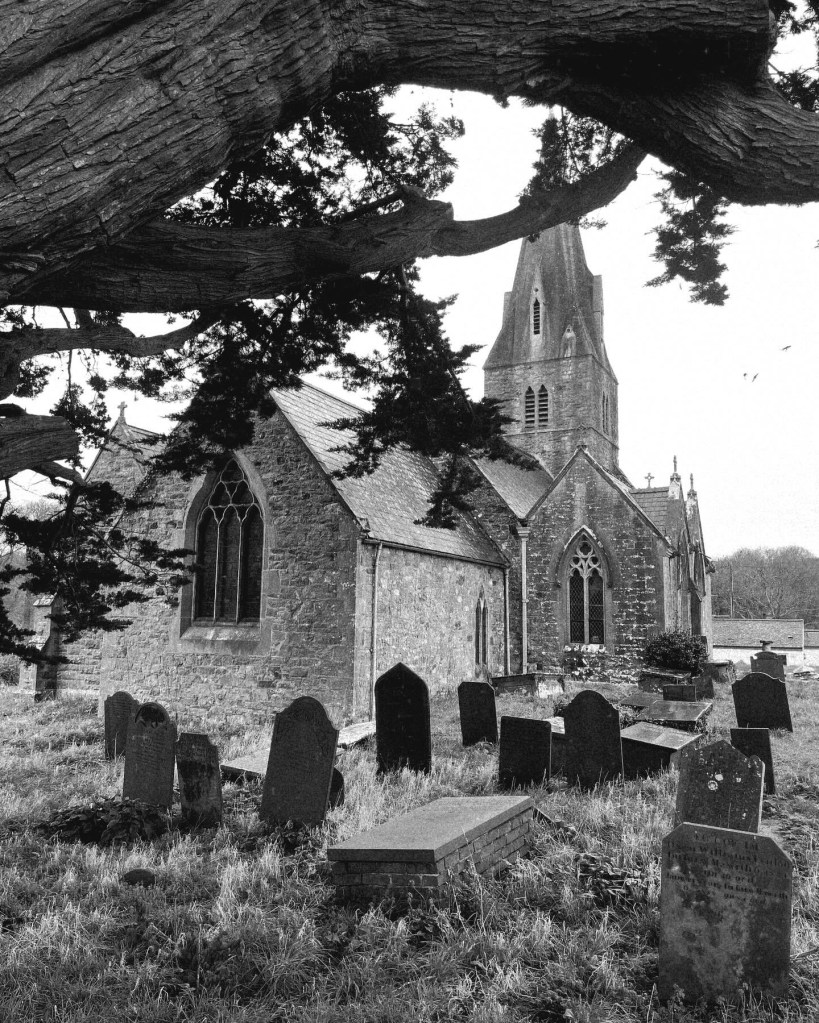
Medieval site rebuilt in the 19th century. From ‘Carved Corbels, Brackets, and Label Stops in Anglesey Churches: A Survey’ by Canon Hulbert-Powell (in the 1944 Transactions of the Anglesey Antiquarian Society and Field Club):
“Near Beaumaris is the modern parish church of Llanfaes, built in 1845 from designs of Messrs. Weightman and Hatfield of Sheffield. It occupies the site of the church established by Llywelyn Fawr (Llywelyn the Great) in the early part of the thirteenth century to serve the inhabitants of his manor of Tyndaethy, with its important ferry over the straits. The manor, as it was called, was the chieftain’s residence, and formed a centre for the dependent villas or hamlets scattered over the area of the two cwmwds of Tyndaethy and Menay, which together formed the cantref of Rosfaire, Llywelyn dedicated his church to S. Catherine.
There may have been an earlier church on the site, but in all probability the chapel of S. Megan about half a mile away served the scattered population of the district before the manor was established. This chapel was near the Edwardian church at Beaumaris and was destroyed when that church was built. Nothing now remains of Llywelyn’s church at Llanfaes except a stone carved with a latin cross fixed on the exterior east gable and a rudely carved head in sandstone evidently native work, built into the exterior wall of the south aisle of the modern church. Close to this church Llywelyn founded in 1240 a House of Franciscan Friars, one of the three such houses in Wales; the others were at Cardiff and Carmarthen.”


P E N N A U C E R R I G


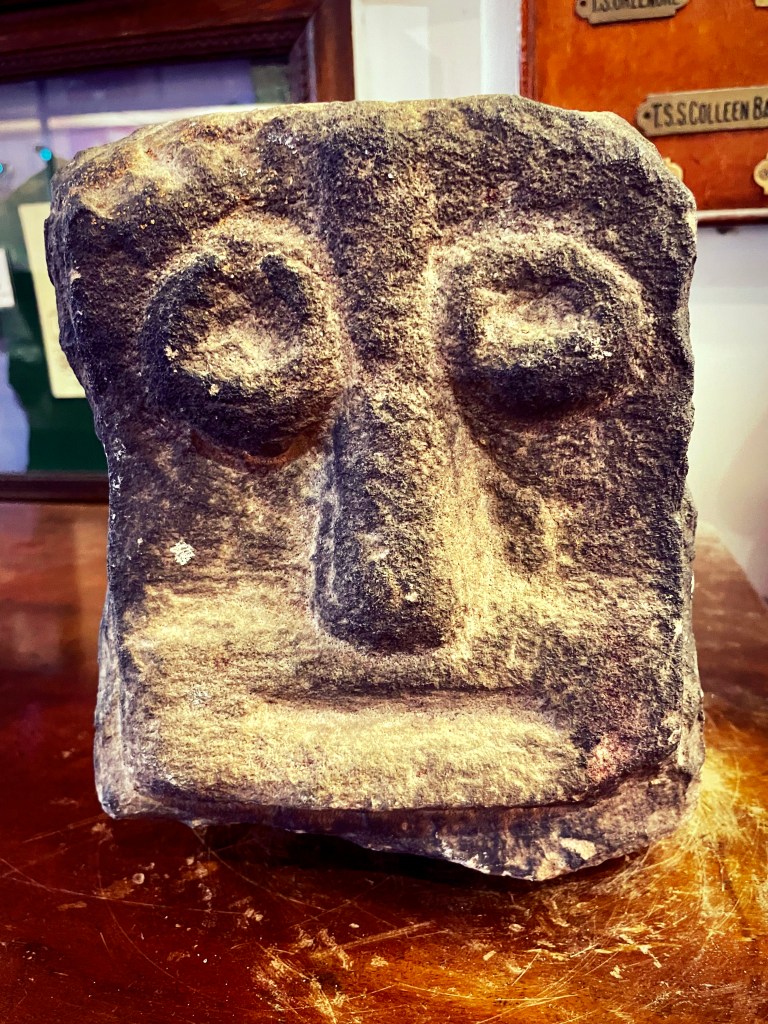
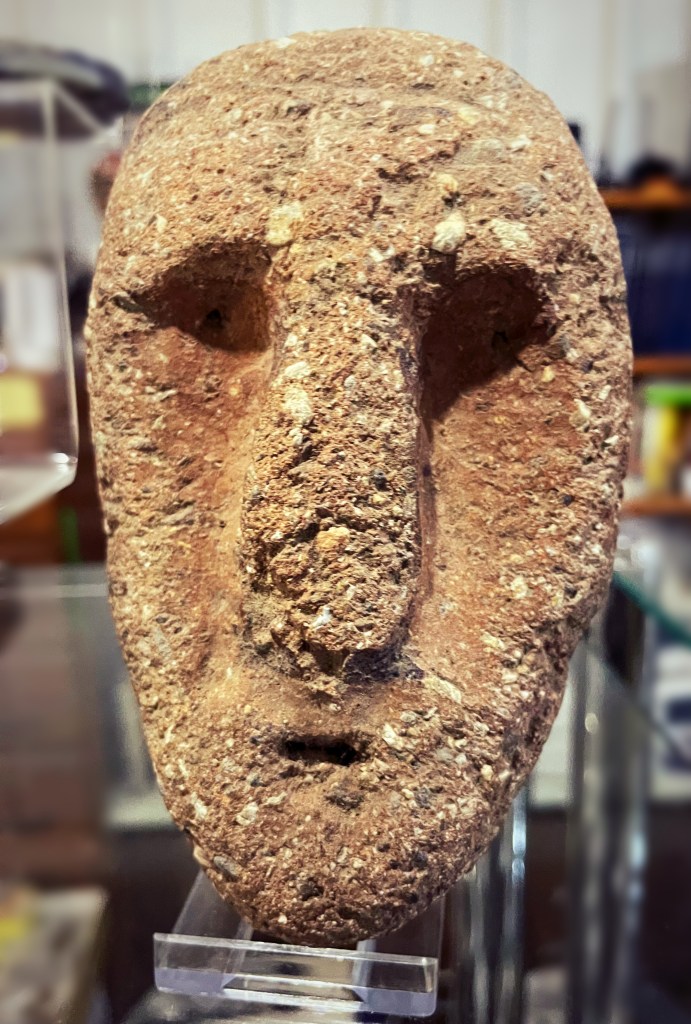
“Dawthowyd o hyd…wrth adeiladu wal gerrig sych ar fferm Bryn y Môr ger y Fali yn ystod y 1950au…a chafodd ei greu o garreg unigol o dywodfaen bras. Mae’n anodd dweud o ble y daeth y garreg oherwydd mae clogfeini mawr i’w gweld yn y gwaddodion rhewlifol sy’n gorchuddio’r rhan fwyaf o Ynys Môn.
Mae twll mortais crwn i’w weld ar waelod y pen, sy’n golygu y gellir ei osod yn gadarn mewn lle amlwg, tra bod y cefn crwn yn awgrymu y bwriadwyd iddo gael ei weld o bob cyfeiriad. Hefyd, mae tyllau mân yn y pen ac mae’r rhain o bosib, yn cynrychioli gwallt. O dan yr ên mae yna nodwedd amlwg, yn rhedeg o un ochr i’r llall…
…Mae pen Bryn y Môr yn cynnwys llygaid siâp almon y cysylitwyd nhw ers tro byd gyda phennau carreg cerfiedig cyn-hanesyddol cynnar (gweler y Pen Hendy o’r un Oriel). Fodd bynnag, mae arno hefyd fanylion pensaerniol, megis fel y sylfaen wastad a’r twll cynnal a allai awgrymu dyddiad diweddarach, o’r oes Ganoloesol efallai.”
“This intriguing carved stone head was discovered whilst rebuilding a dry stone wall on Bryn y Môr farm near Valley during the 1950s. Weighing 32kg, it was created from a single boulder.”

Credir bod y ffiguryn bach hwn o ddyn yn dal hudlath yn ei law yn offrwm addunedol o’r Oes Haearn a ddarganfuwyd yn Rhoscolyn ar Ynys Cybi, Ynys Môn. Fel arfer ar ddangos yng Nghanolfan Ucheldre yng Nghaergybi ond nid yw allan ar hyn o bryd oherwydd gwaith adnewyddu. Roeddwn yn ddiolchgar iawn o gael y cyfle i weld yr arteffact yn bersonol.
***
This small figurine of a man holding a wand in his hand is thought to be an Iron Age votive offering found in Rhoscolyn on Holy Island, Anglesey. Usually on display at the Ucheldre Centre in Holyhead but not currently exhibited due to ongoing renovation work. I was very grateful to be given the opportunity to see the artefact in person.
 Tristan Rhys Williams